
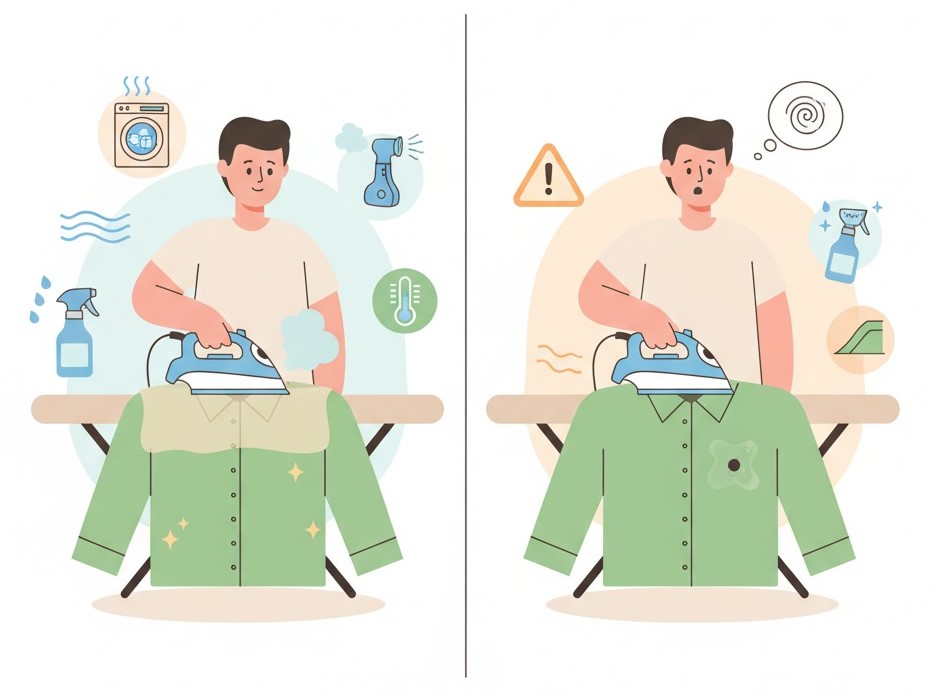
Yes, you can iron polyester but treat it like a shy friend, do not get too close or get too hot. Polyester is a type of plastic, so it can shine, melt or burn if the heat is too high. Low temperature is a key to keeping your clothes safe.
Stop before you start. Remember what happens when you apply heat to polyester fabric
Don’t rush in. Polyester is not like cotton or linen. It’s a synthetic, meaning it’s basically a type of plastic that can easily melt or get a permanent shine. A single mistake with a hot iron could ruin your clothes for good. So, pause for a moment and prepare to iron it the right way.
Understanding polyester and heat sensitivity
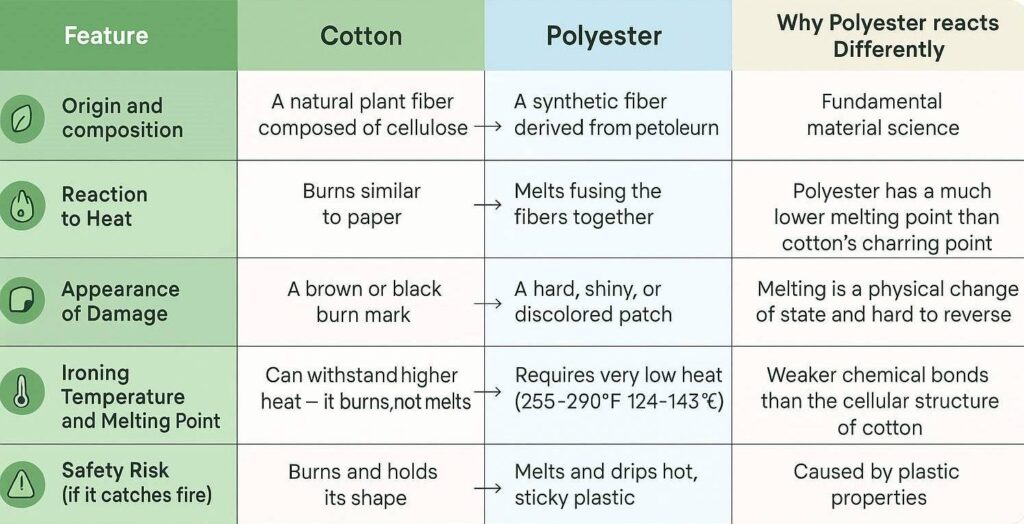
Polyester is a polymer, a long chain of repeated molecules. It can be spun into everything from high performance athletic gear to flowing blouses. But it has a low melting point which causes creating a hard shiny patch Instead of a burn like cotton gets.
So respect the heat and your polyester will stay looking its best.
Why it reacts differently to heat than cotton
Because they are fundamentally different materials with different chemical compositions.
Cotton is a natural plant fiber that burns or chars when heated, while polyester is a synthetic polymer (a type of plastic) that melts and fuses together.
Polyester Psychology: Why This Fabric is a Ticking Time Bomb
When you put an iron to a cotton shirt, you have a few precious seconds to realize your mistake. With polyester, there is no generous margin. With a temperature just a few degrees too high, you have irreversible damage.
Because it’s a plastic polymer, its low melting point is an invisible timer. Your iron doesn’t see your polyester clothes as fabric, it sees plastic. Your goal here isn’t to force the wrinkles out with heat and pressure, but to convince them to leave gently.
By understanding the “psychology” of polyester that it is a fragile, plastic based material that will melt under pressure you gain the power to keep it safe. You learn to handle it not with force, but with finesse.
How to Disarm It
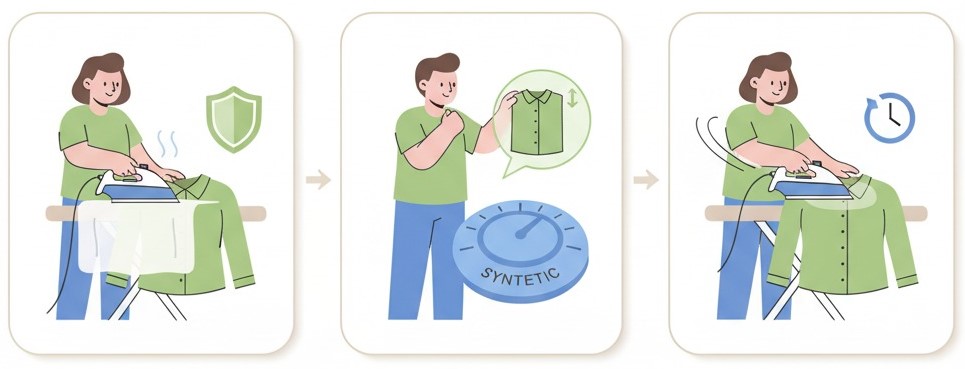
Use a bodyguard. The pressing cloth is your bodyguard. It creates a safe distance between your hot iron and the sensitive fabric. Never let the iron touch the polyester directly.
Start from the lowest setting. Always start with the coolest setting on your iron. Test a small, hidden spot first, like an inside seam if it works, great. If not, slowly and cautiously turn the heat up.
Use a gentle touch. Ironing polyester is a quick gentle glide not a hard press. The pressure should be light, and the iron should always be moving. Don’t let it sit still for even a second.
What Happens When You Get It Wrong?
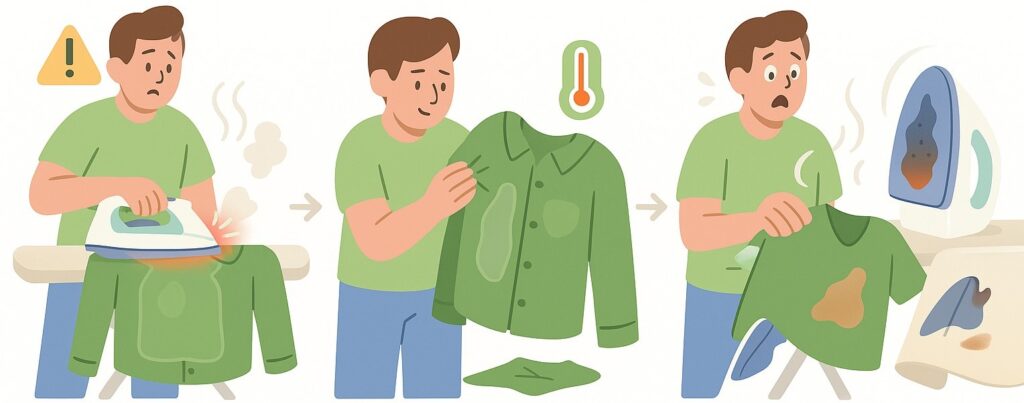
One moment of carelessness and the fabric you once loved is permanently disfigured. Polyester doesn’t just scorch like cotton, it melts.
- Ghost like outline of itself on your clothes?
The very first thing that happens when you apply too much heat to polyester is a reflective outline, especially on dark colored garments, and won’t go away with more ironing or washing.
- Feel Stiff, Rough or Brittle in some spots
If the heat exposure continues, the polyester fibers fuse together, causing the affected areas to become stiff, rough, or brittle to the touch. The fabric loses its original softness and drape.
- The ‘Melted Plastic’ Disaster
One more pass and the timer runs out. Polyester will melt completely. This can result in a hole in the fabric, surrounded by a hardened plastic like residue. Damage is typically irreversible.
- sticky mess appear on your iron’s plate
Now polyester transfer as a sticky molten residue to the iron’s plate. If you try to iron another garment, this residue will likely smear, leaving an oily, hard stain and extending the “polyester psychology” to your next piece of clothing.
Oh No, Can I Salvage a Scorched Polyester Garment?
The first, and most important, thing you need to understand is this: once polyester fibers melt, they cannot be un-melted. The material is forever altered.
But don’t give up entirely just yet. Depending on the severity, a minor shiny spot might be softened, and for more significant damage, there are creative ways to repurpose the item. First, let’s assess the damage and then talk about what if anything can be done.
The Polyester Recovery Kit: Your Emergency Guide for Ironing Gone Wrong
For a shiny mark
Remember, your goal is not to reverse the melt but to soften the edges and dull the shine.
What you’ll need:
White vinegar solution: Mix equal parts white vinegar and water.
A clean, soft cloth
A handheld steamer (optional but recommended)
A soft bristle brush (optional)
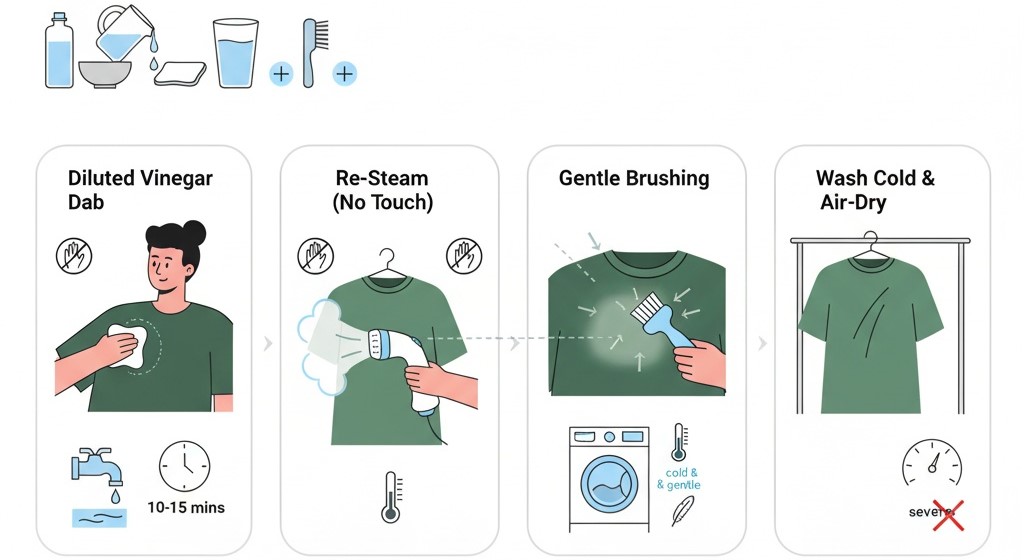
Step 1: Apply diluted vinegar.
Dampen your clean cloth with the white vinegar solution.
Gently blot the vinegar solution onto the shiny spot. Don’t rub it like you’re scrubbing a stain.
Let the solution sit for 10–15 minutes.
Rinse the area with cool water afterward.
Step 2: Re-steam the spot
Hang the garment up.
Use your steamer to create a gentle cloud of mist but do not touch the fabric.
The goal here is to use moisture to soften the fibers, relaxing them back toward their original state. Don’t rush it. Let the steam do its work.
Step 3: Brush it gently
If the shine is still visible, use a soft bristle brush to gently brush the affected area.
Brush in multiple directions to help lift the flattened fibers.
Step 4: Wash and air dry
Wash the garment in cold water with a mild detergent on a gentle cycle.
Hang it to air dry. Do not put it in the dryer.
These steps are a “maximum recovery” attempt for a minor issue. They won’t work on severely melted areas.
Remember that gentle finesse is your best shot at recovery.
What to do with a melted garment
Your options now shift from “Recovery” to “Creative Salvage.”
You can’t reverse the damage, but you can hide it or give the item a new purpose.
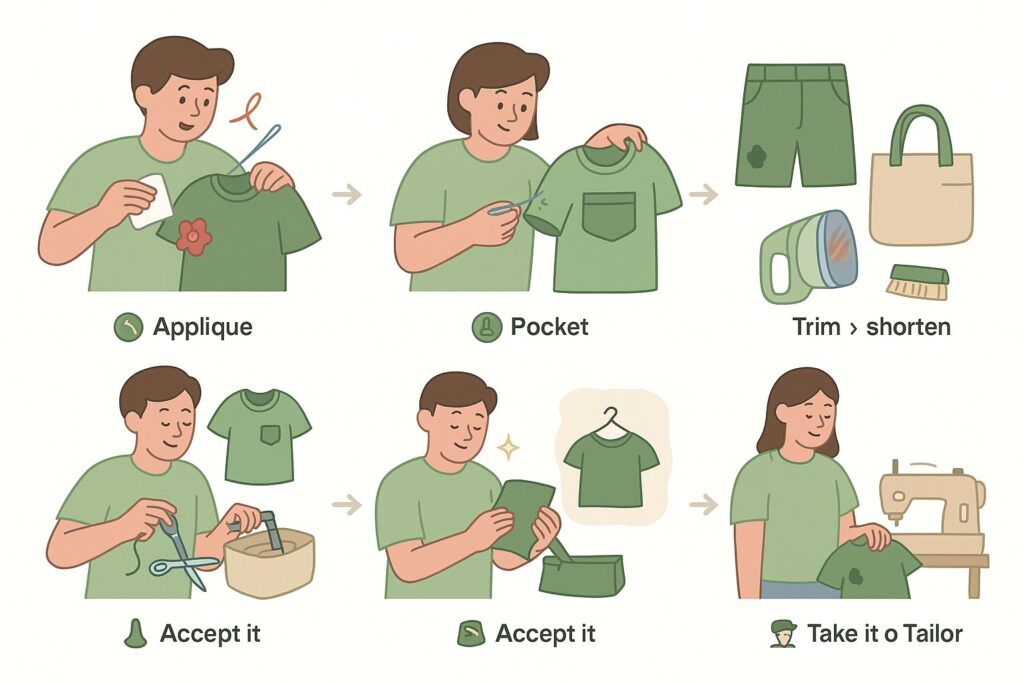
For small holes or melted spots:
Hide it with an applique: This transforms the mistake into a unique design feature.
Add a pocket: If the damage is in a suitable location.
Trim and shorten: For example, turn a pair of pant into shorts or a long skirt into a shorter one if the hole is near the hem.
For large, irreparable damage:
Repurpose it: Turn the rest of the undamaged fabric into something new.
Accept its new life: you might simply accept the flaw and continue wearing it in a casual setting.
Take it to a tailor: While they can’t reverse the melt but can often patch it more discreetly than a home mender.
How to iron polyester safely
Check the care label:
Always follow the garment’s specific care instructions. Some items, particularly blends, may have different temperature requirements, or the label may say “do not iron”.
| Action | Instructions | How to follow |
| Washing | Use a warm or cool permanent press or gentle cycle, not exceeding 40°C or 104°F. | This setting uses a slower spin to minimize agitation and prevent the pilling and abrasion that can damage synthetic fibers. Always wash the item inside out. |
| Bleaching | Do not use bleach. | It can be too harsh for synthetic materials and may cause damage. |
| Drying | Tumble dry on a low heat setting. | Remove the garment from the dryer while it is still slightly damp to avoid static cling and wrinkles. |
| Ironing | Iron at a low, cool, or synthetic temperature setting (max 110°C or 230°F). | Use a pressing cloth between the iron and the polyester to prevent melting, scorching, or developing a permanent sheen. |

Set to low heat:
Use your iron’s lowest heat setting, often labeled “Synthetic,” “Polyester,” or one dot. The temperature should not exceed 300°F (148°C).
Prepare the fabric:
Turn the garment inside out. This is an extra precaution that protects the visible side of the fabric from damage.
Dampen the fabric:
Lightly mist the polyester with water from a spray bottle. This helps the fabric relax and reduces the amount of heat needed to remove wrinkles.
Use a pressing cloth:
Place a clean, thin cotton cloth between the iron and the polyester. This acts as a protective barrier to distribute the heat evenly and prevent melting or shine marks.
Test a hidden spot:
Before ironing the entire item, test your iron’s temperature on an inconspicuous area, such as an inside seam or hem.
Iron gently and quickly:
Press the iron firmly onto the pressing cloth and glide it over the fabric using quick, light, and even strokes. Do not leave the iron in one spot for too long.
Alternative wrinkle removal methods
The best alternative methods for removing wrinkles from polyester involve using steam and controlled heat to relax the fabric’s fibers, rather than a hot iron. These methods are safer for the synthetic material and less labor intensive.
The dryer with ice cubes
What you’ll need
1-2 dry, wrinkled polyester garments
2-3 ice cubes
Your dryer
Simple steps to a smooth garment
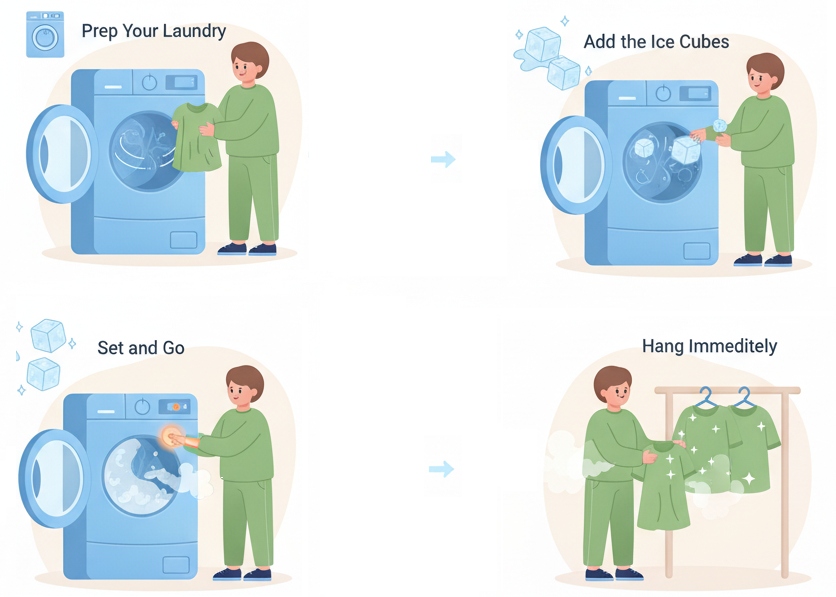
Prep your laundry: Place one or two dry, wrinkled polyester items into your dryer. Don’t overload it the steam needs room to circulate.
Add the magic: Toss 2 to 3 ice cubes in with the clothes.
Set and go: Close the dryer door and run it on a high heat setting for 10 to 15 minutes.
Hang immediately: As soon as the buzzer goes off, remove the clothes and give them a good shake. The wrinkles will have vanished. Hang the item to cool completely, and you’re ready to go.
The garment steamer
For more direct and effective steaming, a handheld or full sized garment steamer is the ideal tool.

Prepare the steamer: Fill the water tank with distilled water (to prevent mineral buildup) and wait for it to heat up.
Hang the item: Hang the garment on a sturdy hanger.
Apply the steam: Pull the fabric taut with one hand and hold the steamer nozzle 1–2 inches from the fabric. Move the steamer in slow, vertical strokes over the wrinkled areas.Allow to dry: Let the garment hang and cool completely before wearing to prevent new wrinkles from forming.
The wrinkle release spray
Wrinkle release spray is a fantastic solution for quickly smoothing out creases in polyester.
Prep the spray
You have two options here:
Buy commercial spray: Purchase a bottle of wrinkle release spray from a brand like Downy.
Make your own: For a budget-friendly DIY version, mix one teaspoon of fabric softener and one teaspoon of rubbing alcohol with one cup of water in a clean spray bottle. Shake it well to combine the ingredients.
Here is the step by step process for getting the best results.
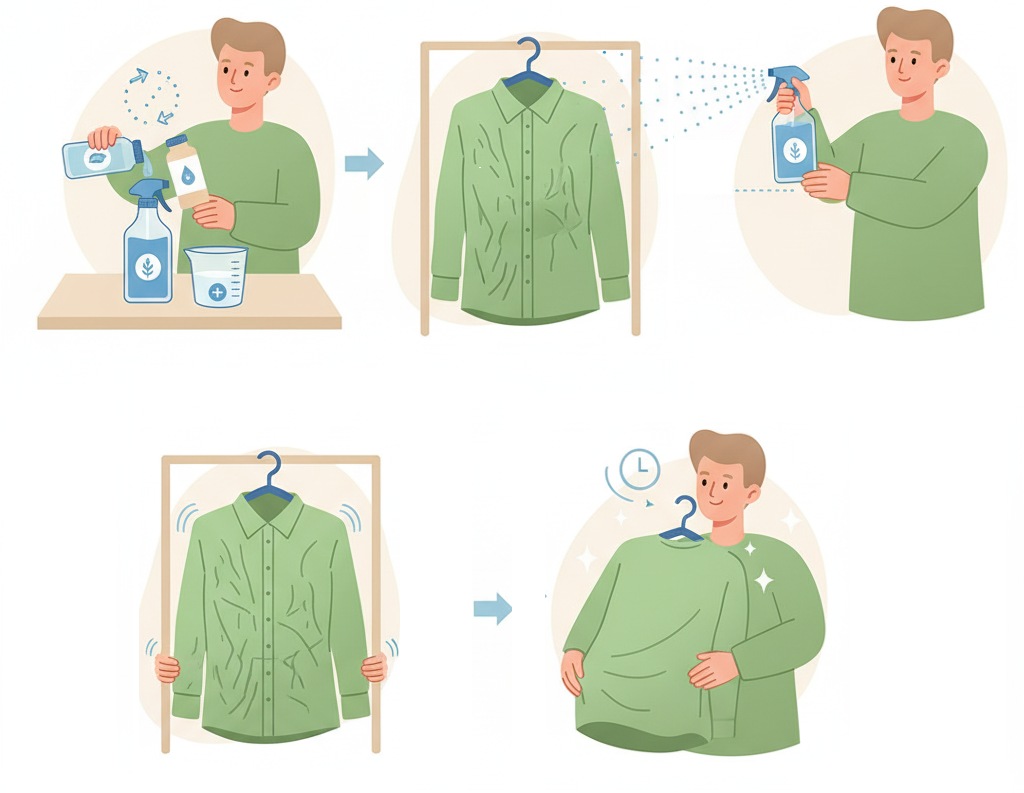
Prep the garment
First, hang your wrinkled polyester garment on a sturdy hanger. It should hang freely, not bunched up or squeezed between other clothes.
Mist the fabric
Next, hold the spray bottle about 6-8 inches away and lightly mist the wrinkled areas until the fabric is slightly damp. Be careful not to soak the garment, as that will only take longer to dry.
Smooth it out
After spraying, use your hands to gently pull and smooth the fabric, focusing on the wrinkled spots. This helps release the creases and allows the fabric to relax.
Let it air-dry
Finally, let the garment hang and air-dry completely. As the dampness evaporates, the wrinkles will fade away.
Final Checklist to Avoid Disaster
| Before You Start | During Ironing | After You’re Done | |
| Action | Check the Tag | Use a Pressing Cloth | Hang It Up |
| (Look for “do not iron” symbol) | (A thin cotton cloth is your shield) | (Let the garment cool completely) | |
| Reason | Some items can’t be ironed at all. | Prevents direct heat from damaging the fabric. | Sets the shape and prevents new wrinkles. |
| Action | Clean Your Iron | Go Low and Slow | Do Not Fold |
| (Wipe away any residue) | (Use the lowest heat setting) | (Until it’s fully cool) | |
| Reason | A dirty iron can leave marks. | High heat melts polyester. | Folding a warm garment can cause wrinkles. |
| Action | Turn It Inside Out | Test a Small Spot | Store Properly |
| (Protects the outer surface) | (Try on an inside seam first) | (Use hangers to avoid crushing) | |
| Reason | Prevents shiny patches from forming. | Ensures the temperature is safe. | Proper storage maintains the smooth finish. |
| Action | Use Quick, Light Movements | Use Steam From a Distance | |
| (Don’t linger in one spot) | (Hold the iron a few inches away) | ||
| Reason | Prevents melting or scorching the fabric. | Relaxes wrinkles with less direct heat. |
FAQ
How do I iron polyester blends?
For best results follow these instructions (1) Check the label (2) Use a low setting (3) Turn the garment inside out (4) Cover with a pressing cloth (5) Use gentle and quick strokes (6) Hang immediately.
What is the best heat setting for polyester?
Typically around 300 °F (149°C) or the “synthetic” setting on your iron. This is because polyester is a heat sensitive, thermoplastic fabric that can melt, scorch or develop permanent shine marks if exposed to high heat.
Do I need a pressing cloth for ironing polyester?
Yes, a pressing cloth is highly recommended when ironing polyester. It protects the fabric from direct heat, which can cause melting or permanent shine.
Benefits of using a pressing cloth:
- Protective barrier: Prevents the hot iron from making direct contact with the heat-sensitive fabric.
- Even heat distribution: Spreads the iron’s heat more uniformly across the surface.
- Steam transfer: When dampened, it helps relax wrinkles with steam, reducing the need for excessive heat.
Can you iron polyester on cotton setting?
No, you should not iron polyester on the cotton setting because:
Differences in heat settings
Polyester requires a low heat setting, typically between 230–300°F (110–149°C) while Cotton requires a much higher heat setting, often over 300°F (149°C).
Risks of using the cotton setting on polyester
1) Melting and irreparable damage
2) Permanent shine marks
3) Scorching or yellowing
Why should I iron polyester inside out?
You should iron polyester inside out to protect the fabric from direct heat, which can cause shine or damage.
Ironing from the reverse side also provides several other benefits:
- Prevents shine: The iron’s direct heat can leave a permanent sheen on the face of the fabric.
- Protects prints and embellishments: This keeps any delicate prints, embroidery, or other details safe from damage.
- Preserves fabric texture: It helps maintain the original finish and texture on the visible side of the garment.
What if I accidentally melted polyester onto my iron’s soleplate?
First, always ensure the iron is unplugged and cool before attempting any cleaning method unless specified otherwise.
Baking soda paste
Mix baking soda and water into a paste, then rub it gently onto the cooled soleplate with a cloth. Wipe clean with a damp cloth.
Salt and newspaper
Sprinkle salt on a sheet of newspaper or a towel. Rub a warm (not hot) iron over the salt to use its abrasive quality to scrub off the melted residue.
Commercial iron cleaner stick
For stubborn residue, heat the iron slightly and rub the stick over the warm soleplate as directed. Wipe the residue onto a cloth.
Acetone (nail polish remover)
Use acetone on a cotton ball to dissolve the hard plastic residue. Wipe the area on a cold iron and follow up with a damp cloth to clean the surface.
Note: Always avoid using abrasive materials like steel wool, which can scratch the soleplate and ruin the iron.
How do I prevent static cling after ironing polyester?
To quickly eliminate static cling after ironing, you can:
Use a metal object: Rub a metal hanger or a ball of aluminum foil over the fabric to discharge static buildup.
Use an anti-static spray: Lightly spritz the inside of the garment.
Mist with water: A light mist of water helps neutralize the static charge.