
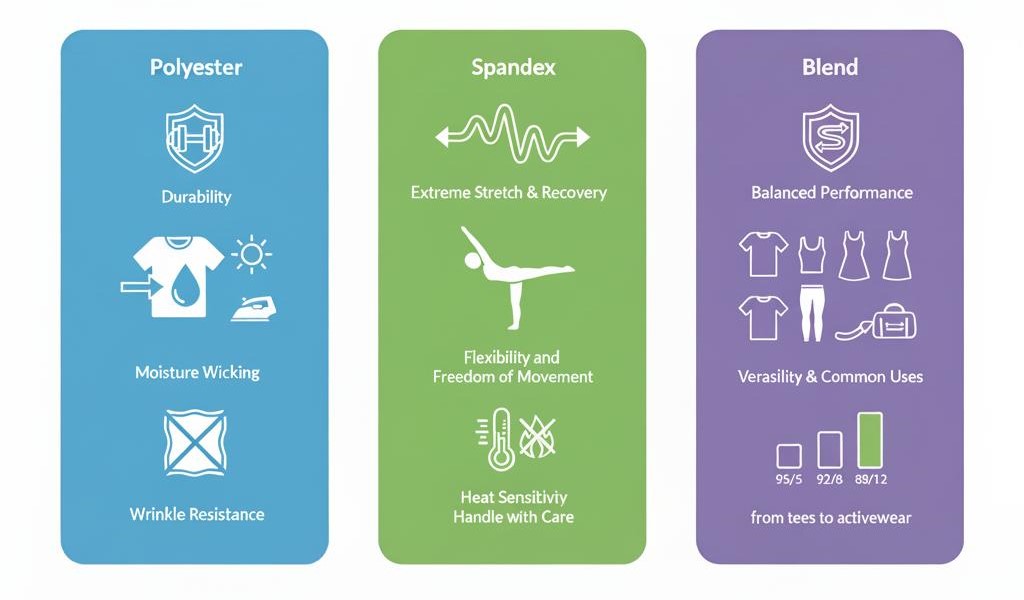
Polyester and spandex (also called Elastane/Lycra) are both synthetic fibers. Polyester provides durability and structure while spandex delivers unparalleled stretch. Many everyday clothes combine them to balance comfort, durability, and fit.
If you want a fabric that needs low maintenance, and resistant to environmental factors, polyester is the superior choice. If the priority is maximum stretch and recovery spandex is the difference maker. When you need both easy care and reliable stretch the polyester-spandex blend is the winning choice.”
Common blend ratios are 95/5 (soft tees), 92/8 (all day stretch), and 88/12 (active wear and leggings).
- Choose polyester: for shape retention, quick dry, and wrinkle resistance.
- Choose spandex: for maximum stretch & snap back recovery.
- Choose the blend: for balance typical picks: 95/5 (tees), 92/8 (everyday), 88/12 (active).
- Care rule: cool wash, low heat (or air-dry) to protect stretch and finish.
- Sustainability: prefer recycled polyester (rPET).
Quick Comparison: Polyester vs Spandex vs Blends
See the differences in 30 seconds then pick the right fabric for your use.
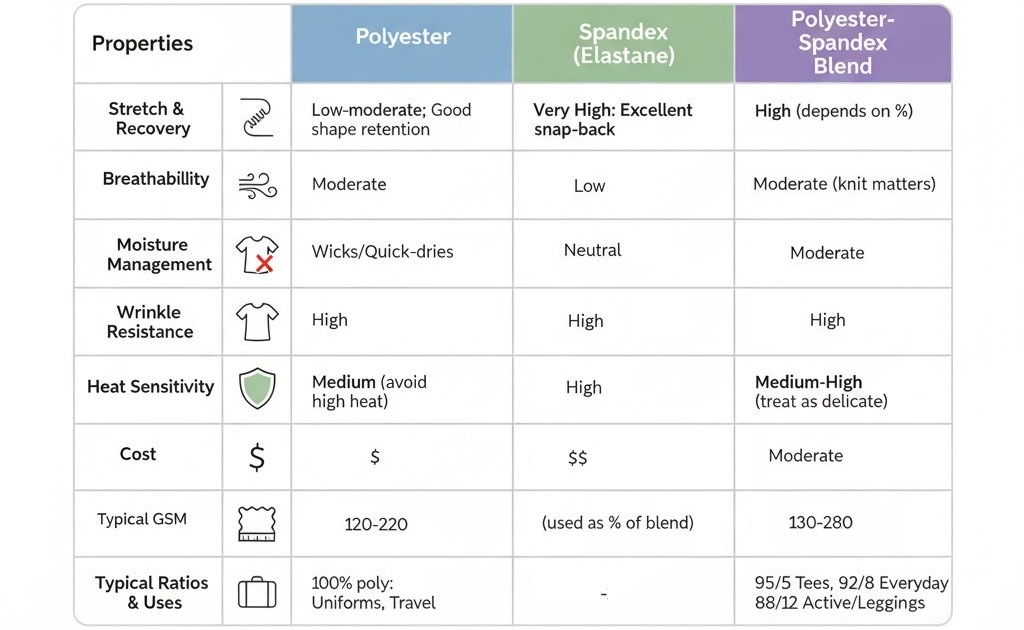
Verdict by Use Case
- Active wear (gym/running): Blend 88/12 or 90/10, 4-way stretch knit → stay fit, fast dry.
- Leggings (everyday): Blend 88/12–92/8, opaque interlock knit → stretch + recovery without sheerness.
- Tees (casual): Blend 95/5 in single jersey → soft hand feel keeps shape.
- Shape wear: Higher spandex (15–20%) with dense knit → maximum compression and recovery.
- Scrubs/Uniforms: Predominantly polyester or 95/5 for wrinkle resistance and durability.
- Travel wear: Polyester or 92/8 → quick dry, low crease, easy care.
- Hot weather: Lighter GSM blends (92/8), breathable knits; avoid heavy finishes.
- Cool weather: Polyester or mid GSM blends; prioritize recovery so knees/elbows don’t bag out.
Disclaimer: “These are fabric level guidelines; always follow the care label on your garment.”
What Is Polyester? (PET)
Polyester (Polyethylene terephthalate, PET) is a synthetic polymer, manufactured from petroleum based chemicals.
It is widely used because it’s easy care, affordable and versatile. It blends well with stretch fibers like spandex for everyday comfort.
Key Characteristics
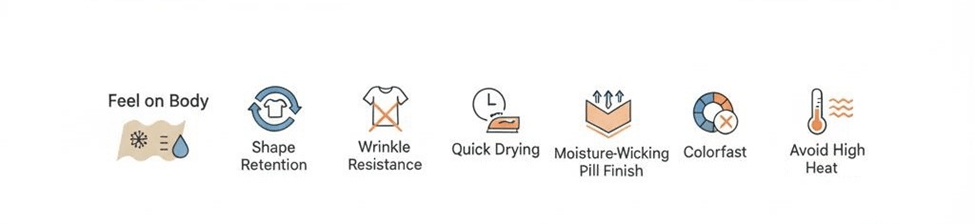
- Feel on body: Smooth, stable hand can feel cooler or slick depending on finish.
- Performance: Shape retention, wrinkle resistance, quick dry; accepts moisture wicking and anti-pill finishes.
- Care & longevity: Wash friendly and colorfast; avoid high heat to prevent shine and wear.
Pros & Cons
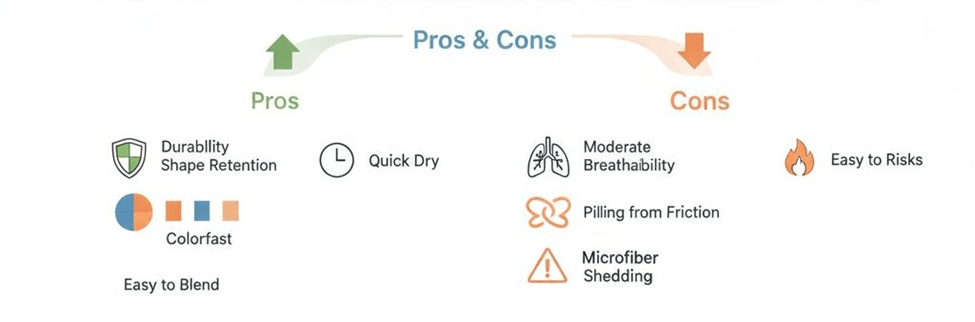
Pros
- Holds shape; resists wrinkles and creases
- Dries fast; low moisture uptake
- Durable and abrasion resistant
- Colorfast; prints and colors stay vivid
- Easy to blend (e.g., with spandex for stretch)
Cons
- Breathability is moderate (depends on knit/weight/finishes)
- Can pill with friction (improves with better yarns/finishes)
- High heat can cause shine or damage over time
- Microfiber shedding in wash (lessen with wash bags/filters)
Common Constructions (knits/wovens)
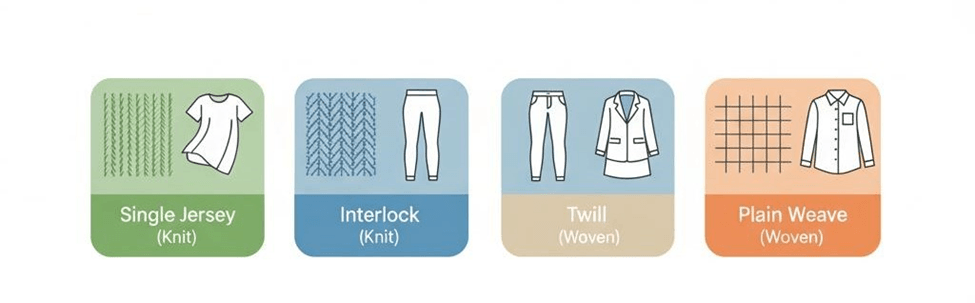
Single jersey (knit)
- Feel/drape: Light, soft, good stretch across width; can be slightly clingy.
- Best for: Tees, base layers; comfort first pieces.
Interlock (knit)
- Feel/drape: Thicker, smoother both sides, more opaque; stable with tidy drape.
- Best for: Opaque tees, dresses, leggings where modesty/structure matter.
Twill (woven)
- Feel/drape: Diagonal ribs; sturdy and drapey without being stiff.
- Best for: Pants, work wear, travel trousers wrinkle hiding, hard wearing.
Plain weave (woven)
- Feel/drape: Simple crisscross; lightweight to mid weight.
Best for: Shirts, uniforms, shells clean look, good for prints.
What Is Spandex? (Elastane)
Spandex is a synthetic, exceptionally stretchy fiber known for its elasticity and ability to return to its original shape.
Spandex is a generic name in North America. The same material is called elastane in Europe and is sold under brand names like Lycra by the company DuPont.
How Spandex Adds Stretch
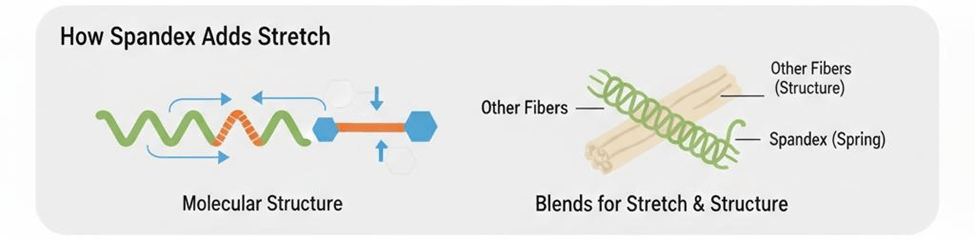
Spandex adds stretch through its unique molecular structure, which consists of long, flexible segments and shorter, rigid segments that act like springs.
In blends (e.g., polyester–spandex), the base fiber gives structure; spandex provides the spring.
Pros & Cons

Pros
- Maximum stretch & recovery (no baggy knees/elbows)
- Allows close, body following fits without losing shape
- Enhances comfort and range of motion
- Works in many knits and weights (from tees to leggings)
Cons
- Heat sensitive: high dryer/iron heat degrades elastic over time
- Can feel clingy in tight fits or dense knits
- Over stretch + friction can reduce lifespan (care matters)
- Pure spandex fabrics are rare; it’s usually a blend
2-Way vs 4-Way Stretch (Short explainer)
- 2-Way stretch: stretches horizontally (selvedge to selvedge). Good for tees and everyday pants; easier to control fit.
- 4-Way stretch: stretches horizontally and vertically. Best for leggings, training wear, shape wear moves in all directions and snaps back.
- Rule of thumb: choose 4-way for high movement or compression; 2-way for casual garments where stability matters.
Micro-tip: For leggings, look for 4-way stretch with opaque interlock knits to avoid sheerness when bending.
The Polyester Spandex Blend Explained
Blending polyester with spandex combines the best of both: structure and easy care from polyester, plus stretch and snap-back recovery from spandex. The result is everyday comfort that keeps its shape.
Why Blend?
- Durability & Wrinkle Resistance: Polyester keeps the garment neat and hard wearing.
- Stretch & Recovery: Spandex adds give so clothes move with you and spring back.
Comfort & Fit Range: Small % changes create big differences from soft tees to compression.
Typical Ratios & Best Fits (Table)
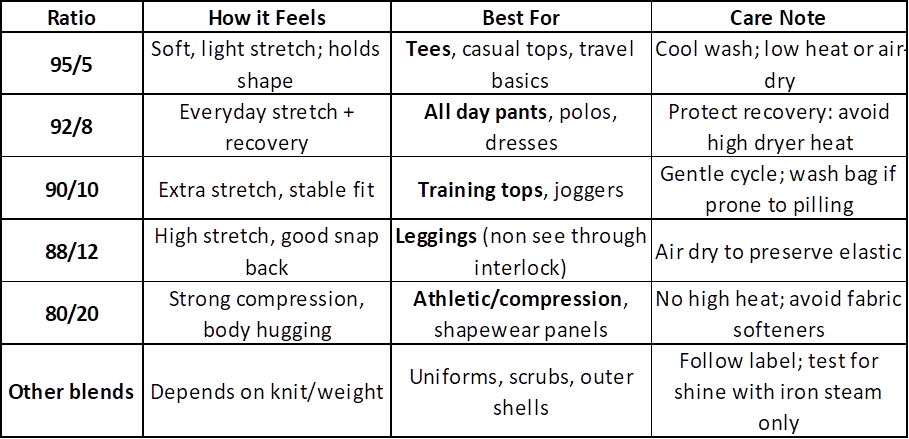
Opacity, Pilling & Hand feel
Quick tests
- Opacity test: Hold fabric to light; stretch to 90°. If you see skin tone clearly, choose interlock or a higher GSM.
- Pilling risk: Rub fabric against itself 10×. If fuzz appears, prefer anti pill finishes or tighter knits.
- Hand feel check: Swipe palm slick = cool touch; brushed = warmer/softer.
Fixes & care
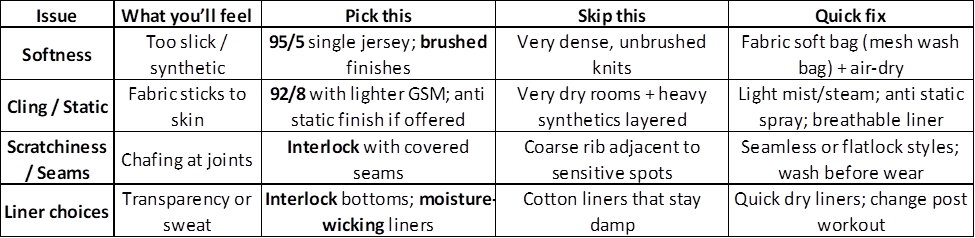
- Reduce sheerness: Pick interlock, slightly higher GSM, or darker colors.
- Limit pilling: Turn inside out, wash in a bag, shorter cycles, avoid rough items.
- Keep stretch alive: Cool wash, low heat / air dry, avoid fabric softeners.
Always follow your garment’s care label for exact temperatures and instructions.
Choosing the Right Fabric for Your Use
Pick your activity, climate, and comfort preference to get a precise recommendation.
Activity Based Recommendations
Yoga / Training
- Blend: 88/12 – 90/10
- Knit: 4-way interlock
- GSM: 200–260
- Why: High stretch + recovery; stays opaque in deep bends.
- Care tip: Cool wash; air-dry to protect elastic.
Running
- Blend: 90/10 – 92/8
- Knit: Light weight single jersey or fine interlock
- GSM: 150 – 190
- Why: Faster dry; less cling; enough give for stride.
- Care tip: Avoid heavy softeners (reduce wicking).
Shape wear
- Blend: 80/20 – 85/15
- Knit: Dense interlock or power mesh constructions
- GSM: 280 – 340
- Why: Firm compression, strong snap back.
- Care tip: No high heat; skip softeners (they weaken recoil).
Office / Uniforms
- Blend: 95/5 (or 100% poly for crispness)
- Knit/Woven: Interlock tees / twill trousers
- GSM: 180 – 240 (knits) / 200 – 260 (wovens)
- Why: Wrinkle resistance, shape retention, easy care.
- Care tip: Warm iron on reverse; avoid shine with press cloth.
Casual Tees
- Blend: 95/5 – 92/8
- Knit: Single jersey
- GSM: 160 – 200
- Why: Soft hand feel, gentle stretch, holds shape.
- Care tip: Inside out wash to limit pilling.
Travel
- Blend: 92/8 – 95/5
- Knit/Woven: Single jersey tops / plain weave pants
- GSM: 160 – 220
- Why: Quick dry, low crease, light pack.
- Care tip: Hang dry overnight; spritz steam to refresh.
Pro Tip: If you want maximum opacity for leggings, prefer interlock over single jersey at the same ratio.
Climate & Comfort
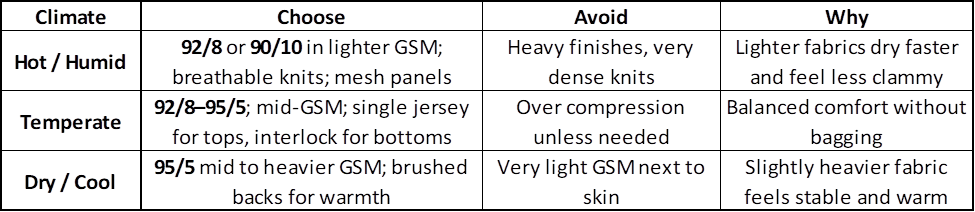
Sensitivity & Skin Feel
Performance: Stretch, Recovery, and Moisture
How your fabric behaves in motion, heat, sweat, and the wash explained simply.
Stretch & Recovery
- Stretch: how far the fabric gives when you move.
- Recovery: how well it snaps back (no baggy knees/elbows).
- The blend and the knit matter: more spandex + 4-way knits → more recovery.
Try On Test (15s)
- Knee bend x10 / sleeve bend x10: Look for no sag after 10 reps.
- Waistband pull: Stretch 2–3 cm and release does it return to the same spot?
- Pinch & release at thigh: Good fabrics spring back; poor recovery leaves a dent.
Fix it / Protect it:
If recovery is so-so, go higher spandex (e.g., 88/12 or 90/10) and choose interlock for bottoms.
Low heat /air dry to preserve elastic.
Breathability & Moisture
- Fiber baseline: Polyester is moderately breathable and quick drying; spandex itself isn’t breathable it adds stretch.
- Finishes help: Wicking finishes pull sweat off skin; mesh zones increase airflow.
- Weight & knit rule: Lighter GSM and open knits breathe better; dense knits retain heat.
Breathability Check (5s)
Hold fabric to your mouth and blow through it some airflow = more breathable.
Wicking Check (10s)
Place a drop of water on the surface. If it spreads quickly, it’s wicking; if it beads, it relies more on evaporation.
Care note:
Skip heavy fabric softeners (they coat fibers and reduce wicking). Wash cool; avoid high heat that can close up the knit and harm stretch.
Durability & Abrasion
- Gym wear: Look for high recovery and tighter knits; they resist seat/knee bagging.
- Bag straps & desks: Repeated rubbing causes pilling and shiny spots on high heat.
- Wash friction: Mixed loads (zippers, rough towels) increase abrasion.
Rub Test (10s)
Rub fabric against itself 20×. If fuzz appears, choose anti pill finishes, tighter interlock, or wash in a laundry bag.
Seam Stress Check (10s)
Gently stretch across seams. Good builds show flat, even stitching with no popping; poor builds distort or crack.Care note:
Wash inside out, use shorter cycles, and laundry bags for leggings and fitted pieces. Dry low or air-dry to avoid shine and fiber fatigue.
Care & Longevity (By Fiber and Blend)
The exact wash, dry and de pilling steps that make polyester and polyester spandex last longer.
Core Care Rules (Checklist)
Wash cool – warm (20 – 40 °C); hottest you should go for blends is 40 °C.
Low–medium spin (≤ 800 rpm) to reduce torque on stretch yarns.
Liquid, mild detergent; no bleach; no heavy softeners (they reduce wicking & recovery).
Inside-out for tees/leggings to limit abrasion and pilling.
Use a laundry bag for leggings/tight knits; wash with similar fabrics.
Shorter cycles (quick/express) when the load isn’t very soiled.
Tumble dry low or air-dry; high heat ages elastic.
Iron low/synthetic (use a press cloth) or steam lightly; avoid direct hot soleplate.
Remove promptly after wash/dry to prevent creases and heat buildup.
Follow the garment label first if it conflicts with any general rule.
Avoiding Shrinkage, Warping & Shine
What actually happens: Polyester rarely “shrinks” like cotton; heat relaxes and deforms yarns, and spandex loses snap when overheated.
Safe ranges: Keep wash ≤ 40 °C; dryer low; iron synthetic/low (~110 °C) with a press cloth.
De-Pilling & Colorfastness Tips
Prevent pilling
- Inside-out, laundry bag, similar fabrics together (no jeans/zips).
- Prefer tighter knits (interlock) for high-friction areas.
- Shorter cycles, lower spin; avoid overloading.
Fix pilling
- Use a fabric shaver or de pilling comb on a flat surface.
- Trim lightly; don’t press hard (avoids thin spots).
Keep colors true
- First 1–2 washes: cold, separate, and inside-out.
- Use color catcher sheets with bright /darks.
- Avoid soak mixing bright with lights; dye moves in still water.
Sustainability & Trade-Offs
Practical steps to lower environmental impact without sacrificing comfort and performance.
Recycled Polyester (rPET) vs Virgin
rPET (recycled polyester) is made from recycled feed stocks (often bottles or textile waste). Virgin polyester is made from new petrochemical feed stocks.
Deeper dive (sourcing, pros/cons, quality retention) is in our recycled polyester guide.
Microfiber Shedding: Practical Mitigation
All synthetics can shed microscopic fibers during laundering. Shedding rates are influenced by fabric construction, wash settings, and filtration, not just “rPET vs virgin.”
For step by-step setup (wash bags/filters, colder cycles, load size), see the guide;
Longevity > Replacement
Environmental impact improves when a garment stays in rotation longer. Longevity is primarily about choosing the right knit/weight for use and following low heat, low friction care.
Full care routines and troubleshooting live in the guide;
Buying Guide (For Consumers or Sourcing Teams)
How to read labels, vet transparency, and pick a size with confidence.
Reading Labels & Spec Sheets
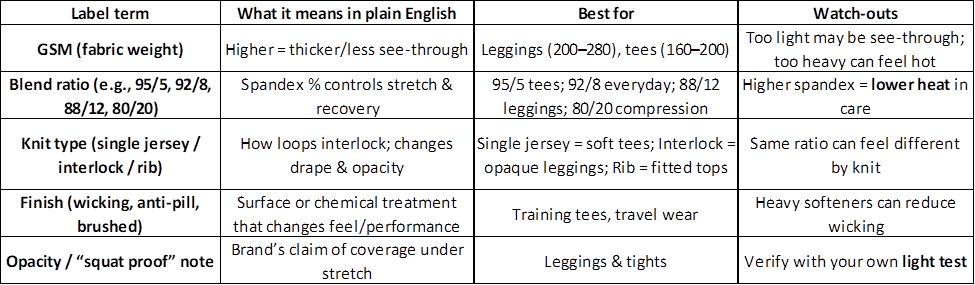
Transparency Signals
What to look for
- Certifications (e.g., OEKO-TEX® Standard 100 for input safety)
- Testing claims (e.g., stretch & recovery, pilling/abrasion tested)
- Mill or fabric source disclosed (even region + mill type)
- Consistent specs across color ways (same GSM/knit/ratio)
- Care clarity (temperatures, heat limits)
- Repair or take back options (longevity focus)
Why it matters
- Reduces guesswork; filters out vague marketing
- Signals quality control & repeatability
- Helps you match replacement orders later
- Extends lifespan and improves total value
Fit & Return Policy
30-second Try on Routine (stretch recovery)
- Bend test (10 reps): knees/elbows shouldn’t bag.
- Waistband pull & release: returns to the same spot = good recovery.
- Light test for bottoms: stretch under bright light; if skin tone shows clearly, choose interlock or higher GSM.
Sizing tip
- Between sizes? Choose recovery over raw stretch for leggings (e.g., 88/12 interlock).
- For tees/ polo, 92/8–95/5 single jersey balances comfort and shape.
Return policy must haves
- At least 14–30 days after delivery
- Easy, prepaid label or local drop-off
- Clear policy on wear testing (e.g., try on allowed indoors)
FAQs
Is elastane the same as spandex?
Yes! Elastane, spandex, and Lycra are all names for the same high-stretch fiber. Brands use “spandex” more commonly in the US, while “elastane” is preferred in Europe.
Is 95% polyester 5% spandex breathable?
Moderately Polyester is moderately breathable, but spandex in the mix reduces air circulation for more stretch and fit. For breathability, pure polyester might perform better. However, 95/5 blends work well for casual wear and active wear (with moisture-wicking finishes). If breathability is a priority, opt for higher polyester content or lighter GSM.
Will polyester–spandex shrink or warp in the dryer?
Not much. Polyester won’t shrink like cotton, but spandex can lose its stretch if exposed to high heat. Polyester-spandex blends are more heat-sensitive and may warp or lose recovery. Low heat or air-drying is always best for preserving fit and comfort.
Which is better for hot weather—polyester or polyester–spandex?
Polyester alone is more breathable and dries quickly, which can be better in hot weather. However, polyester-spandex blends are often more comfortable because they provide stretch and fit without being overly tight, making them great for active wear. Lighter GSM fabrics are recommended for hot climates.
What ratio is best for leggings/tees/shapewear?
Leggings: For opaque, comfortable leggings, go for a 92/8 or 88/12 ratio, especially with interlock knits.
Tees: For soft, breathable tees, choose a 95/5 blend in a single jersey knit for maximum comfort and shape retention.Shapewear: For compression and body shaping, opt for a higher spandex content like 80/20 or 85/15 in dense interlock or power-mesh fabrics.
How to stop pilling on polyester–spandex?
Pilling occurs when fibers rub against each other, typically during wear or washing. To prevent pilling, follow these tips:
- Wash inside-out to protect fibers.
- Use a gentle cycle with liquid detergent (no harsh powder or softeners).
- Dry flat or air-dry to minimize friction.
- If pilling happens, use a fabric shaver to carefully remove fuzz.