

Is Viscose Breathable? A Complete Guide to Understanding Its Comfort and Performance
Yes, viscose is breathable, but how breathable it is depends on several factors such as the weave, blend, and finish of the fabric.
Why Is Viscose Breathable?
- Viscose is made from cellulose: It’s a plant based fabric that naturally allows air to circulate, making it breathable.
- Moisture wicking: Viscose absorbs moisture and allows it to evaporate, keeping you cooler in warm conditions.
- Soft texture: Its smooth, lightweight nature adds to its comfort, especially in hot weather.
Factors That Affect Viscose’s Breathability
- Fabric Type:
- 100% viscose = More breathable
- Viscose blends (with polyester) = Less breathable
- Weave and Thickness:
- Loose weave = More airflow
- Tighter weave = Less airflow
- Finishes and Treatments:
- Water repellent finishes = Less breathable
- Natural, untreated fabrics = More breathable
When Viscose Falls Short
- In humid climates: The moisture doesn’t evaporate as quickly, which may make viscose feel sticky.
- When wet: Viscose can lose its shape and become clingy, reducing comfort.
- Blends with synthetics: The addition of polyester or spandex reduces its breathability.
Viscose vs. Other Fabrics: Breathability Comparison
| Fabric | Breathability | Best for |
| Viscose | Moderate to High | Summer clothes, loungewear, light tops |
| Cotton | High | Casual wear, t-shirts, summer clothes |
| Linen | High | Extremely breathable, hot weather |
| Polyester | Low | Cold weather, moisture retention |
How to Choose the Most Breathable Viscose Clothing
- Look for 100% viscose: Garments without synthetic blends are the best for breathability.
- Choose light, loose fabrics: The lighter and looser the weave, the better the airflow.
- Avoid heavy finishes: Water repellent treatments can reduce the breathability of viscose.
Conclusion
Viscose is generally breathable, especially in moderate climates and warm weather. To get the most out of viscose, choose 100% viscose with a loose weave, avoid synthetic blends, and check for fabric treatments that may hinder airflow.
What is Viscose? Definition and Raw Material
Viscose is a semi synthetic fabric made from plant based materials like wood pulp, known for its soft texture and breathability. It is often used in clothing due to its comfortable feel and affordable cost.
The Manufacturing Process: Semi Synthetic by Design
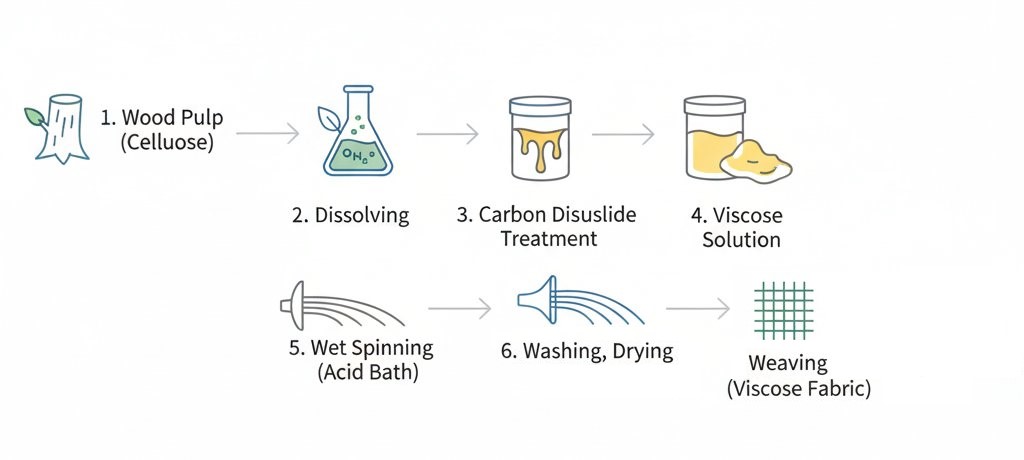
Despite being plant based, it undergoes a chemical process to turn cellulose into fiber, making it part synthetic.
Viscose vs. Rayon vs. Modal: A Comparison
It’s commonly confused with rayon, which is an umbrella term for regenerated cellulose fibers in the US market, making viscose a specific type of rayon.”
Modal is another similar fabric, but it’s made with different processing and is generally more durable.
| Aspect | Viscose | Rayon | Modal |
| Fiber Type | Semi synthetic | Semi synthetic | Semi synthetic |
| Raw Material | Wood pulp (cellulose) | Wood pulp (cellulose) | Beech wood pulp (cellulose) |
| Manufacturing Process | Regenerated cellulose | Regenerated cellulose | High wet modulus (HWM) |
| Softness | Soft | Soft | Softer and more durable |
| Breathability | Moderate | Moderate to High | High |
| Durability | Moderate | Low | High |
| Common Uses | Clothing, textiles | Clothing, home textiles | Activewear, bedding |
| Environmental Impact | Moderate | High (due to chemicals) | Moderate (uses less water) |
Why Viscose is Considered Breathable
Viscose is considered breathable because fabric allows air to circulate through its structure, and its moisture wicking properties help keep you cool and comfortable.
Its fiber structure, with tiny pores, enhances air circulation, making it ideal for warm weather.
| Aspect | Viscose | Why It’s Breathable |
| Material | Plant based | Allows air circulation and moisture absorption |
| Fiber Structure | Porous fibers | Tiny pores promote airflow and ventilation |
| Moisture Wicking | Absorbs and evaporates moisture | Keeps skin dry and comfortable, reduces sweating |
| Comfort | Soft and smooth | Lightweight and breathable feel, especially in heat |
| Best For | Summer wear, loungewear | Ideal for warm and humid climates |
The Science Behind Viscose’s Breathability
Cellulosic Composition: gives it properties similar to natural fibers such as cotton, allowing the material to interact with moisture and air more effectively.
Unlike synthetic fabrics, which block air flow, cellulose fibers allow air to pass through, keeping you cool.
Chemical process: The process used to make viscose doesn’t compact the fibers too tightly, allowing for natural air circulation.
Breathability = Regulated body temperature: The fabric’s open structure helps release heat and moisture.
Fiber Structure: Pores and Air Circulation
Viscose fibers are porous and have tiny holes throughout.
Microscopic pores let air flow freely through the fabric, which is key to breathability.
The more open and loose the fibers, the easier it is for air to move through.
More air flow = less heat trapped = cooler feel
Moisture Wicking Properties and Comfort
Absorbs moisture: Viscose fabric pulls sweat away from your skin.
Evaporates moisture quickly: The fabric allows sweat to evaporate, keeping you dry.
Keeps you comfortable: Because viscose wicks moisture, you don’t feel sticky or clammy.
Perfect for warm weather: The combo of air circulation + moisture wicking = ultimate comfort.
Conclusion
Viscose fabric is breathable because:
- Cellulose fibers naturally allow air to flow through.
- Its porous fiber structure ensures air circulation and helps release heat.
- Moisture wicking properties keep your skin dry and cool.
It’s the go to fabric for warm weather and comfort.
How Climate and Conditions Affect Viscose’s Breathability
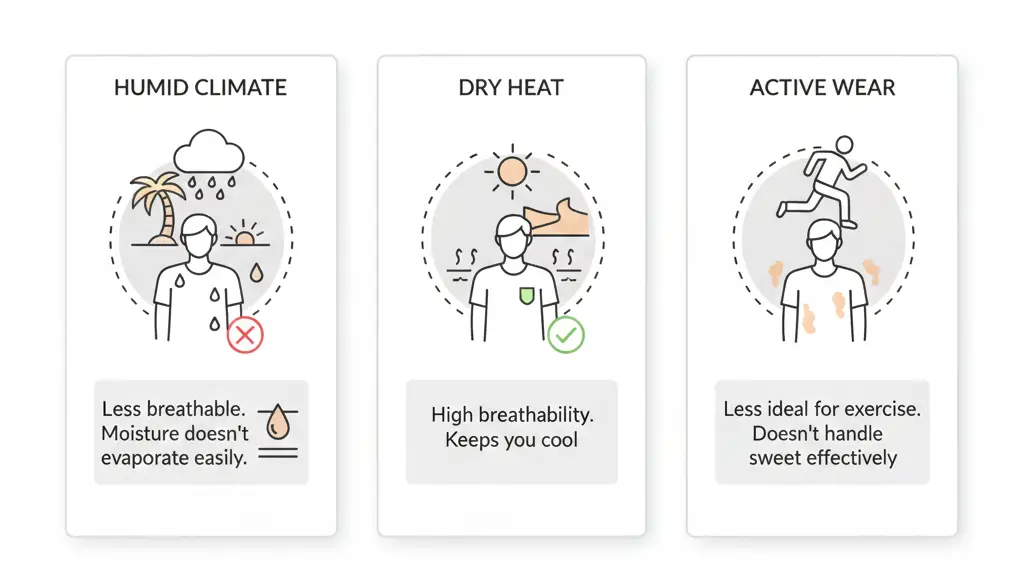
Its performance varies depending on the climate and conditions.
In humid climates, viscose can feel less breathable because moisture can’t evaporate easily.
In dry heat, it performs well, keeping you cool.
For exercise and active wear, viscose may not be the best choice as it doesn’t handle sweat as effectively as some other fabrics.
| Climate/Condition | Viscose Performance | Reason |
| Hot & Humid Climates | 🌧️ Less breathable, can feel sticky | Moisture can’t evaporate easily, fabric gets damp |
| Dry Heat | 🌞 Breathable and comfortable | Moisture evaporates quickly, fabric stays dry |
| Exercise & Active wear | 🏃♀️ Not ideal for intense activities | Doesn’t wick away sweat as effectively as synthetics |
Viscose in Hot and Humid Climates
Moisture buildup: In humid conditions, viscose may trap moisture against the skin because the fabric absorbs sweat but doesn’t release it as quickly as it would in drier environments.
Sticky feeling: As the moisture accumulates, viscose can start to feel sticky or clingy to the skin, making it less comfortable.
Less breathable: Because the fabric retains moisture, it loses its breathability in high humidity, causing discomfort during hot, muggy days.
How Viscose Performs in Dry Heat
Excellent moisture evaporation: In dry climates, viscose excels because it absorbs moisture and allows it to evaporate quickly. The fabric stays dry, providing a cool, comfortable experience.
Keeps you cool: The breathable nature of viscose works well in dry heat, helping regulate body temperature without trapping heat.
Ideal for hot, dry conditions: Viscose is perfect for wearing during the summer or in areas with low humidity, as it helps maintain comfort and airflow
Is Viscose Breathable for Exercise and Activewear?
Not the best choice: While viscose has breathable properties, it’s not ideal for intense physical activity or exercise.
Sweat retention: Viscose absorbs sweat, but it doesn’t wick moisture as efficiently as synthetic fabrics like polyester or lyocell (Tencel).
Clinginess during exercise: Because viscose retains moisture, it can become clingy or heavy during exercise, which can make it uncomfortable.
Better for casual wear: Viscose is best suited for lounge wear or casual outings rather than high impact activities or sweat heavy workouts.
Viscose vs. Other Fabrics: How It Stacks Up
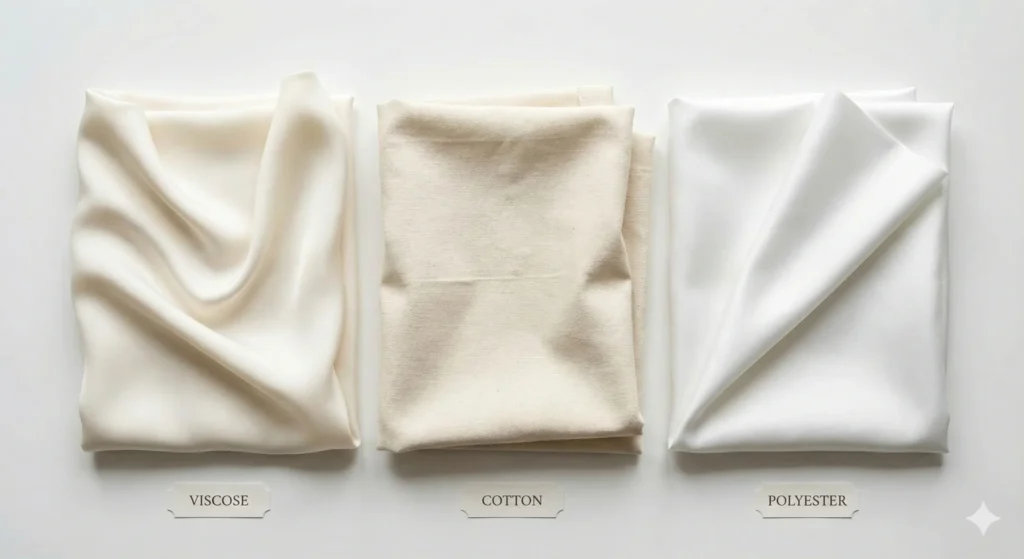
Viscose is a breathable fabric, but its performance differs when compared to other materials like cotton, linen, polyester, and modal.
Cotton and linen are naturally breathable, while polyester is less breathable.
Modal, a close relative of viscose, is even more breathable and durable than regular viscose.
| Fabric | Breathability | Key Differences | Best For |
| Viscose | Moderate to High | Soft, smooth feel, moisture absorbing | Summer clothes, loungewear |
| Cotton | High | 100% natural, excellent moisture wicking, breathable | Casual wear, t-shirts, bed sheets |
| Linen | Very High | Highly breathable, dries quickly, slightly rough texture | Hot climates, beachwear |
| Polyester | Low | Synthetic, traps heat and moisture, less breathable | Winter wear, active wear |
| Modal | High to Very High | Softer and more durable than viscose, wicks moisture better | Active wear, bedding |
Viscose vs. Cotton: Which is More Breathable?
Cotton is more breathable than viscose. It’s a natural fiber with a loose weave, which allows for more air circulation.
Viscose is breathable, but cotton tends to wick moisture more efficiently, keeping you cooler in humid or hot conditions.
When to choose cotton: For hot and humid weather, cotton is the better choice for keeping cool and dry.
Viscose advantage: Viscose has a softer texture and a smoother feel than cotton, making it more comfortable for lounging and lighter summer garments.
Viscose vs. Linen: Comparing Moisture Absorption
Linen is one of the most breathable fabrics, even more so than viscose. It has a natural ability to absorb and release moisture, making it ideal for hot climates.
Viscose also absorbs moisture, but linen’s fibers are more open and porous, meaning it can evaporate moisture more quickly than viscose.
When to choose linen: For extremely hot or tropical climates, linen is better at keeping you cool.
Viscose advantage: Linen can feel rougher against the skin, while viscose is typically softer and has a smoother finish.
Viscose vs. Polyester: Why It’s a Better Choice for Breathability
Polyester, a synthetic fabric, is known for trapping heat and moisture. It is much less breathable than viscose, making it uncomfortable in warm weather.
Viscose has natural fibers that allow air to circulate, helping to keep your body cool. It also absorbs moisture, unlike polyester, which traps it.
When to choose viscose: For breathable summer clothing, viscose is much more suitable than polyester, especially if you’re looking for comfort in warmer temperatures.
Polyester advantage: Polyester is more durable and resistant to wrinkles, making it better suited for winter clothing and active wear.
Viscose vs. Modal: Similarities and Differences
Modal is a more durable and breathable version of viscose. While both are made from regenerated cellulose, modal undergoes a slightly different production process that makes it softer and stronger than viscose.
Modal also tends to be more moisture wicking than regular viscose, making it a better choice for active wear.
When to choose modal: If you want a fabric that is both breathable and durable, modal is the better option, especially for items like active wear or bedding.
Viscose advantage: Viscose may be more affordable than modal and offers a similar feel for those seeking softness and comfort in casual wear.
When Viscose Falls Short: Limitations and Drawbacks
Viscose has several drawbacks despite its breathability and softness.
In high humidity, it can become damp and uncomfortable. It is prone to losing shape and wrinkling easily, and its durability can be compromised after washing.
Additionally, when blended with synthetics, it can lose breathability and become less comfortable.
| Drawback | Viscose Performance | Reason |
| High Humidity | Less breathable, may feel damp | Moisture retention prevents proper airflow |
| Losing Shape & Wrinkling | Can lose shape, wrinkles easily | Weakens when wet, becomes clingy and creased |
| Durability After Washing | Prone to shrinkage, wears down faster | Fabric can lose integrity and smoothness |
| Viscose Blends & Breathability | Reduced breathability when mixed with synthetics | Synthetic fibers restrict airflow |
The Drawbacks of Viscose in High Humidity
Moisture retention: In humid environments, viscose absorbs moisture from sweat or the air but doesn’t release it as efficiently as natural fibers like cotton or linen.
Feels damp and sticky: This trapped moisture makes viscose feel heavy and uncomfortable in high humidity, as it holds onto moisture rather than allowing it to evaporate.
Lowers breathability: In humid conditions, viscose’s ability to breathe is hindered, leading to a reduced cooling effect.
Why Viscose Can Lose Shape and Wrinkle
Water absorption: Viscose fibers are prone to losing shape when exposed to water. After washing or getting wet, the fabric can become clingy and misshapen.
Wrinkle-prone: Viscose is naturally susceptible to wrinkles, especially when it’s wet or overly stretched. This makes it harder to maintain the smooth, polished look it originally had.
Careful handling required: You need to be gentle with viscose hand wash and air dry to preserve its shape and minimize wrinkling
Durability Concerns: What Happens After Washing?
Prone to shrinkage: Viscose fibers can shrink when exposed to water, especially if the fabric is exposed to high heat or rough washing.
Weakened structure: Over time, repeated washing can weaken the fibers, causing them to break down and lose their smooth, soft feel.
Proper care: To maintain its durability, viscose should be washed gently and avoided in high heat drying.
How Viscose Blends Impact Breathability
Viscose-synthetic blends (e.g., polyester-viscose) reduce breathability because the synthetic fibers restrict airflow.
Breathability loss: Synthetic materials like polyester and spandex don’t allow the same level of air circulation as 100% viscose or natural fibers like cotton.
Comfort compromise: Blending viscose with synthetic fibers can make the fabric less comfortable for warm or humid climates, as it no longer provides the same cooling effect.
How to Choose the Most Breathable Viscose Clothing
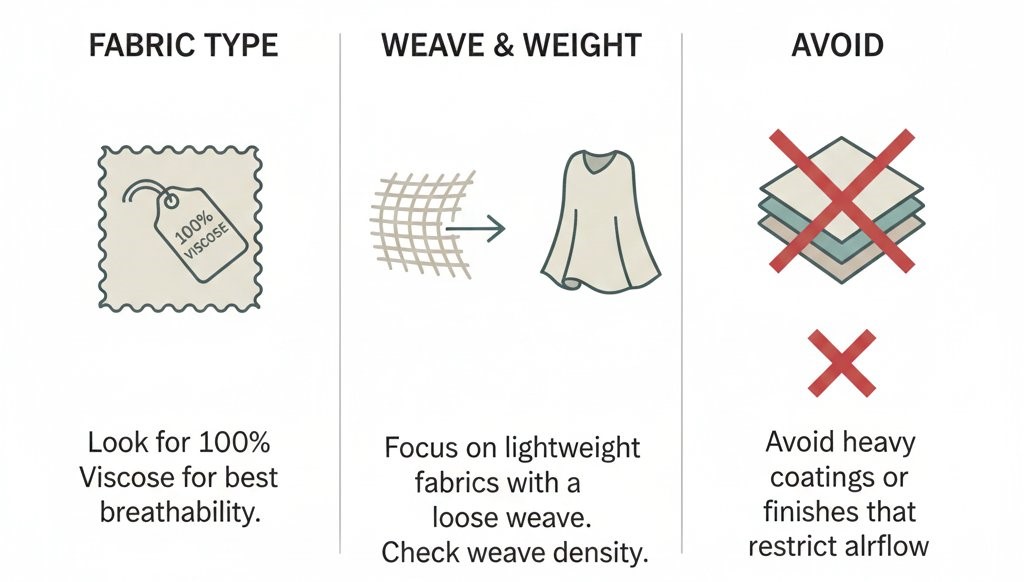
When shopping for breathable viscose, focus on lightweight fabrics with a loose weave, and avoid heavy coatings or finishes that restrict airflow.
Look for 100% viscose garments for the best breathability, and check the weave density for optimal air circulation.
| Key Factor | Impact on Breathability | What to Look for |
| Fabric Weight | Lighter fabrics are more breathable | Choose lightweight viscose fabrics |
| Weave Type | Loose weave = more airflow | Look for loose, open weaves (e.g., plain weave) |
| Weave Density | Low density weave allows air to circulate | Prefer lower density fabrics for better ventilation |
| Fabric Finish | Heavy finishes block air flow | Avoid heavy coatings, go for natural finishes |
| Fabric Blend | Blends with synthetics reduce breathability | Choose 100% viscose or viscose with natural fibers |
What to Look for When Shopping for Breathable Viscose
Lightweight fabric: Choose lighter viscose fabrics, as they tend to be more breathable. Heavier viscose fabrics, though durable, can trap heat and moisture.
Loose fit: Garments that are looser fit allow better airflow compared to tight fitting clothes made from viscose. The fabric itself should also have a loose weave to enable air circulation.
Weave, Density, and Finish: Key Factors Affecting Breathability
Weave type: The type of weave influences how air moves through the fabric. Plain weaves or loose woven fabrics offer more ventilation compared to tightly woven fabrics, which can be more insulating.Weave density: A low density weave means the fabric will have larger gaps between fibers, allowing more air to pass through.
High density fabrics with tighter weaves reduce airflow, making them less breathable.
Finish: The finish of the fabric plays a major role. Heavy treatments, like water-repellent finishes, or coatings can reduce breathability by blocking airflow. Opt for natural finishes or untreated viscose for maximum breathability.
How to Identify Quality Viscose Garments
Feel the fabric: Quality viscose should feel soft and smooth without any rough patches. It should also be lightweight and have a slight sheen.
Check the label: Always look for 100% viscose for the most breathable option. If the garment is blended, check the ratio of viscose to synthetic fibers more viscose means better breathability.
Check for drape: High quality viscose will drape well, meaning it will hang loosely and flow naturally, which also aids in breathability.
Avoiding Heavy Coatings and Finishes That Impair Breathability
Be cautious of coatings: Some viscose fabrics are treated with finishes that make them more resistant to stains or wrinkles, but these can impair breathability by sealing the fabric. Look for garments without heavy coatings.
Natural finishes: Prefer viscose fabrics that are dyed with natural dyes or unfinished, as these allow for better air circulation and moisture absorption. Avoid fabrics that have been treated with chemical finishes that prevent the fabric from breathing.
Caring for Viscose Clothing: How to Preserve Comfort and Durability
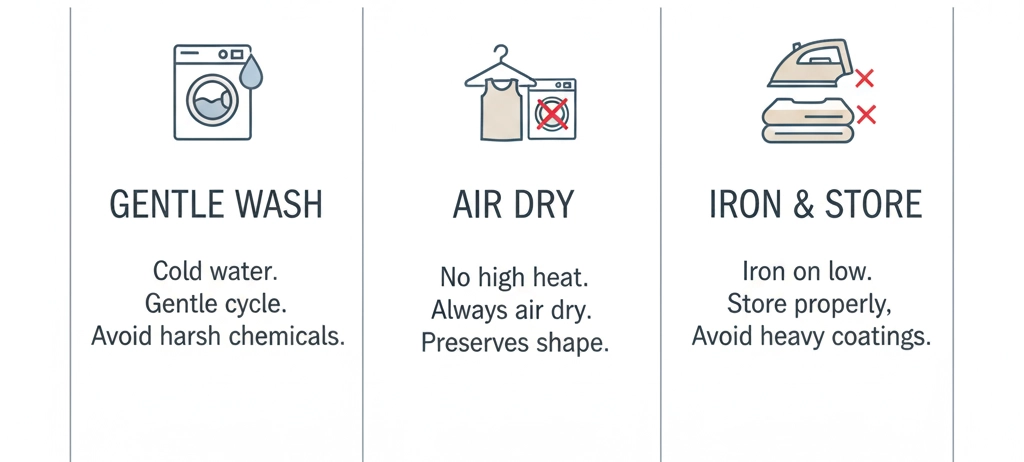
Viscose requires special care to maintain its comfort and durability.
Wash it gently using cold water, avoid high heat drying, and always air dry.
For wrinkling, iron on a low setting and store properly to preserve its shape.
To keep breathability intact, avoid harsh chemicals and heavy coatings.
| Care Factor | Proper Technique | Reason |
| Washing | Wash with cold water, use a gentle cycle | Prevent shrinkage and fabric breakdown |
| Drying | Air dry or tumble dry on low heat | High heat damages fibers, leading to shape loss |
| Ironing | Iron on low heat while slightly damp | Avoid scorching and preserve the fabric’s smoothness |
| Storage | Store in a cool, dry place, avoid hanging | Prevent stretching and maintain garment shape |
| Maintaining Breathability | Avoid harsh chemicals and heavy finishes | Ensure moisture absorption and air circulation |
Proper Washing and Drying Techniques for Viscose
Wash gently: Viscose is a delicate fabric, so always use cold water and a gentle cycle when machine washing. This will help preserve the fabric’s softness and prevent shrinkage.
Hand wash for better care: If you can, hand wash your viscose garments with mild detergent to maintain the fibers’ integrity.
Avoid high heat drying: Never dry viscose in high heat or use a regular tumble dryer. The fabric can shrink or lose its shape. Instead, air dry your garments by laying them flat on a clean, dry surface or hanging them on a gentle drying rack.
Tumble dry on low: If you must use a dryer, set it to low heat to prevent heat damage.
Ironing and Storing Viscose Garments to Prevent Wrinkling
Iron on low heat: Viscose tends to wrinkle easily, so it’s important to iron it while the fabric is still slightly damp. Use the lowest heat setting to avoid damaging the fibers.
Avoid high heat: High temperatures can damage the fibers and lead to shiny patches on the fabric. Always test the iron on a small, inconspicuous area first.
Store carefully: Viscose garments should be stored in a cool, dry place. Avoid hanging them for long periods, as this can lead to stretching. Fold them gently or store them in breathable garment bags to maintain shape.
How to Maintain the Breathability of Viscose Over Time
Avoid harsh chemicals: Over time, the fabric may lose its breathability if exposed to harsh chemicals like bleach or strong fabric softeners. Always use gentle detergents that are safe for delicate fabrics.
Keep it clean and dry: Storing viscose garments in a damp or humid environment can affect its moisture wicking properties. Make sure your clothing is dry before storing it.
Avoid heavy finishes: Viscose fabrics treated with heavy water-repellent finishes or stiffening agents can lose their natural breathability. Choose garments with minimal treatments to ensure the fabric stays breathable over time.
Alternatives to Viscose: When Breathability Matters Most
When breathability is a priority, linen, cotton, and modal are often better choices than viscose for hot and humid weather.
Lyocell (Tencel) offers similar breathability to viscose but with improved moisture-wicking. Synthetic fabrics, like polyester, are less breathable and trap heat, making them uncomfortable for warm climates.
Best Fabrics for Hot and Humid Weather: Linen, Cotton, and Modal
Linen: Offers the highest breathability due to its loose weave and quick drying properties, making it ideal for extremely hot climates.
Cotton: Known for its comfort and moisture wicking ability, cotton is perfect for casual summer wear and humid conditions.
Modal: Similar to viscose but more breathable, modal is also softer and more durable, making it great for active wear or bedding.
When to Choose Viscose vs. Lyocell (Tencel) for Breathability
Lyocell (Tencel) is a more eco-friendly version of viscose and has superior moisture wicking and breathability, making it a better choice for active wear and hot climates.
Viscose is still a good option for casual wear, but Lyocell provides improved performance in terms of moisture management and comfort.
Why Synthetic Fabrics Don’t Compare for Comfort and Airflow
Synthetic fabrics like polyester and nylon trap heat and moisture, making them uncomfortable in hot or humid conditions.
Unlike natural and semi-synthetic fabrics, synthetics don’t allow for proper airflow, making them less breathable and suitable only for cold weather or durable wear.
Conclusion
For maximum breathability:
- Choose linen or cotton for hot and humid weather.
- Lyocell (Tencel) outperforms viscose in moisture wicking and comfort.
- Avoid synthetics for breathable clothing, as they trap heat and moisture.
FAQ About Viscose
is viscose bad for skin?
Viscose is not inherently bad for skin.
Why:
Viscose is derived from natural cellulose, making it a semi synthetic fiber that is typically non irritating for the skin.
Its smooth, breathable structure is designed to minimize friction, making it generally safe for most skin types.
Exception:
In rare cases, individuals with extremely sensitive skin may experience irritation due to residual chemicals from the manufacturing process.
Proper washing before first use mitigates this risk.
is viscose hot?
Viscose is not inherently hot, but its breathability can be affected by the fabric’s weight and the environment.
Why:
Viscose is a breathable fabric, allowing air to circulate and moisture to evaporate, which keeps the skin cooler compared to synthetic fibers like polyester. Its comfort largely depends on the weave and thickness.
Exception:
In humid conditions or when made from heavier viscose fabrics, it may feel less breathable and trap moisture, leading to discomfort.
Choosing lighter viscose fabrics helps maintain airflow and comfort.
is viscose like polyester?
No, viscose is not like polyester.
Why:
Viscose is a semi synthetic fabric made from natural cellulose (wood pulp), whereas polyester is a fully synthetic fabric made from petroleum based products.
Viscose is breathable, soft, and more moisture absorbent, while polyester is less breathable, tends to trap heat, and does not absorb moisture as effectively.
Exception:
Both fabrics can be used in blends, which may combine some of the benefits of viscose’s breathability with polyester’s durability and resistance to wrinkles, but the core properties still differ.
is viscose like cotton?
Viscose is similar to cotton, but not the same.
Why:
Both viscose and cotton are plant based fibers (cotton is a natural fiber from plants, while viscose is a semi synthetic fiber made from chemically processed wood pulp)
Both are soft, breathable, and moisture absorbing, making them comfortable for warm weather.
However, cotton is more durable and more moisture wicking, while viscose is often softer and has a smoother texture.
Exception:
Viscose can shrink more easily than cotton and may lose shape when exposed to water or high heat, making it more delicate in comparison.
Cotton is more robust and easy to care for.
is viscose silk?
No, viscose is not silk.
Why:
Silk is a natural fiber produced by silkworms, while viscose is a semi-synthetic fabric made from wood pulp or other plant fibers.
Silk is known for its luxurious feel, shine, and strength, whereas viscose is soft and smooth but lacks the same natural luster and durability as silk.
Exception:
Viscose can be treated or finished to mimic the shine and soft texture of silk, but it does not have the same fiber structure or inherent qualities as natural silk.
is viscose warm
Viscose is not inherently warm.
Why:
Viscose is a breathable fabric, which allows for air circulation and moisture evaporation, keeping the body cool.
It’s generally suitable for moderate climates but doesn’t offer the insulation that thicker fabrics like wool or synthetic fibers provide.
Exception:
In heavier viscose fabrics or blends with insulating materials, viscose may feel warmer. However, in humid conditions, it may feel sticky due to moisture retention.
For warmth, other fabrics like wool or thermal blends are better options.
is viscose waterproof
No, viscose is not waterproof.
Why:
Viscose is a porous fabric made from natural cellulose, which means it absorbs moisture rather than repelling it. It can become damp and lose its shape when exposed to water.
Exception:
Viscose fabrics that are treated with water-repellent coatings can offer some water resistance but they are still not waterproof like synthetic fibers designed specifically for water protection (e.g., Gore-Tex).
does viscose pill
Yes, viscose can pill, but it’s less common than with some other fabrics.
Why:
Pilling occurs when fibers break and tangle, forming small balls of fabric.
Viscose fibers, being relatively delicate compared to synthetics, can pill under friction or after repeated wear.
However, it’s less likely to pill as much as materials like low quality wool, but often more likely to pill than pure polyester.
Exception:
Viscose blended with synthetic fibers like polyester may be more prone to pilling.
To minimize pilling, avoid excessive rubbing and wash viscose garments inside out using a gentle cycle.
does viscose have microplastics
Viscose is not the same as plastic based fabrics, it’s made from plant cellulose but like any textile, it can shed tiny fibers. Those fibers are cellulosic, not plastic, so they do not count as “microplastics.”
Why:
- Viscose originates from wood‑pulp cellulose, not synthetic polymers.
- Environmental science research distinguishes between fiber‑fragment pollution from synthetic plastics and fiber shedding from regenerated cellulose.
- According to fiber tracking studies, fabrics like polyester/nylon release “microplastics”; whereas regenerated cellulose fabrics (viscose, rayon, lyocell) release cellulosic microfibers, which degrade more easily in the environment.
Exception:
If viscose is blended with or treated using synthetic fibers or coatings, especially for stretch, durability, or water-resistance, those synthetic components can shed microplastic fibers similar to polyester or nylon blends.
Final Verdict
Viscose: Cellulose refined, comfort defined