
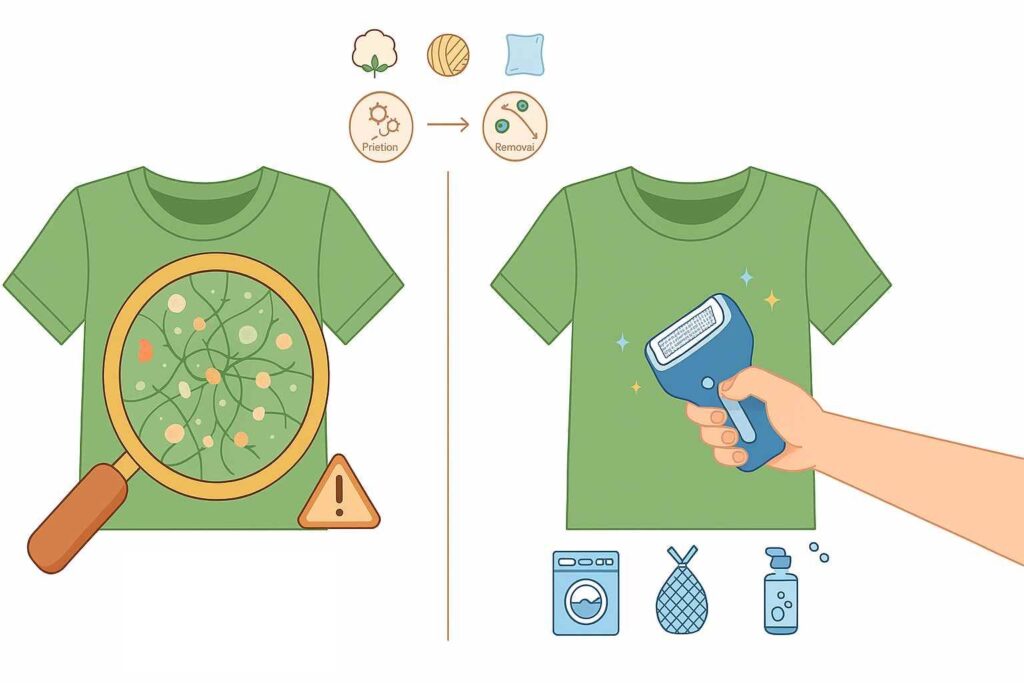
Yes, polyester does pill, but not in the way you might think. The story is not just about cheap fabric. Factors like fiber quality, weave type and how you care for the garment all play a role. This guide reveals what causes pilling. The science behind it. How polyester compares to other materials and how to prevent it so your clothes stay looking new.
Let’s start with the basics before polyester takes the blame.
What is pilling?
Pilling is the natural aging process of a fabric, in which fibers on your clothes get bunched into little balls. It usually shows up in high friction areas like under the arms, on collars or where a bag rubs against your clothes.Because synthetic fibers are very strong, they hold onto these tiny balls tightly.
Since pills do not look or behave the same, the next step is to understand the different types and how they form.
Types of pilling
These little fuzz balls can appear differently so they are grouped into types, based on the fibers, how the pills form and how visible they become.
| Based on fiber material | Based on formation | Based on appearance and severity |
| Synthetic pilling (like Polyester and acrylic) difficult to remove | Fuzz formation loose fibers migrates outward from fabric surface | No pilling Surface remains smooth |
| Natural fiber pilling (like wool and cotton) often break and shed more easily | Entanglement The loose fibers begin twisted together | Slight pilling There is some light fuzz on the surface |
| Blend pilling (like strong Polyester & weak cotton) creates resilient pills that are more conspicuous | Growth The entanglement grows into small, spherical balls of fiber | Moderate pilling The surface is partially covered with pills |
| Wear-off The pills may eventually break off | Severe pilling significant fabric surface is heavily covered with pills | |
| Very severe pilling The entire surface is covered in numerous pills |
Among all fabrics, polyester has a special talent for attracting pills. Let’s figure out why.
Why polyester pill so easily
Polyester pills so easily because of its high tensile strength and smooth surface which cause broken fibers to cling tightly to the fabric instead of shedding naturally. This creates durable, highly visible pills especially in cheaper fabrics or when blended with weaker fibers like cotton.
But pilling is not random it actually follows a step by step cycle.
The Pilling Process
Pilling follows a natural four stage cycle, from initial fuzz to final wear off. Knowing these stages helps you manage the problem, as pills can be removed at different points in the process.
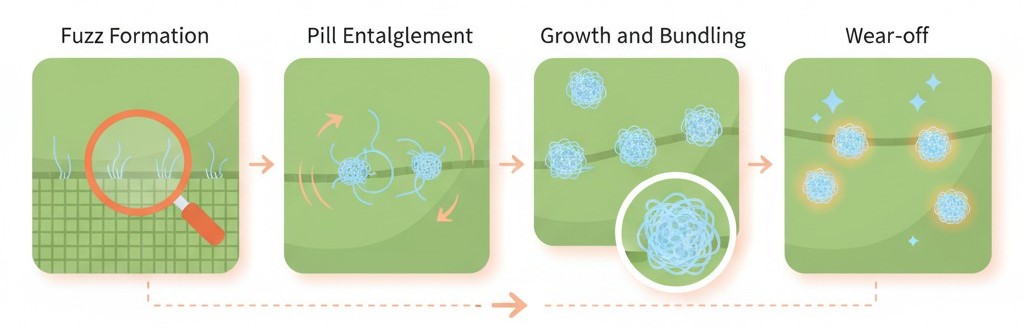
Fuzz formation
A fabric surface turns fuzzy as fibers loosen and migrate outward. A fabric will have less fuzz when its yarn is made from long fibers that are tightly twisted because this construction securely locks fibers in place.
Pill entanglement
As the fuzz grows, the loose fibers on the surface begin to tangle and knot with each other. This is especially pronounced in areas that experience the most rubbing.
Growth and Bundling
As loose fibers on the surface tangle and compact, they form the tiny balls that make your garment look worn.
Wear-off
The pill cycle ends when the little balls break off, but how easily they shed depends on the fiber Natural fibers loosen and let pills drop off, while durable synthetic fibers grip them, causing the fuzz to build up over time.
Understanding the cycle is one thing but it all begins with what makes those pills form in the first place.
What causes pilling on clothes?
The primary factor causing pilling is friction which occurs in two key ways.
- The tumbling and rubbing of clothes in the washer
- Everyday friction such as fabric rubbing against your armpits, thighs or furniture.
This process is not immediate; it’s a gradual development that occurs over a period of time or after a series of rubbing and washing cycles.
While friction plays the biggest role, several other factors also contribute to pilling. Some important from these are:
Fiber strength
Polyester has strong fibers that are less likely to break. Weaker fibers, like cotton, shed loose bits over time. Since polyester fibers do not break away, they form tangled balls or “pills,” that stay attached to the fabric. This makes the pills more noticeable and difficult to remove.
Fiber blends
In polyester blends, weak natural fibers like cotton break and form pills. The strong polyester fibers then hold these pills on the fabric, making them noticeable and hard to remove.
Fabric construction
Looser, knitted fabrics pill more easily because their fibers snag and tangle. Tightly woven fabrics resist pilling since their fibers are held securely in place.
What fabric pills the most?
| Fabric | Appearance | Why it pills | common items |
| Acrylic | Soft texture | Short, straight fibers easily tangle | Sweaters, blankets |
| Polyester Blends | Strong synthetic fibers trap weak, shedding fibers | T-shirts, athletic wear | |
| Fleece | Brushed, fuzzy surface | Loose fibers readily form pills | Sweaters, blankets |
| Low Quality Wool | Shorter fibers, loosely spun | Short fibers break easily and tangle | Cheaper wool sweaters |
| Loosely Knitted Fabrics | Open, flexible structure | Fibers move freely and snag on each other | Sweaters, knitwear |
But don’t worry there are fabrics that fight back.
What type of fabric doesn’t pill?
Silk, linen, and long staple cotton hold their ground, keeping pills at bay.
| Fabric | Why it resists pilling | Product examples |
| Silk | The long, continuous, and naturally smooth fibers do not easily break or tangle into pills. | Silk blouses, scarves, and bedding. |
| Linen | A strong, durable fiber with naturally long strands that stay locked in place. | Linen shirts, trousers, and summer dresses. |
| Merino Wool | Uses longer, finer fibers that resist breakage better than conventional wool. | Unbound Merino T-Shirts, wool& Merino Wool Hoodie Tunic. |
| Long Staple Cotton | Made with longer fibers that create a smoother, more durable surface, like Pima or Egyptian cotton. | Pima Cotton Tees |
Best polyester fiber blends that resist pilling
Mix polyester with the right partner, such as merino wool or quality cotton it resists pilling far more.
| Fabric | Pilling Resistance | Why it Works |
| Cotton and Polyester | Varies by quality | 1) When both the cotton and polyester fibers are of high quality, they tend to resist pilling more effectively. 2) Shorter or lower quality fibers are more likely to break and form pills. |
| Merino wool and Nylon | High | The strong nylon fibers reinforce the merino wool, especially in high friction areas, reducing breakage and pilling. |
| Cotton and Spandex | Medium to High | A small percentage of spandex adds elasticity and resilience, helping the fabric return to its shape and reducing friction. |
Does pilling indicate a low quality fabric?
Even expensive clothes can pill, so it doesn’t always mean a fabric is low quality.
It’s a normal process based on the fabric type and how you care for it.
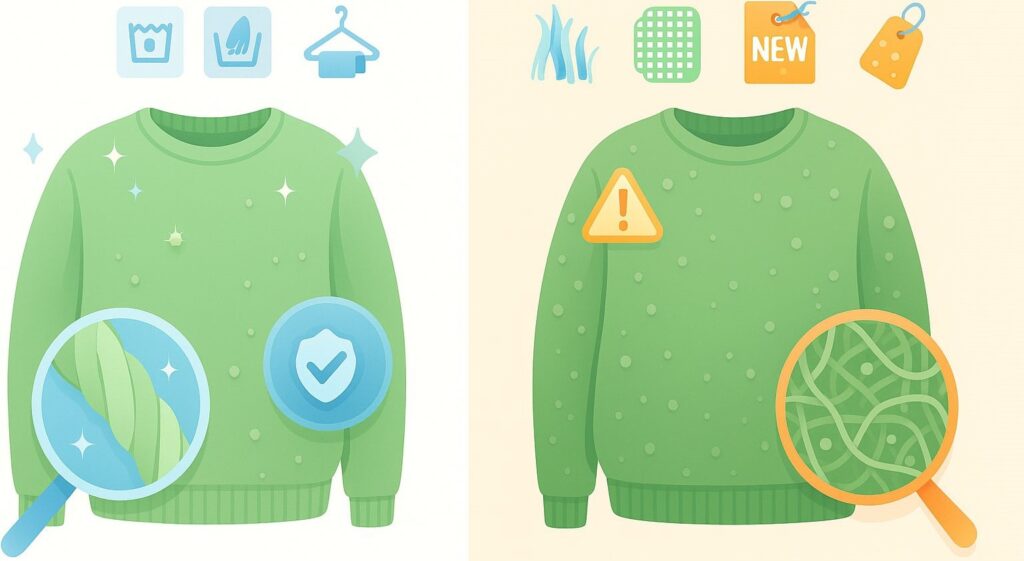
When pilling may signal low quality
- Cheap fabrics with short, loose fibers
- Inexpensive blends
- Loose weaves
- Pilling on a new garment
When pilling does not indicate low quality
- Soft, expensive fabrics like cashmere can pill due to their delicate fibers.
- Some new, high quality clothes might pill at first as they shed loose fibers.
- Normal rubbing on high quality materials can cause pilling in high friction areas.
- Loose knits, even in high end sweaters, pill more easily because fibers move freely.
Comparing Polyester with Other Natural Fabrics
Polyester pills are more noticeable and last longer than those on natural fabrics like cotton or wool.
Polyester versus natural fibers:
| Feature | Polyester | Natural Fibers (e.g., cotton, wool) |
| Fiber Strength | Strong and resilient | Weaker and more brittle |
| Pill Durability | Pills are tough and cling tightly to the fabric surface. | Pills are softer and fall off more readily |
| Pilling in Blends | Pills form easily on blended fabrics because strong polyester fibers trap weaker natural fibers | Pilling is influenced by fiber length and weave |
| Fabric Structure | Pilling is more likely in knitted or loosely woven fabrics | Pilling is more likely in knitted or loosely woven fabrics |
| Pill Visibility | Pills are very easy to see and make clothes look old | Pilling is generally less noticeable as the pills tend to shed more readily. |
The good news is you can prevent most of it with the right laundry moves.
Preventive measures to avoid pilling
From sorting laundry to gentle washing, these tricks save your clothes before pills appear.
Pre Wash Preparation
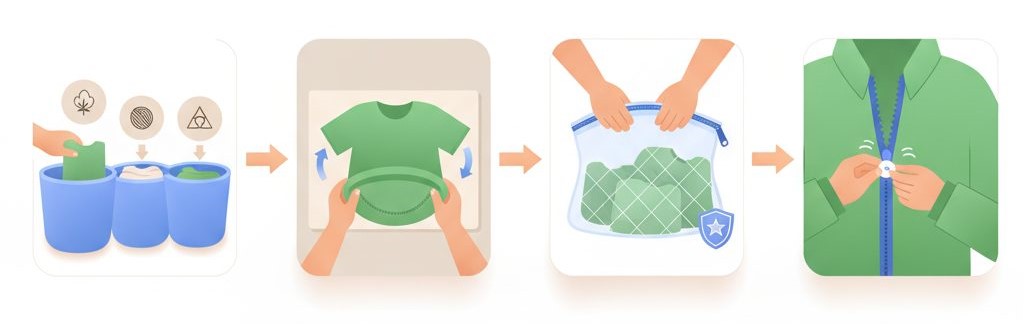
- Sort by fabric type
- Turn garments inside out
- Use a mesh laundry bag
- Zip up zippers and fasten buttons
During the wash cycle
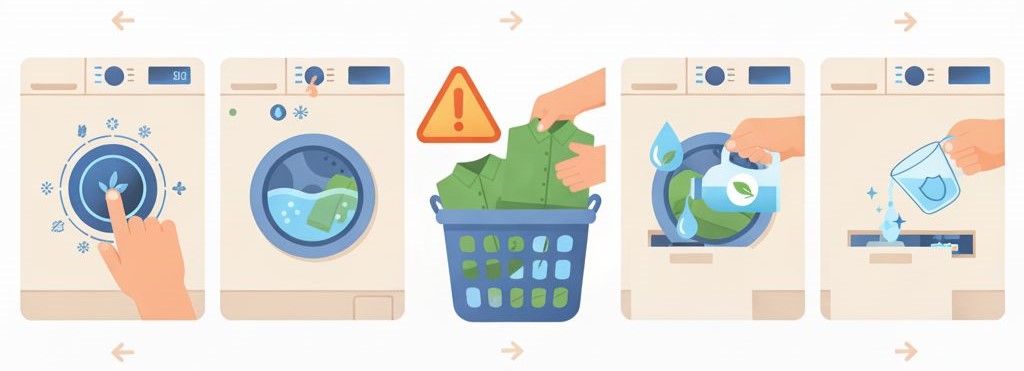
Use a gentle or delicate cycle
Use cold water
Do not overload the machine
Use a mild liquid detergent
Use fabric softener carefully
After the wash
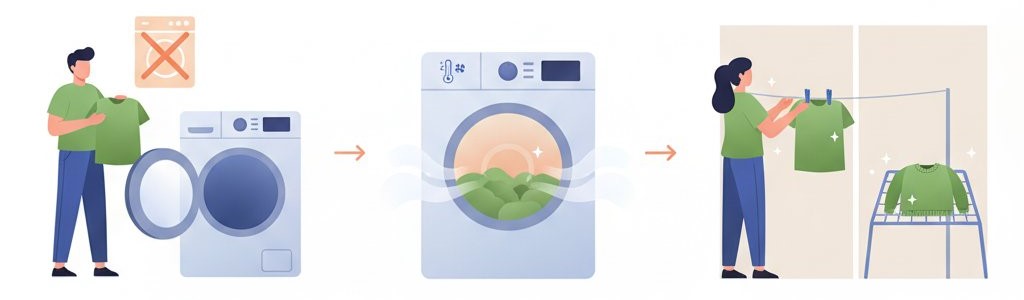
- Avoid the clothes dryer
- Dry on low heat
- Line dry or lay flat
But what if it’s already too late and your clothes are covered in pills?
How to remove pilling from clothes
From fabric shavers to razors, here’s how to fight back and rescue your wardrobe.
Quick methods for removing pills
Fabric shaver
An electric fabric shaver is a fast and highly effective tool for safely removing pills and fuzz.
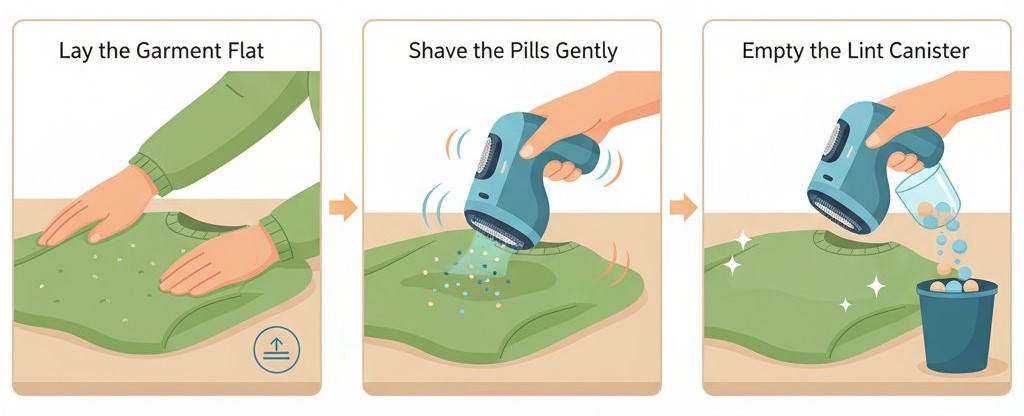
- Lay the garment flat on an even firm surface.
- Turn the device on and gently glide it over the surface of the pilled fabric.
- Empty the lint canister as needed.
Sweater comb or stone
These tools scrape pills off fabric and work especially well on sweaters and knits.

- Lay the garment flat and taut on a hard surface.
- Gently rub the comb or stone over the pilled area in one direction.
- Use a lint roller or your hand to remove the loose fuzz
Disposable razor
A clean, sharp disposable razor can be used to shave off pills but this method carries a risk of cutting or damaging the fabric.
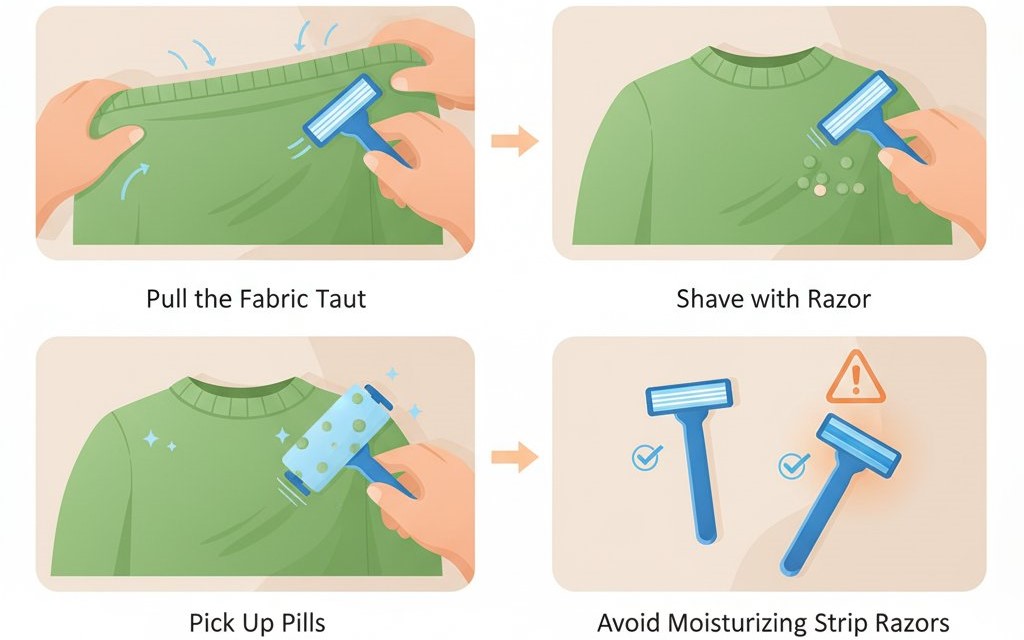
- Pull the fabric taut over a flat or curved surface.
- Gently shave upward with short, light strokes.
- Use a lint roller or tape to pick up the shaved pills.
- Avoid razors with moisturizing strips as they can cause more pilling.
Finally, let’s clear up a few common questions everyone asks about polyester.
FAQ
Does polyester pill more than cotton?
When it comes to pilling, longer polyester fibers are a life saver. It’s the shorter polyester and cotton blends that cause the real trouble.
Does 100% polyester pill
Yes, but high quality fabric made from long filaments, pills less than low quality polyester blends with other fibers. You can minimize pilling by choosing high quality, tightly woven fabric and washing it gently.
Can you wash polyester?
Most polyester items are washable while structured garments like suits and delicate blouses, the care label may advise dry cleaning.
Will polyester shrink in the dryer?
Polyester will shrink in the dryer if exposed to high heat, especially if it’s a lower quality fabric. To prevent shrinkage, always use a low heat or air dry setting.
Can you iron polyester?
Yes, you can iron polyester but keep the heat low. Too much heat will scorch or melt the fabric. A clothes steamer is a safer and often easier alternative for removing wrinkles.