
Is Polyester Bedding Bad for You? A 2025 Health Guide Based on Dermatology Research

Polyester bedding is not automatically bad for your health, but it is not equally suitable for every sleeper. Most concerns come down to comfort, skin response, and heat management rather than direct harm.
People question polyester because it is synthetic, can feel warm, and is often treated with finishes that stay in contact with the body for hours.
This guide clarifies where those concerns are valid, where they are overstated, and who actually needs to pay attention.
Quick Answer — Is Polyester Bedding Actually Bad for Health?
Polyester bedding is generally safe from a health standpoint, but it can create comfort and skin-related issues for certain people. The material itself is not toxic, yet its physical properties can affect sleep quality.
- Health risk: Polyester is not considered hazardous under normal sleeping conditions
- Comfort issue: Traps heat and moisture more than most natural fibers
- Skin impact: May aggravate acne, eczema, or sensitive skin
- Who should be cautious: Hot sleepers, heavy sweaters, infants, and people with reactive skin
What Polyester Bedding Is Made Of — Why This Matters for Your Body
Polyester bedding is made from synthetic polymer fibers designed to be durable and smooth, but these traits change how the body releases heat and moisture during sleep. The material does not absorb moisture in the same way natural fibers do.
Because sweat stays closer to the skin, heat is retained and evaporation is slower. With hours of direct skin contact, this can affect temperature regulation and skin comfort, especially in warm environments or for sensitive sleepers.
Synthetic Fibers Explained in Simple Human Terms
Synthetic fibers like polyester are man-made materials that do not behave like plant or animal fabrics. Instead of soaking up moisture, they act more like a smooth plastic surface, letting sweat sit on the skin rather than moving it away.
How Polyester Interacts With Heat, Sweat, and Skin Overnight
During a full night of sleep, polyester allows less airflow and absorbs very little moisture, so body heat and sweat tend to stay closer to the skin. This does not harm most people, but it can reduce cooling efficiency during deeper sleep stages.
- Sweat evaporates more slowly, increasing the chance of feeling warm or damp
- Prolonged skin contact can amplify irritation for sensitive sleepers
The Real Concerns People Have About Polyester Bedding
Concerns about polyester bedding are common and understandable because they come from real sleep experiences, not abstract health fears. People notice physical effects first, then question whether the material itself is responsible.
Most worries arise when sleep feels warmer, skin feels less comfortable, or bedding behaves differently than expected over time. These reactions prompt reasonable questions about suitability rather than safety.
Heat Retention and Night Sweating
Polyester traps heat because it allows less air to pass through and absorbs very little moisture. Sweat stays near the skin instead of dispersing into the fabric.
People who naturally sleep warm or perspire more notice this effect first, while cooler sleepers may experience little to no difference.
Skin Irritation, Acne, and Sensitivity Reactions
Polyester creates a smoother but less absorbent surface, which can increase friction and keep moisture against the skin overnight. This combination can disrupt the skin barrier for some people.
- Those with acne, eczema, or easily reactive skin are more likely to notice irritation, not everyone.
Chemical Finishes, Dyes, and Fabric Treatments
Many polyester fabrics are treated with dyes, softeners, or wrinkle-resistant finishes to improve appearance and durability. The presence of these treatments is not the issue; the amount of residual chemicals and how well the fabric is washed and certified matters far more for skin tolerance.
Is Polyester Bedding Toxic or Dangerous?
Polyester can involve chemicals during manufacturing, but that does not mean it is toxic to sleep on. Production processes and end-use exposure are very different risk categories.
Once finished, washed, and sold, polyester bedding is regulated for consumer safety and is not classified as dangerous under normal sleep conditions.
Does Polyester Release Harmful Substances During Sleep?
Polyester may release trace residues when new, but exposure during sleep is extremely low and decreases further after washing. Normal bedroom temperatures do not cause meaningful chemical release.
For most users, this level of contact is considered negligible rather than harmful.
What Safety Testing and Textile Standards Actually Show
In testing terms, “safe” means that finished bedding fabrics do not release substances above regulated exposure limits during normal use. Standards focus on skin contact, residual chemicals, and long-duration exposure, not short industrial handling.
- Finished bedding must meet limits for skin-safe chemical residues
- Compliance assumes normal washing and household use, not factory conditions
Who Is Most Likely to Have Problems With Polyester Bedding
Problems with polyester bedding are usually about compatibility rather than harm. The material works well for some sleepers and poorly for others based on how their bodies handle heat, moisture, and prolonged skin contact.
People who already struggle with temperature regulation or skin sensitivity are more likely to notice discomfort, while others may sleep comfortably without issues.
Hot Sleepers and Heavy Perspirers
Hot sleepers and heavy perspirers generate more body heat and moisture during the night than polyester can efficiently disperse. This mismatch can lead to trapped warmth and lingering dampness.
- The issue is thermal regulation, not fabric safety
People With Sensitive Skin, Eczema, or Acne
For sensitive skin types, prolonged moisture combined with fabric friction can disrupt skin comfort over time. Polyester’s low absorbency can keep sweat in contact with the skin longer than natural fibers.
This does not cause skin conditions, but it can worsen existing sensitivity or reactivity during sleep.
Babies, Children, and High-Sensitivity Use Cases
Babies and children regulate heat less efficiently and spend longer periods in direct contact with bedding. In these high-sensitivity cases, breathability and moisture dispersion matter more than durability or cost.
Polyester is not inherently unsafe, but many caregivers prefer materials that allow more airflow to reduce heat and moisture buildup.
Polyester vs Cotton vs Bamboo Bedding — Health-Focused Comparison
When comparing bedding materials from a health perspective, the key differences come down to airflow, moisture handling, and skin comfort during long sleep periods. Each fabric interacts with the body in a distinct way.
Cotton and bamboo tend to absorb and release moisture more effectively, while polyester prioritizes durability and smoothness. These differences affect comfort more than safety, but they influence how well a material suits certain sleepers.
Breathability and Temperature Regulation
| Material | Airflow | Moisture Handling | Heat Retention |
| Polyester | Low | Low absorption | Higher |
| Cotton | Moderate | Absorbs and releases | Moderate |
| Bamboo | High | Strong moisture wicking | Lower |
Skin Comfort During Prolonged Contact
| Material | Moisture on Skin | Friction Risk | Suitability for Sensitive Skin |
| Polyester | Higher | Moderate | Conditional |
| Cotton | Lower | Low | Generally suitable |
| Bamboo | Lowest | Low | Often preferred |
Overall Health Impact Summary
| Material | Direct Health Risk | Comfort Risk Groups | General Assessment |
| Polyester | Low | Hot and sensitive sleepers | Situational fit |
| Cotton | Low | Few | Broad compatibility |
| Bamboo | Low | Few | High comfort focus |
Do Polyester Sheets Release Microplastics — and Does That Affect Your Health?
Microplastics are tiny synthetic fiber fragments that can shed from polyester fabrics during washing and regular use. With bedding, the primary exposure route is indirect, as fibers are released into water systems rather than significantly inhaled or absorbed during sleep.
For personal health, current evidence suggests bedding-related microplastic exposure during sleep is minimal, with comfort and skin response remaining the more relevant concerns.
When Polyester Bedding Is NOT a Problem
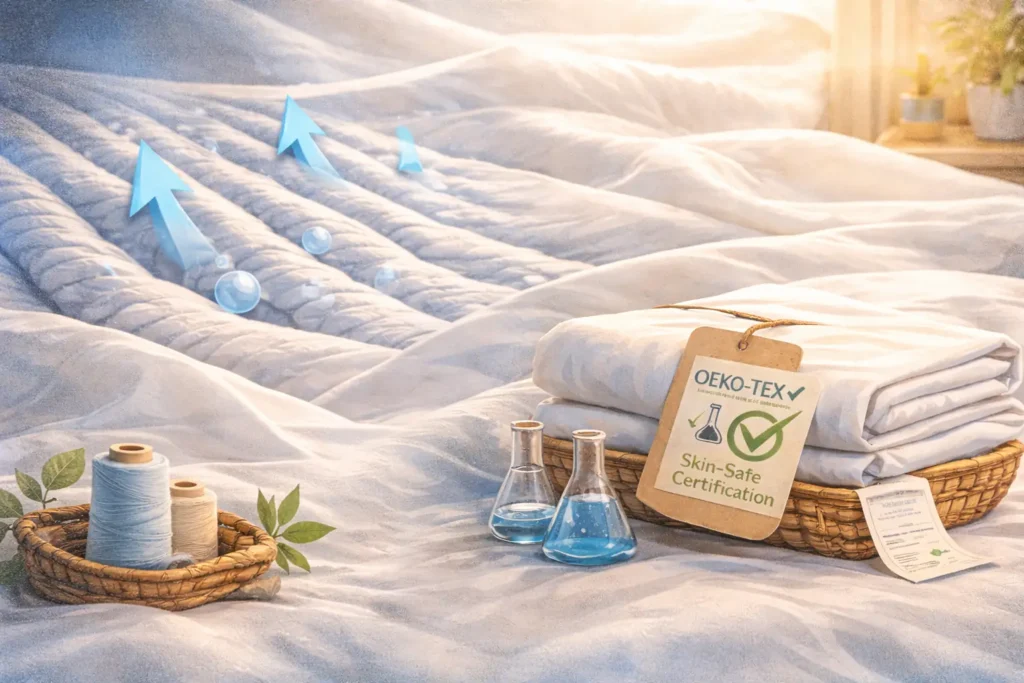
Polyester bedding is not a problem when sleep conditions and body responses align with the material’s properties. In cooler rooms and for people who do not perspire heavily, heat and moisture buildup are often minimal.
It can also work well for sleepers without skin sensitivity who prioritize smooth texture and low maintenance over breathability.
Modern Microfiber and Improved Polyester Weaves
Tighter, finer weaves allow better airflow than older polyester fabrics
Softer filament structures reduce friction against the skin
Improved construction can lessen heat buildup for some sleepers
Certified, Low-Residue Polyester Products
Finished fabrics are tested for low residual chemical levels
Pre-washed materials reduce initial skin exposure
Certification focuses on skin contact safety, not marketing claims
When You Should Avoid Polyester Bedding
You should avoid polyester bedding when repeated use consistently disrupts your sleep comfort or skin response. The issue is not danger, but ongoing mismatch between the fabric and your body’s needs.
If heat buildup, dampness, or skin irritation persists despite proper washing and room conditions, switching to a more breathable material is a practical choice.
Clear Physical Signs Polyester Is Not Working for You
Waking up sweaty despite a cool room
Skin feeling damp or sticky in the morning
Increased itching, redness, or discomfort after sleep
Situations Where Natural Fibers Are a Safer Choice
Sleeping in warm or humid environments
Managing sensitive skin or existing irritation
Choosing bedding for infants or high-sensitivity use cases
How to Make Polyester Bedding Safer If You Already Own It

If you already own polyester bedding, comfort and skin tolerance can often be improved with simple adjustments. The goal is to reduce heat, moisture buildup, and prolonged residue contact rather than eliminate the fabric.
Small changes in use and care can make polyester more compatible with your sleep environment.
Washing, Ventilation, and First-Use Practices
Wash new bedding before first use to remove surface residues
Use mild, fragrance-free detergent
Dry fully and allow bedding to air out before use
Layering and Sleep Environment Adjustments
Pair polyester sheets with a breathable mattress protector
Keep bedroom temperature on the cooler side
Avoid stacking multiple synthetic layers during sleep
How Polyester Is Often Sold as “Cotton” — and How to Read Labels Correctly
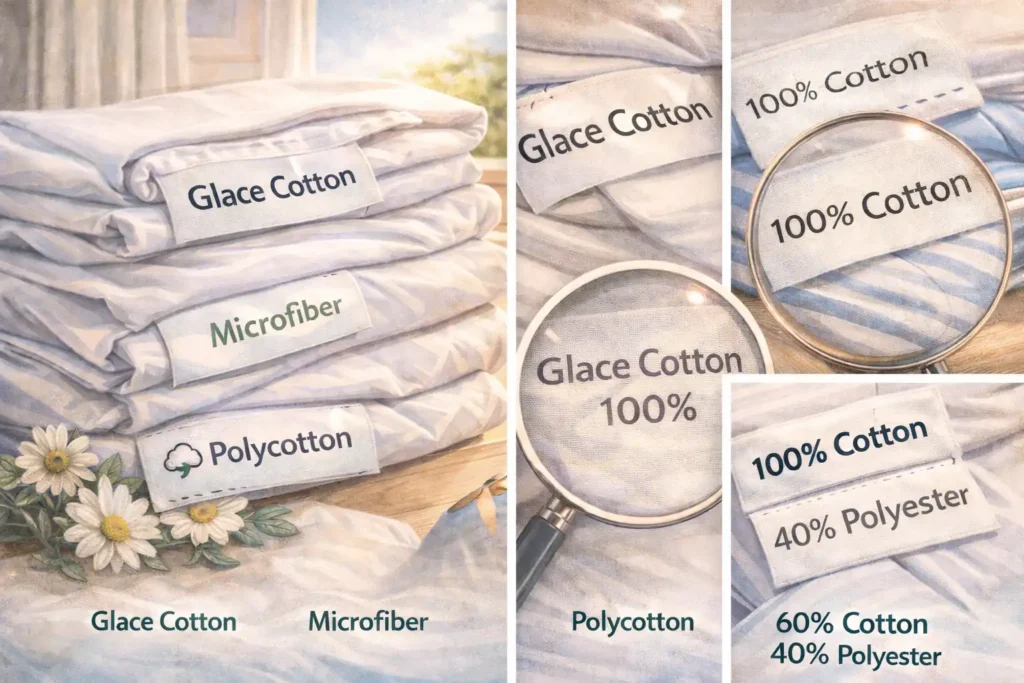
Polyester is often marketed using familiar or comforting terms that suggest natural fibers, even when the fabric is fully synthetic. This creates confusion for buyers who assume performance and skin feel will match cotton.
Reading labels carefully is the only reliable way to know what will actually be in contact with your skin during sleep.
Common Misleading Terms (Glace Cotton, Microfiber, Polycotton)
Glace cotton: Usually polyester with a smooth, glossy finish
Microfiber: Fine polyester fibers, not a natural material
Polycotton: A blend of polyester and cotton, not pure cotton
What Fabric Labels Actually Tell You
Percentage breakdown shows exact fiber content
“100% cotton” or “100% polyester” indicates dominant behavior
Blend ratios affect breathability and moisture handling more than names
What to Look for on Bedding Labels (Buyer Safety Checklist)
When buying bedding, labels are your most reliable source of health-related information. They tell you how the fabric will behave against your skin, not how it is marketed.
- Fiber composition: Look for exact percentages (e.g., 100% polyester, 60/40 polycotton)
- Skin-contact claims: Prefer clear statements about low chemical residue or skin safety
- Care instructions: Fabrics that tolerate regular washing are easier to keep residue-free
- Finish disclosures: Note mentions of wrinkle-resistant or permanent softening treatments
- Country of origin and compliance: Indicates which consumer safety standards apply
Certifications and Claims That Actually Matter
Skin-contact safety testing: Indicates limits on residual chemicals during prolonged use
Independent compliance statements: More reliable than self-declared quality claims
Wash durability claims: Suggest residues are designed to diminish with normal laundering
Marketing Claims You Should Ignore
“Luxury” or “hotel-style” wording: Describes feel, not health or breathability
Fabric nicknames: Terms that imply cotton or silk without stating fiber content
Undefined “hypoallergenic” claims: Meaningless without testing criteria
Final Verdict — Should You Stop Using Polyester Bedding?
You do not need to stop using polyester bedding by default. For many people, it is a functional and safe option that does not cause noticeable issues.
- Continue using it: If you sleep cool, sweat minimally, and have no skin sensitivity
- Reassess your choice: If heat buildup or skin irritation is recurring
- Switch materials: If comfort problems persist despite proper care and room conditions
Key Takeaways
Polyester bedding is not toxic under normal sleep conditions
Most concerns relate to heat and moisture, not chemical danger
Hot sleepers and sensitive skin types notice issues more often
Babies and high-sensitivity users benefit from breathable fabrics
Modern polyester can be more comfortable than older versions
Fabric labels provide more clarity than marketing terms
FAQs
Is polyester bedding bad for skin?
It is generally safe but can worsen irritation or acne in people with sensitive or moisture-reactive skin.
Is polyester bedding safe for babies?
It is not considered unsafe, but more breathable fabrics are often preferred for infant comfort and heat regulation.
Does polyester bedding cause sweating?
It can increase warmth for some sleepers by limiting airflow and slowing moisture evaporation.