
Polyester is not fully waterproof because water can seep through its woven gaps. It is naturally hydrophobic (property of a substance that repels water and does not mix with it) due to its polymer structure. To make polyester waterproof, it must be treated with special coatings like (Polyurethane or PVC) or have a waterproof membrane layered on top.
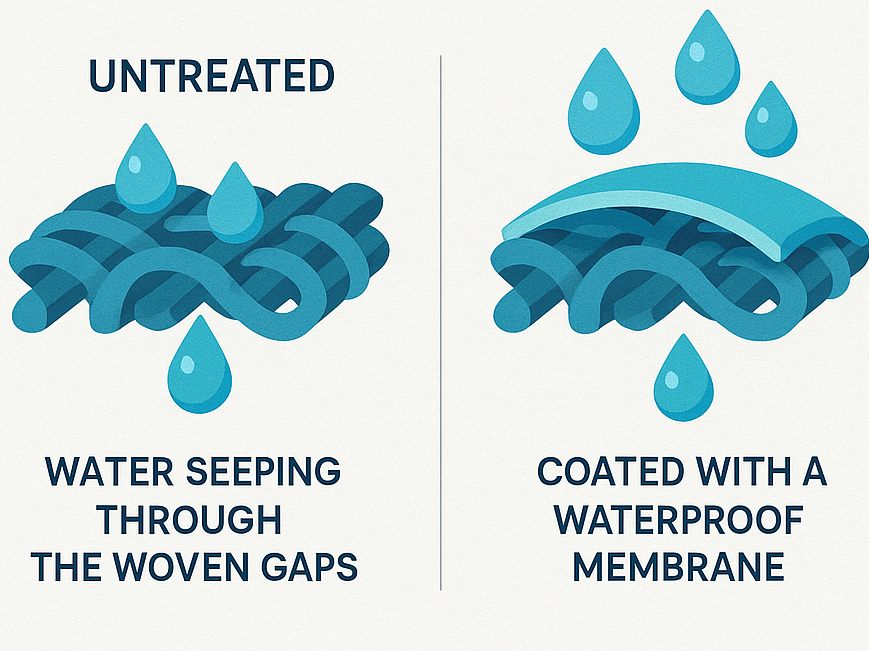
For choosing the right gear for your needs it’s crucial to understand the difference between water repellent, water resistant and waterproof fabrics.
Now, let’s dive into the specifics of what each term means and how they are achieved.
The Key Differences: water Repellent, water Resistant and Waterproof

Water repellent
A special treatment that makes water form beads and roll off a surface. In textiles, it’s a finish that providing a basic breathable layer of protection against light moisture.
Water resistant
A material or coating that can prevent water from easily passing through it but is not completely sealed. Water resistant provides a higher level of protection than water repellent. It will eventually soak through in moderate to heavy rain or prolonged exposure to water.
Water Proofing
The process of making an object or structure sealed to water, preventing it from absorbing or being damaged by water. It is a complete and long term solution that protects against water even under pressure.
Comparison of Water Repellent, water Resistant and Waterproof Fabrics
| Feature | Water-Repellent | Water-Resistant | Waterproof |
| Protection Level | Lowest | Moderate | Highest level |
| What It Does | Sheds light mist and rain | It can handle splashes or light rain | Complete impenetrable barrier |
| How It’s achieved in textiles | Through Durable Water Repellent (DWR) coating. | Uses a tight, dense fabric weave | Treated with a polyurethane coating or membrane with fully sealed seams |
| Breathability | High breathability | Varies based on the density of the weave. | Often the least breathable |
| Use Case | Casual wear or windbreakers | Good for light rain or drizzle | Wet conditions, such as hiking or snow sports. |
| Durability | The repellent coating wears off over time | Depends on the weave and any additional coatings. | The most durable for wet conditions |
So, now you know the key difference between water repellent, water resistant and truly waterproof fabrics. What’s the real difference between a jacket rated for 5,000 mm and one rated for 20,000 mm? Let’s dive into the waterproof ratings to uncover what those numbers really mean for you.
Decoding Waterproof Ratings: How to Read the Numbers?
The waterproof number you see on a jacket like 10,000 mm is a real measurement. This isn’t a marketing trick. This is determined by a lab test called the Hydrostatic head test. A higher number means better protection in heavier rain.
The Waterproof Rating Chart with explainations
| Waterproof Rating (mm) | Protection Level | Best for |
| 0 – 5,000 mm | No / Little Resistance | Low intensity activities. |
| 6,000 – 10,000 mm | Moderate Resistance | Everyday wear, light to average rain. |
| 11,000 – 20,000 mm | High Resistance | Heavy rain, prolonged downpours, most snow sports and hiking. |
| 20,000mm+ | Extreme Resistance | Wet and extreme conditions, high pressure activities. |
Choosing Your Gear Based on Ratings
So what does this all mean for you?
- Light rain or city use? A jacket with a low rating (6,000–10,000mm) is enough. It’s a great balance of comfort and protection.
- Heavy downpours or snow? You’ll want a high rating (11,000mm or more). This is a must for hiking, skiing or any activity where you’ll be outside for a long time in bad weather.
The best waterproof fabric won’t save you if the stitching leaks. That’s why you should look for a jacket with fully sealed seams, where every single stitch is covered to make sure no water gets in.
So you’ve found the perfect jacket with a high waterproof rating and sealed seams. There’s another important question:
What about the moisture that comes from within? Waterproof is only half the story; for true comfort, you need a jacket that breathes.” Let’s talk about breathability.
Why Breathability Matters: Staying Dry from the Inside Out
For true comfort, your gear needs to handle your own body’s moisture as well. Breathability is the fabric’s ability to let sweat vapor escape from the inside while keeping rain from getting in. This is especially important for anyone doing a physical activity like hiking or skiing, where your body will be generating heat and sweat.
How Breathability is measured?
Just like with waterproofness, breathability has its own number to help you compare products. You’ll typically see it measured in grams (g/m²/24hrs).
What the numbers mean:
This number tells you how much sweat vapor (in grams) can pass through one square meter of the fabric in 24 hours.
The higher the number, the more breathable the fabric
| Breathability Rating (g) | Breathability Level | What It Means for You |
| 0–10,000g | Low to Moderate | Comfortable for light activity like a gentle walk. |
| 10,000–15,000g | High | Great for hiking and everyday use. |
| 15,000g and up | Excellent | Best for high-intensity activity like fast-paced hiking or running. |
After a lot of use the fabric can start soak up water because the original DWR coating wears off over time. This condition called ‘wet out’ due to this your jacket loses up to 70% of its breathability. The good news is you don’t need to replace your gear. You can restore its original performance by re-waterproofing it. Here’s how to do it in a few simple steps.
How to Re-Waterproof your Polyester Jacket at Home?
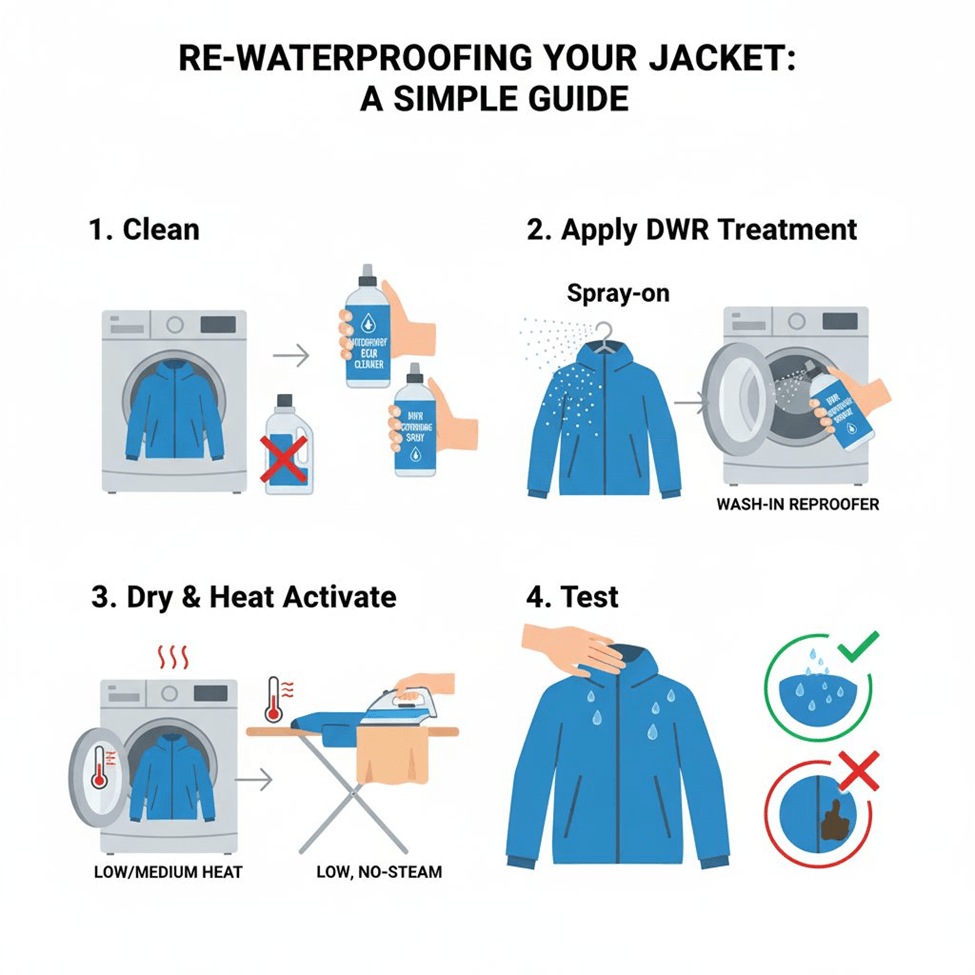
To successfully re-waterproof a polyester jacket, you need to clean it correctly, choose the right product, and apply it properly to reactivate the Durable Water Repellent (DWR) coating. The process is straightforward and can be done at home using either a spray-on or wash-in treatment.
Step1. Clean your jacket thoroughly
First, run a gentle wash with a special cleaner made for waterproof gear (like Nikwax or Grangers). This gets rid of old dirt and residue. Do not use regular detergent or fabric softener.
Step2. Apply a DWR treatment
While the jacket is still damp, you can apply the waterproofing in one of two ways:
- Spray-on: Hang the jacket up and spray the product evenly over the outside, focusing on high wear spots like the shoulders.
- Wash-in: Put the jacket back in the washer with the wash-in treatment and run a second gentle cycle.
Step3. Dry and heat activate
- Tumble dry: The easiest way is to put the jacket in the dryer on a low or medium heat setting. The heat helps activate the waterproofing.
- Iron: If you can’t tumble dry, air dry the jacket. Then, iron it on a low, no-steam setting with a towel in between.
4. Test your work
Once the jacket is dry, sprinkle some water on it. If the water beads up, you’re all set. If not, repeat the process.
Now you know the quick fix for a jacket that’s wetting out. What if the original coating wasn’t enough? The truth is, the best gear isn’t just treated, it’s engineered and understanding this is the key to knowing exactly what you’re buying. Here’s a look inside those technologies.
How Manufacturers Waterproof Polyester?
The best waterproof gear is engineered from the ground up. It’s not just a coated shell. It’s built with multiple layers of cutting edge technology. Understanding this process helps you:
- Choose a jacket that lasts.
- Find gear that truly protects you.
- Make a smart investment.
Here’s how manufacturers build that superior waterproof performance.
Coatings: The Protective Layer
The most common and foundational method of waterproofing is by applying a special liquid coating to the inside of the fabric. There are a few main types:
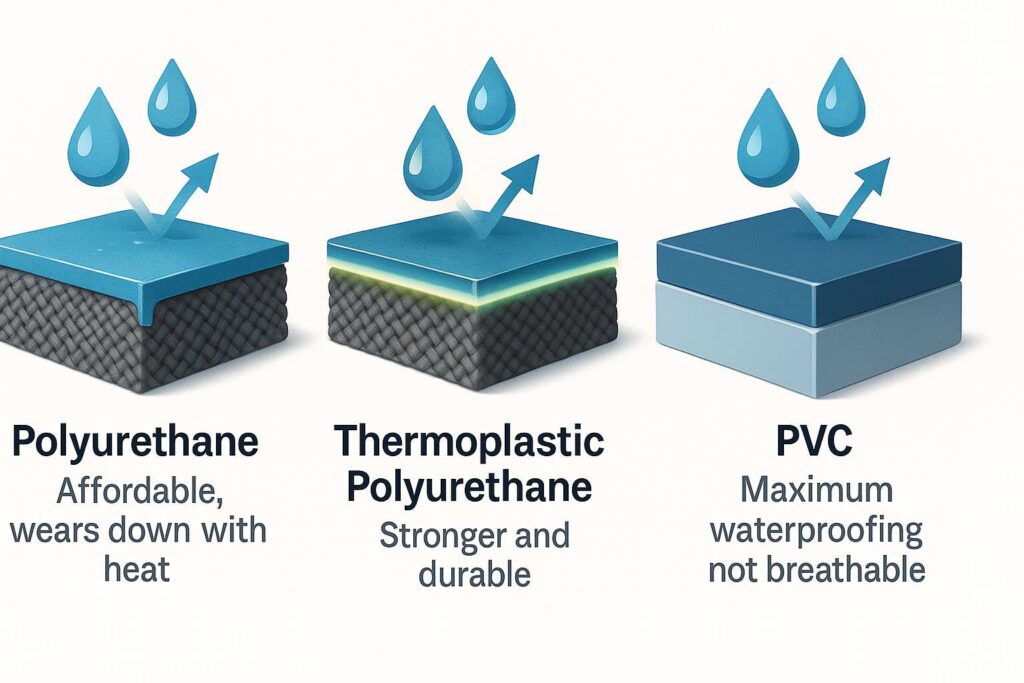
- Polyurethane (PU): This is a popular and affordable option. It provides a good waterproof barrier but can wear down over time, especially with heat and repeated use.
- Thermoplastic Polyurethane (TPU): A more advanced and durable version of PU. It is tougher and more resistant to damage, making it a better choice for high end gear.
- PVC: This coating offers maximum waterproofing but is not breathable. It’s best for heavy duty gear like tarps, where you need to block water completely and breathability isn’t a concern.
Lamination: Layering for Maximum Performance
For maximum durability and breathability, manufacturers don’t just coat the fabric they laminate it. This involves bonding a waterproof and breathable membrane to the outer fabric. The number of layers determines the gear’s performance.
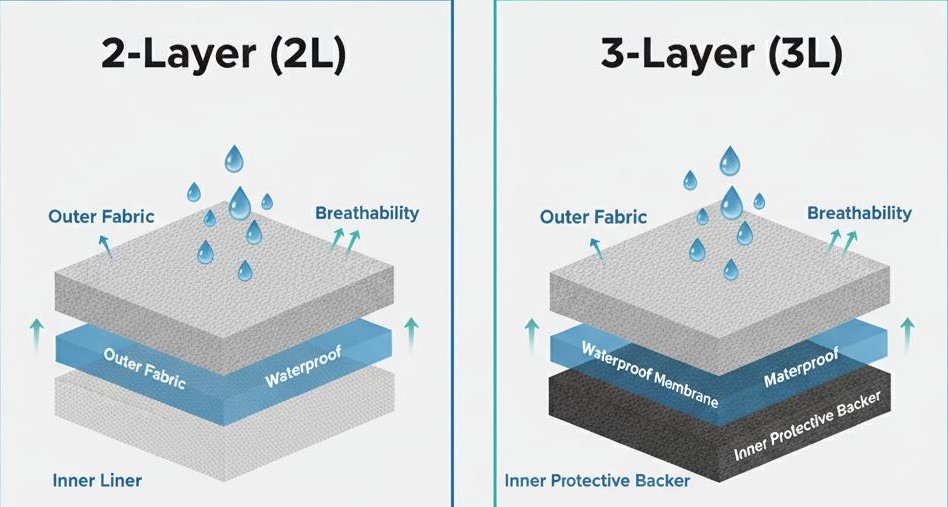
- 2-Layer (2L): A waterproof membrane is bonded to the outer fabric, with a separate inner liner to protect the membrane. This is a versatile and common choice for everyday jackets.
- 3-Layer (3L): The outer fabric, the waterproof membrane, and a protective inner backer are all bonded together into a single, highly durable fabric. This is the top tier for performance and is used in premium gear.
Membranes: The Smart Barrier
The membrane is the magic behind breathable waterproofing. Made from materials like expanded Poly tetra fluoro ethylene (ePTFE), it contains microscopic pores that are large enough to let sweat vapor escape but too small for liquid water to get in.
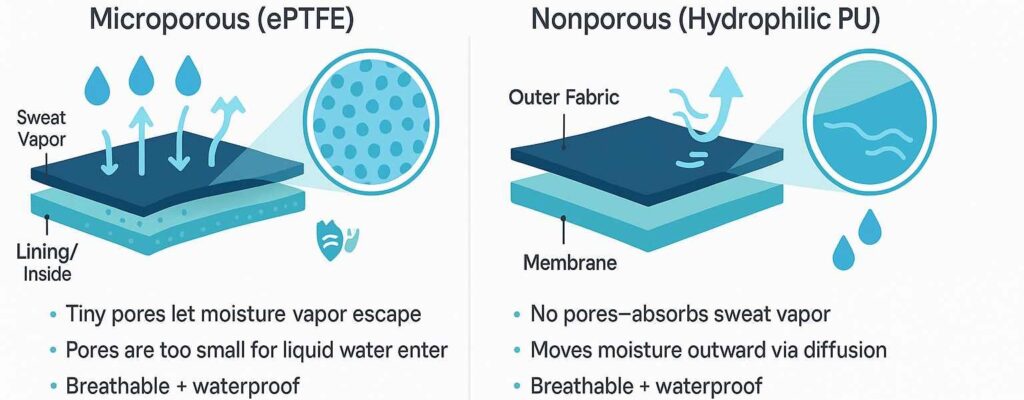
- Micro porous: These membranes use tiny holes to let moisture vapor pass through.
- Nonporous: These rely on chemical properties to absorb sweat from the inside and move it to the outside through diffusion.
Sealed Seams: The Final Seal
A jacket with the best fabric in the world can still leak through the tiny holes created by stitching. This is why manufacturers apply a waterproof seam tape over every stitch line on the inside of a garment.
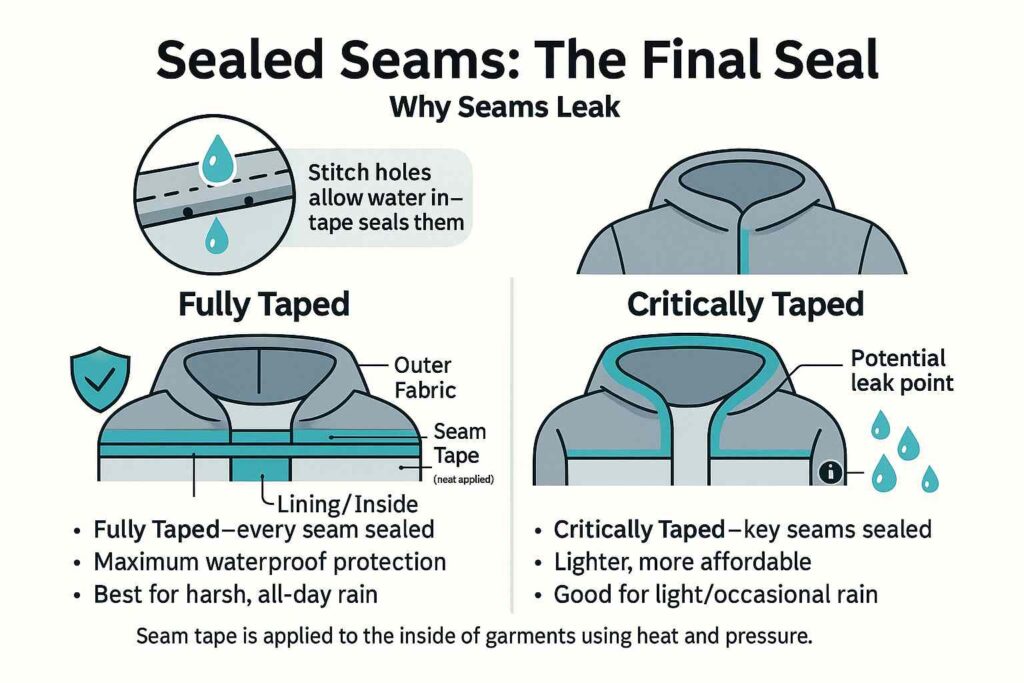
- Fully Taped: Every single seam is taped for maximum protection.
- Critically Taped: Only the most exposed seams (like shoulders and neck) are taped, which is common on more affordable gear.
Buying new waterproof gear can be confusing, but it doesn’t have to be. This simple checklist will help you decode the labels so you can choose the right gear every time.
Buying Checklist: What to Look For on the Tag or Product Page.
| Feature | What to Look For | Why It Matters |
| Waterproof Rating mm | For average rain: 10,000mm. For heavy rain: 20,000mm+. | The higher the number, the more water pressure the fabric can resist. |
| Breathability Rating (g/m2/24hrs) | For casual wear: 10,000g. For high activity: 15,000g+. | A higher number means sweat escapes faster, keeping you comfortable. |
| Construction | (2-Layer) good for everyday use. (3-Layer) best for durability and high performance. | Determines the jacket’s durability and overall performance. |
| Seam Sealing | Fully Taped Seams. | Ensures no water leaks through the stitching. |
| DWR Coating | Check if it has a DWR coating. | This is the first line of defense against rain and needs to be refreshed over time. |
Care & Maintenance Myths vs Facts
| Myths | Facts |
| You should never wash waterproof gear. | Must wash, but only with a special technical cleaner. Washing restores breathability by removing dirt and body oils. |
| A hot wash will clean your gear better. | Always use a gentle cycle with warm or cold water. |
| Regular laundry detergent is fine. | Standard detergents destroy the DWR and clog fabric pores. Always use a technical wash. |
| You don’t need to re-proof if the jacket is still new. | Regular re-proofing is necessary to maintain peak performance and breathability. |
| High-tech gear should be air-dried only. | Heat helps reactivate the DWR coating. Always check the care label first. |
The Eco-Friendly Choice: Sustainable Polyester Options.
Recycled polyester, PFAS free DWR, and a product’s longevity are all key pillars of sustainable fashion and outdoor gear. These practices help minimize the environmental impact of textile production and consumption.
Recycled Polyester (rPET): How It Helps the Planet
Recycled polyester is a sustainable alternative to virgin polyester, which is derived from petroleum.
Want the full breakdown? Read our Complete Guide to Recycled Polyester.
Why Go PFAS-Free? The Shift to Safer DWR Coatings
For decades, Durable Water Repellent (DWR) finishes on waterproof gear were made using per and polyfluoroalkyl substances (PFAS), also known as “forever chemicals.”
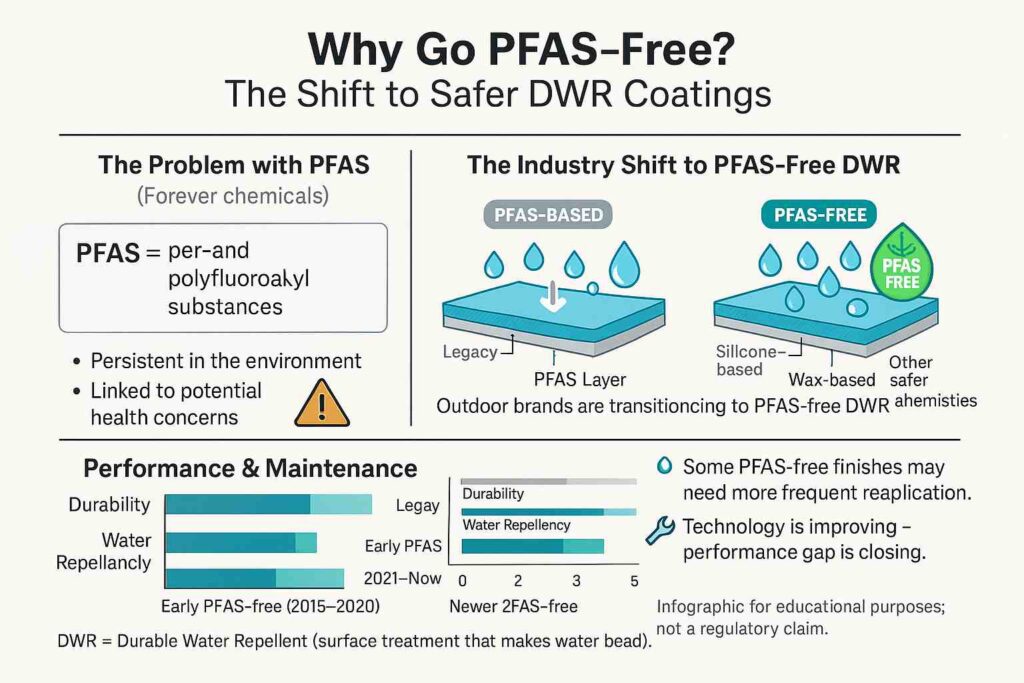
- The problem with PFAS: These chemicals are persistent in the environment and have been linked to potential health concerns.
- The industry shift: The outdoor industry is now moving toward safer, PFAS-free DWR alternatives, which use different chemistries such as silicon or wax based compounds.
- Performance trade-offs: While effective, some early PFAS-free DWRs were less durable and required more frequent reapplication to maintain optimal water repellency. However, technology is continually improving to close this performance gap.
The importance of longevity and the circular economy
The single most sustainable item is one that lasts for a long time. The circular economy model focuses on maximizing the life of a product through its full lifecycle.
- Buy for durability: Invest in high quality gear and apparel designed to last, rather than cheaply made fast fashion items.
- Care and repair: Take good care of your items and repair them when they get damaged. Brands like Patagonia and Arc’teryx offer repair services or guidance to empower customers to fix their own gear.
- Extended lifecycle (circular economy): When an item is no longer needed, sell it, donate it, or trade it in.
- Resale programs: Companies like Patagonia (Worn Wear) and REI (Re/Supply) run robust platforms for buying and selling used gear, giving products a second life and keeping them out of landfills.
- End-of-life recycling: For items that are truly at the end of their life, some brands accept them back for recycling or repurposing.
- The most impactful decision: The core takeaway is that conscious consumption prioritizing high quality, long lasting products and taking care of them is one of the most effective ways consumers can reduce their environmental footprint.
FAQ
Is polyester good for rain?
Yes for light to moderate rain. However, for a proper rainstorm, you need a jacket with an added waterproof coating or membrane to prevent leaks.
What happens when polyester gets wet?
Polyester doesn’t absorb much water.It resists moisture and dries quickly. However, in heavy rain it can still get soaked if not treated with a waterproof coating.
Can polyester be made fully waterproof?
Yes. Polyester can be made fully waterproof by adding coatings (like PU or TPU), laminating it with a waterproof membrane, and sealing the seams.
Is polyester waterproof or water resistant?
Polyester is naturally water resistant, not fully waterproof. It can repel light rain, but for full waterproofing it needs special coatings or membranes.
Is polyester windproof?
Polyester by itself is not fully windproof, but its tight weave blocks most wind. With special coatings or layers, it can be made completely windproof
How long does waterproof coating on polyester last?
A waterproof coating on polyester usually lasts 20–30 washes or 1–2 seasons of regular use. It can be restored with re-proofing sprays or wash-in treatments.
Is polyester a good choice for hiking and outdoor sports in wet conditions?
Yes, polyester is a good choice if it has a waterproof coating or membrane. It’s lightweight, quick-drying, and durable, but untreated polyester won’t keep you dry in heavy rain.
How do I know if a polyester jacket is high quality and will stay waterproof?
Check the waterproof rating (10,000mm+), breathability rating, fully taped seams, and durable DWR coating. These features show the jacket is built to stay waterproof.