
Nylon vs Polyester Carpet (Which One Is Better for Your Home)?
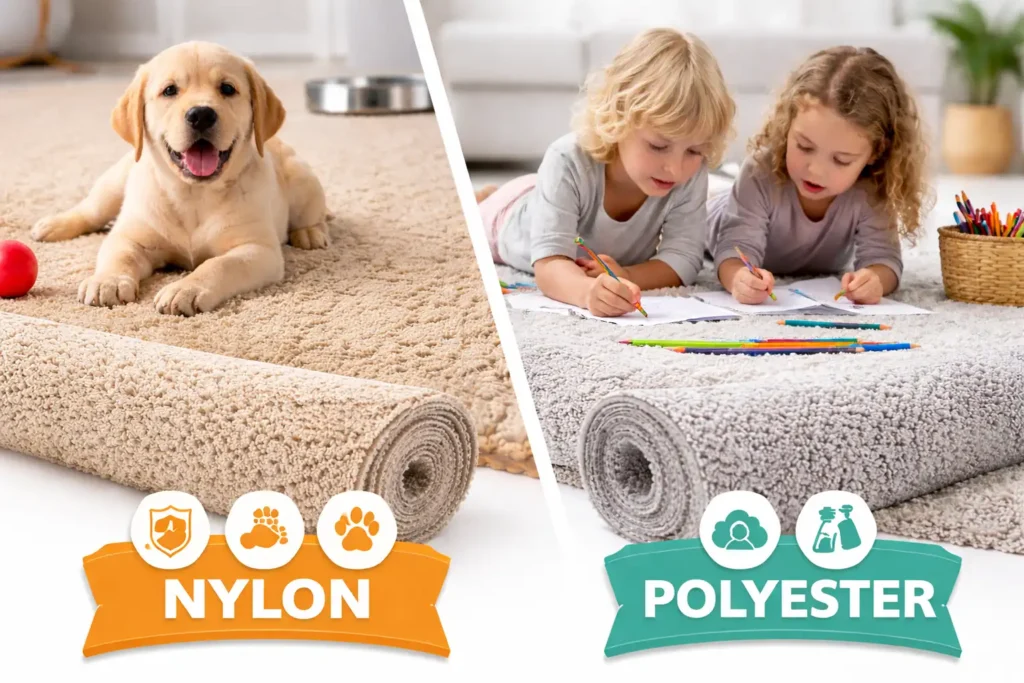
Choosing between nylon and polyester carpet is confusing for many homeowners, especially when sales claims focus more on features than real outcomes.
Both materials are widely used, yet they behave very differently when it comes to durability, stain resistance, pet accidents, foot traffic, and long term cost.
What looks similar in a showroom can perform very differently after a few years in a real home.
This guide breaks down nylon vs polyester carpet using practical, lived in performance how they age, clean, and hold up, so you can make a clear, informed decision.
Quick Answer, Nylon or Polyester Carpet?
Nylon carpet is the better overall choice for most homes due to its durability, recovery, and long term appearance.
| Feature | Nylon (Winner for Life) | Polyester (Winner for Budget) |
| Primary Strength | Durability & Resilience | Softness & Liquid Repellency |
| Typical Lifespan | 10–20 Years | 5–15 Years |
| Maintenance | Responds best to professional cleaning | Repels water, but attracts oils |
| 2025 Price (Installed) | $5.00 – $7.50 / sq. ft. | $3.00 – $5.00 / sq. ft. |
Important note: Polyester’s stain resistance is often misunderstood, while it resists water based stains, it permanently absorbs body oils and pet oils, which causes long term darkening that cleaning cannot reverse.
What Nylon and Polyester Carpets Are Really Made Of (Why This Matters)
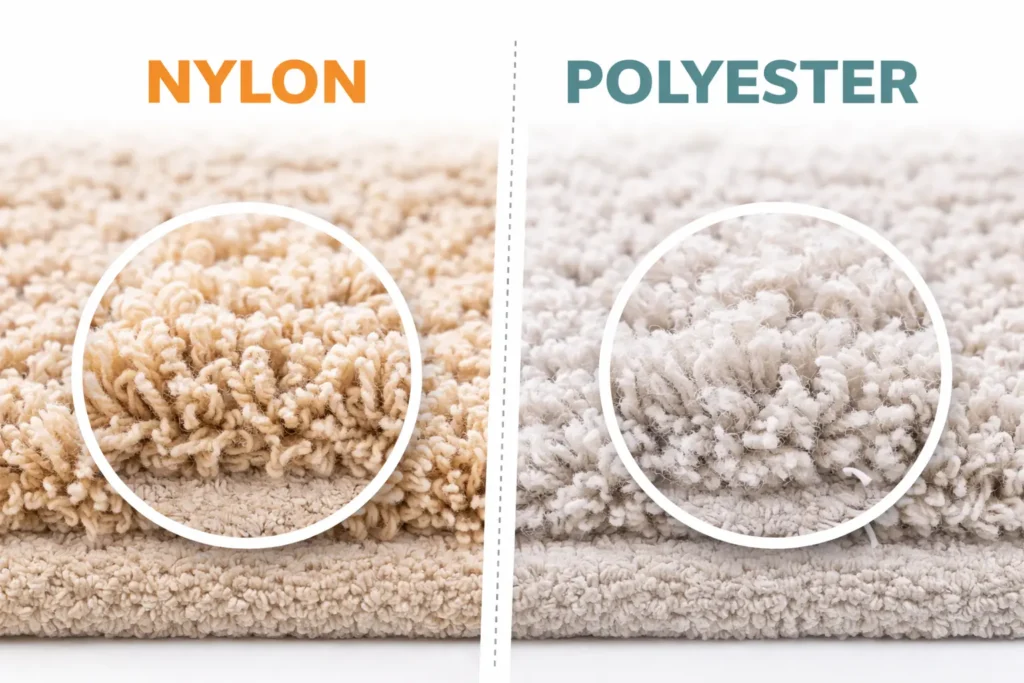
Nylon Carpet Fiber (Strength and Resilience Explained Simply)
Nylon carpet fibers are engineered to bend under pressure and then return to their original shape, rather than staying crushed.
This flexibility is the main reason nylon performs better over time in lived-in homes. Instead of relying on surface softness, nylon’s strength comes from how the fiber reacts when weight is repeatedly applied, such as footsteps, furniture, or pets moving across the same paths every day.
- Fibers flex and recover instead of breaking down
- Maintains pile height and texture under frequent traffic
- Resists permanent matting in narrow walkways
- Holds appearance longer between professional cleanings
In real homes, this matters most on stairs and hallways. These areas receive concentrated pressure in the same spots, and nylon’s ability to rebound helps the carpet look consistent years after installation, not just in the first few months.
Polyester Carpet Fiber (Softness, Color, and Cost Explained)
Polyester carpet fibers are naturally smooth and uniform, which is why they feel soft underfoot and hold rich, vibrant color.
The fiber structure reflects light evenly, making polyester carpets look plush and visually appealing in showrooms and low-use rooms.
Polyester is also less expensive to produce, which directly lowers the purchase price for homeowners.
Strengths
- Very soft texture that feels comfortable in bare-foot areas
- Excellent color clarity and resistance to fading
- Lower upfront cost compared to nylon
Limitations
- Fibers compress easily and recover slowly after pressure
- Shows traffic patterns faster in frequently used areas
- Absorbs oils from skin and pets, leading to gradual darkening
These limitations do not make polyester a poor material, but they explain why its performance drops faster in active homes compared to nylon.
Durability Comparison, Which Carpet Lasts Longer in Real Homes?
Traffic Resistance and Fiber Recovery
Fiber recovery refers to how well carpet fibers return to their original position after being walked on. In real homes, this matters more than initial softness or thickness. Every step bends the fiber, and over time, weak recovery leads to flattened paths that never fully lift again.
Under daily foot traffic, nylon and polyester behave very differently. Nylon fibers bend and spring back, while polyester fibers tend to stay compressed once pressure is repeated in the same areas.
- Nylon: Strong recovery keeps the pile upright and evenly textured
- Polyester: Limited recovery causes visible lanes in hallways and walk paths
- Nylon: Handles concentrated traffic without permanent flattening
- Polyester: Performs best only where traffic is spread out
Important note: A common myth is that heavier carpet always lasts longer.
In reality, fiber recovery not weight or thickness is the main factor that determines how well a carpet holds up under daily use.
Crushing, Matting, and Long-Term Appearance
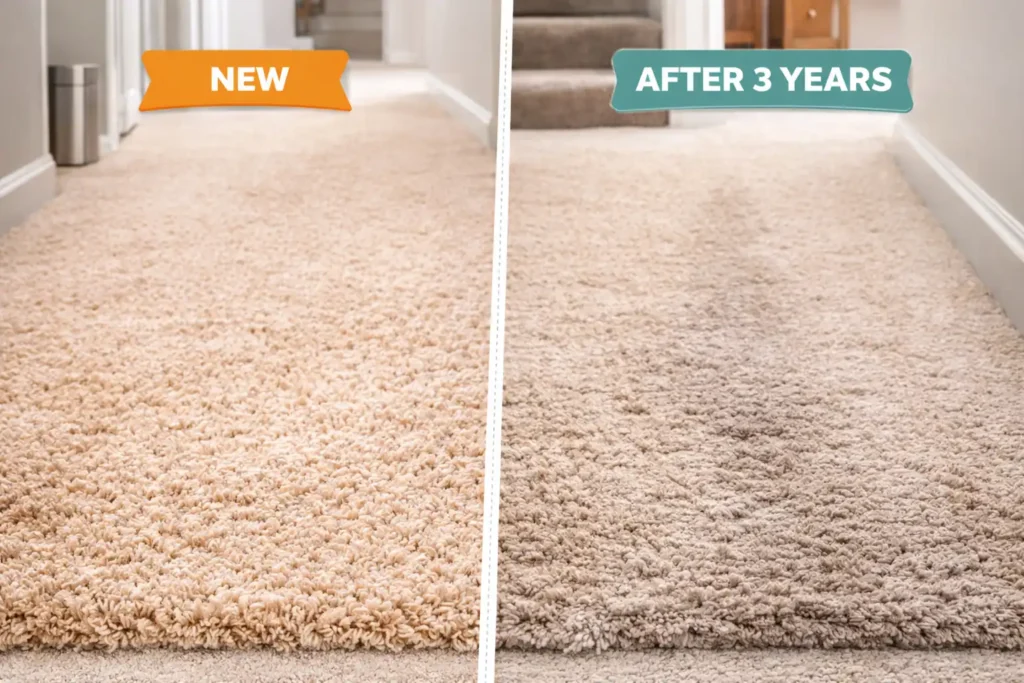
Crushing and matting describe what happens when carpet fibers lose their ability to stand upright after repeated pressure. Over several years, this shows up as dull, flattened areas that no longer match the surrounding carpet, even after cleaning. The difference between nylon and polyester becomes more visible with time, not less.
- Nylon: Fibers rebound, so flattening appears slower and more evenly distributed
- Polyester: Fibers compress permanently, creating clear traffic lines
- Nylon: Maintains a more consistent surface texture across rooms
- Polyester: Develops shiny, matted patches where walking is frequent
Pile height also plays a role. Taller piles exaggerate flattening when fiber recovery is weak. Polyester carpets with higher pile heights tend to show matting faster, while nylon handles both low and medium piles with more stable long-term appearance.
Expected Lifespan (Realistic, Not Marketing Claims)
Carpet lifespan is often overstated in marketing, but real performance depends on fiber behavior, traffic level, and maintenance habits. No carpet lasts indefinitely, yet some materials hold their appearance far longer under normal household use. Nylon consistently outperforms polyester when realistic conditions are considered.
- Nylon: 12–15 years in average homes with regular cleaning
- Polyester: 5–8 years before visible matting affects appearance
- High-traffic areas: Reduce lifespan by several years regardless of fiber
- Maintenance: Routine vacuuming and periodic professional cleaning slow wear
These ranges assume normal family use, not extreme neglect or commercial conditions. Proper padding and correct installation also influence longevity, but fiber resilience remains the primary factor in how long a carpet looks acceptable, not just how long it technically remains intact.
Why Nylon 6,6 Is Preferred for Stairs and High-Traffic Areas
Nylon 6,6 is preferred in stairs and high-traffic areas because it holds its shape better under repeated, concentrated pressure. While both nylon types are durable, Nylon 6,6 has a tighter internal structure that improves resilience where feet land in the same spots every day.
- Recovers faster after heavy foot pressure
- Resists crushing on stair treads and edges
- Maintains texture in narrow, high-use paths
- Handles frequent vacuuming and cleaning without breakdown
Stairs expose carpet to constant impact, twisting, and compression. Nylon 6,6 manages this stress more effectively than standard nylon and far better than polyester, which is why it is commonly specified for staircases, hallways, and busy family living spaces.
Why Some Buyers Choose Triexta (SmartStrand) Instead of Polyester
Some buyers choose triexta, commonly sold as Smart Strand, because it offers polyester like softness with better recovery and stain performance. It is often compared to polyester due to its plush feel and competitive pricing, but its fiber behavior places it closer to nylon in everyday use.
- Softer feel similar to polyester
- Better resilience than standard polyester under traffic
- Built-in stain resistance rather than surface treatments
- Priced between polyester and nylon in most markets
Triexta is not a replacement for nylon in high traffic areas, but it is often selected by homeowners who want improved performance without moving fully into nylon pricing.
Stain Resistance, Spills, and Cleaning Reality
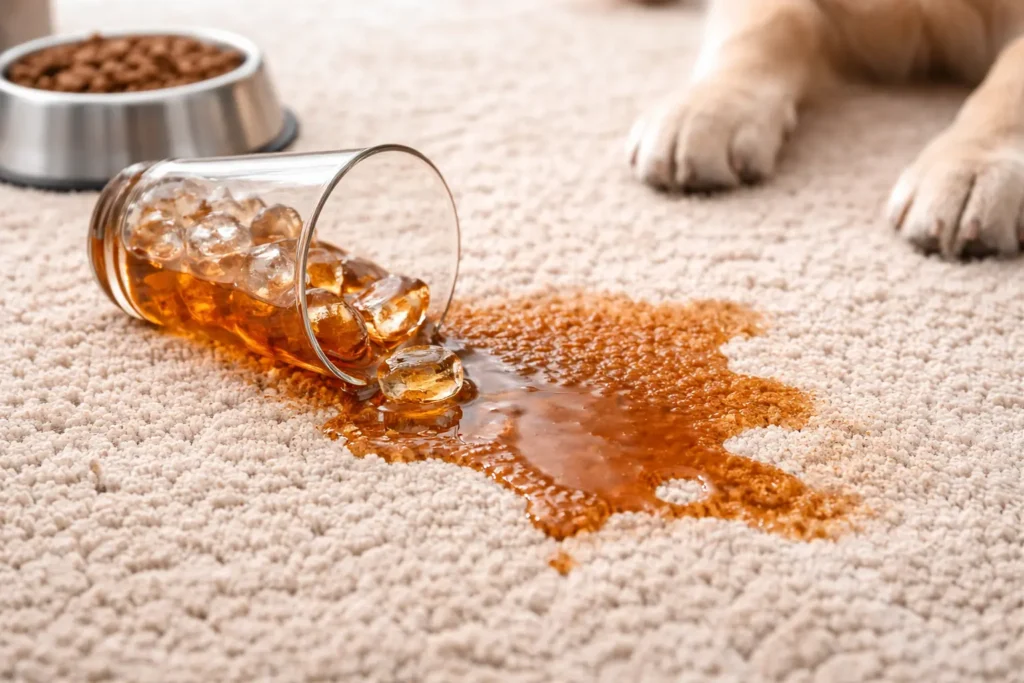
How Nylon Handles Spills, Dirt, and Cleaning Chemicals
Nylon handles spills and everyday dirt well because its fibers release contaminants during cleaning rather than locking them in. This is an important distinction: stain resistance slows absorption, while cleanability determines whether a carpet can be restored after spills occur. Nylon performs strongly in real homes because it responds well to routine vacuuming and professional cleaning.
- Releases soil and residue during hot water extraction
- Tolerates common cleaning chemicals without fiber damage
- Performs consistently even after protective treatments wear down
- Recovers appearance better after deep cleaning
Most nylon carpets receive stain-resistant treatments, but these are not the primary reason for long-term performance. Even untreated nylon remains easier to clean than polyester because it does not permanently bind oils, allowing maintenance to restore appearance rather than simply slow visible buildup.
Standard Nylon vs Solution-Dyed Nylon (What Buyers Miss)
Standard nylon and solution-dyed nylon differ in how color is added to the fiber, which directly affects stain behavior.
Standard nylon is dyed after the fiber is formed, while solution-dyed nylon has color integrated throughout the fiber before it becomes carpet.
This difference changes how the carpet reacts to certain spills and fading.
- Standard nylon: Easier to recolor and widely available in more styles
- Solution-dyed nylon: Better resistance to bleach, sunlight, and strong spills
- Both: Share the same strength and recovery characteristics
Important note: Solution-dyed nylon improves stain resistance but does not make carpet stain-proof.
Cleaning habits and response time still matter. Buyers often focus too much on dye method and overlook fiber resilience, which has a greater impact on long term appearance than color technology alone.
How Polyester Handles Stains and Permanent Soiling
Polyester is naturally resistant to water based stains because its fibers do not readily absorb moisture. This hydrophobic behavior helps prevent spills like juice or soda from soaking in quickly.
However, stain resistance and long term cleanliness are not the same, and this distinction is where polyester underperforms.
- Repels many liquid spills initially
- Resists fading from most household liquids
- Absorbs oils from skin, cooking vapors, and pets
- Retains oily residue that attracts and holds dirt
Over time, these absorbed oils darken the carpet and make routine cleaning less effective. The issue is gradual, not sudden.
Polyester carpets may look clean for years in low use rooms, but in active areas, permanent soiling becomes visible even when the carpet is regularly maintained.
Pet Accidents and Odor Retention (Important)
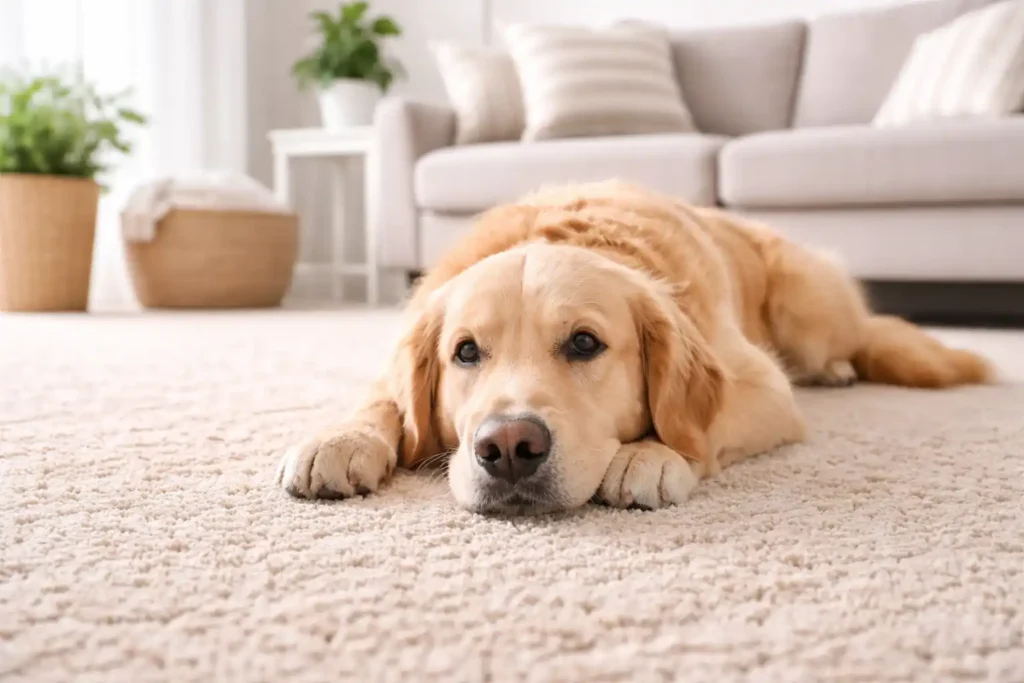
Pet accidents test how carpet fibers handle both moisture and odor over time. While surface spills can be cleaned, repeated urine exposure affects fibers, backing, and padding differently depending on material.
Nylon manages this better because it releases contaminants more fully during extraction cleaning.
- Nylon: Allows deeper flushing, reducing long-term odor retention
- Polyester: Traps oily residues that bind odor molecules
- Both: Can retain odor if padding is saturated
Important note: No carpet fiber alone prevents pet odor problems. Prompt cleanup and proper pad selection matter as much as fiber choice.
For homes with pets, nylon paired with a moisture-resistant pad provides the most reliable long-term odor control and easier recovery after accidents.
Comfort, Feel, and Appearance Over Time
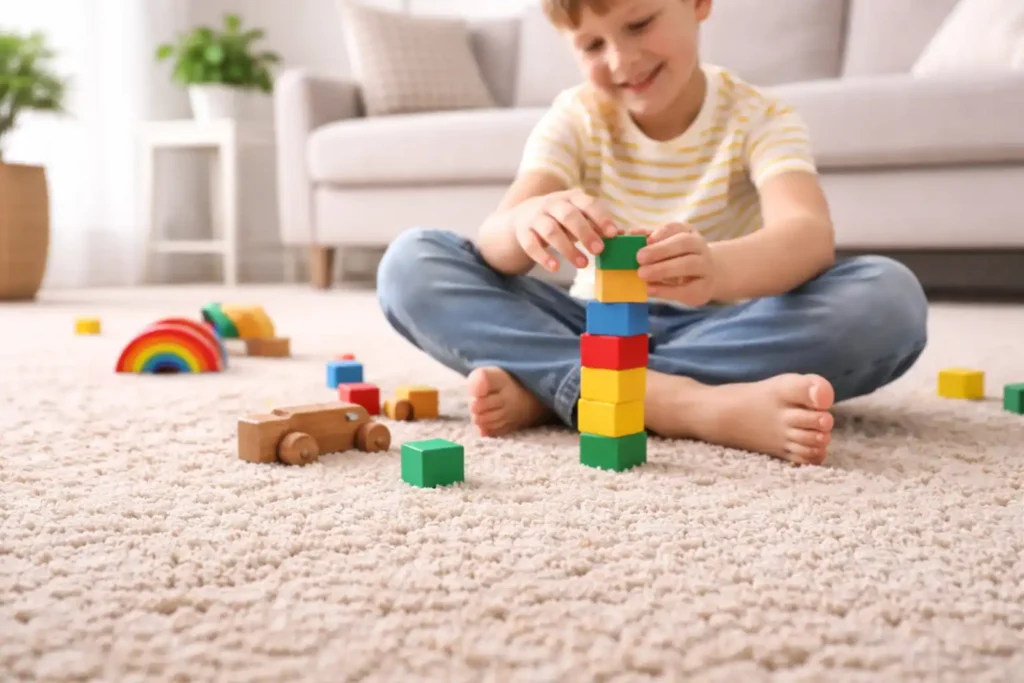
Softness Underfoot and Texture Differences
Nylon and polyester feel different underfoot because their fibers behave differently when compressed.
Polyester is naturally smooth, which creates a softer, plusher feel when new.
Nylon feels slightly firmer at first, but this firmness is tied to strength rather than lack of comfort.
In real homes, perceived comfort shifts with age. Polyester often feels less plush after traffic patterns develop, while nylon maintains a more even, supportive surface that continues to feel comfortable years after installation, not just in the showroom.
Color Retention and Fading Risks
Color retention depends on both fiber type and how the color is added. Polyester naturally holds color well and resists fading from sunlight and most household spills. This is why polyester carpets often appear vibrant for many years, especially in low-traffic rooms.
- Polyester: Strong resistance to fading and color loss
- Nylon: Good color stability, especially in solution-dyed options
- Nylon: More sensitive to harsh chemicals if not solution-dyed
- Both: Can fade with prolonged direct sunlight exposure
Which One Looks “New” Longer
On day one, polyester often looks plusher and more vibrant, while nylon appears slightly firmer and more structured.
The difference becomes clearer after a few years of normal use. By year three, traffic patterns and furniture pressure begin to reveal how each fiber ages.
- Nylon: Maintains a more even surface and consistent texture
- Polyester: Shows flattening and dull paths sooner
Nylon vs Polyester Carpet for Pets, Kids, and High-Traffic Homes
Best Choice for Homes With Pets
- If pets have frequent accidents → choose nylon
- Odor control matters long term → choose nylon
- If shedding and oily residue are concerns → avoid polyester
- Pets are low-shedding and well-trained → polyester can work in low-traffic rooms
- You want easier deep cleaning → nylon performs more reliably
Best Choice for Homes With Children or Allergies
- If spills and frequent cleaning are expected → choose nylon
- Durability matters more than softness → choose nylon
- Bedrooms are low traffic and budget focused → polyester is acceptable
- If allergen removal through cleaning is important → nylon releases soil better
- Stain panic is the main concern → solution-dyed nylon is safer
Best Choice for Living Rooms, Bedrooms, and Stairs
- If the area has constant foot traffic → choose nylon
- If the space includes stairs or hallways → nylon is strongly preferred
- Room is a guest bedroom → polyester is sufficient
- Furniture will be moved often → nylon resists crushing better
- Comfort matters more than longevity → polyester fits low-use spaces
Cost Comparison (Is Nylon Worth the Higher Price?)
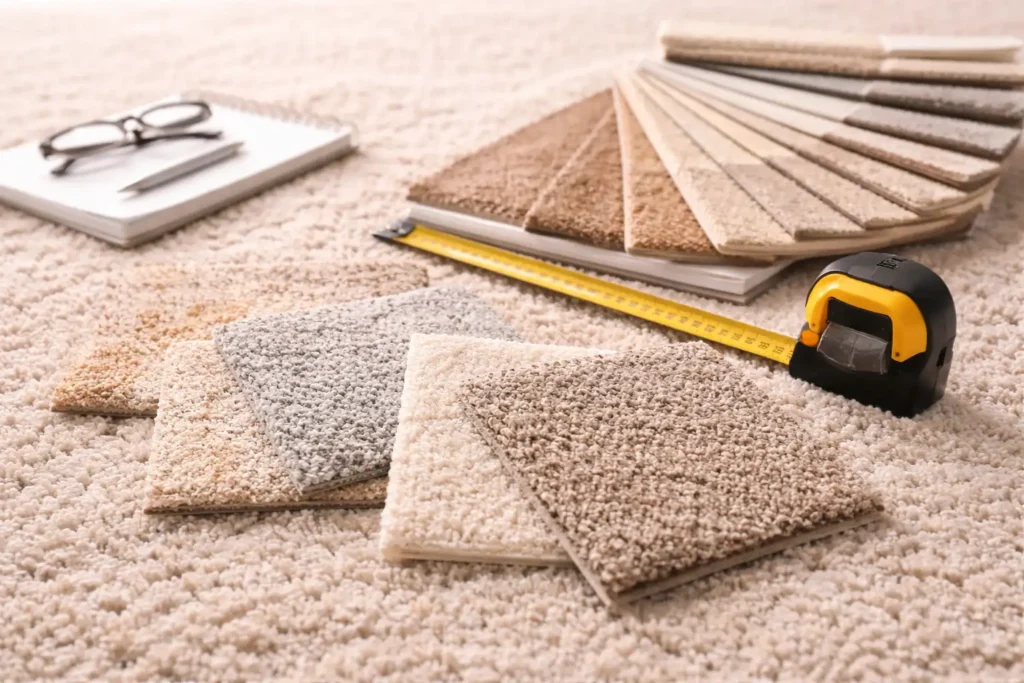
Upfront Cost Differences
Nylon carpet typically costs more upfront than polyester because its manufacturing process and fiber resilience add to material value.
Polyester remains a lower entry option, especially in basic or fashion grade products.
The difference is noticeable at the point of purchase, but cost alone is only one part of the financial picture.
Nylon’s higher initial price reflects its stronger performance in everyday use rather than just marketing. For many buyers, spending a bit more initially means the carpet meets real home demands without early replacement.
Polyester’s lower entry cost makes sense for tight budgets or low use spaces, but it should not be mistaken for equivalent long term performance.
Cost Per Year of Use (Real Value Comparison)
When evaluating cost per year of use, divide total investment by realistic lifespan rather than comparing sticker prices alone.
Nylon’s longer serviceable life means the annualized cost decreases over time, particularly in busy areas. Polyester’s lower initial cost spreads over fewer effective years before visible wear prompts replacement.
Maintenance frequency also factors into true annual cost, nylon’s easier recovery and cleaning reduces the need for early deep cleanings or premature replacement.
Looking strictly at dollars per year of acceptable appearance and performance, nylon often delivers better financial value in most homes, even though polyester starts lower on the price tag.
Environmental and Health Considerations
VOCs, Indoor Air Quality, and Off Gassing
Both nylon and polyester carpets sold today generally meet modern indoor air quality standards. Off gassing levels are influenced more by backing, adhesives, and padding than by the fiber itself. Initial odors usually dissipate within days to weeks.
- Low-VOC certifications matter more than fiber type
- Proper ventilation reduces short-term exposure
- Quality padding can improve overall indoor air quality
Important note: “Natural” feel does not equal lower emissions. Always verify emissions ratings rather than assuming fiber choice alone determines air quality.
The “Plastic Bottle” Benefit (When Polyester Is the Greener Choice)
Polyester is often marketed as environmentally friendly because it can be made from recycled plastic bottles. In certain cases, this reduces landfill waste and lowers raw material demand compared to virgin fibers.
- Uses recycled content in many products
- Reduces reliance on new petroleum inputs
- Common in budget-friendly eco-labeled carpets
However, recycled input does not automatically mean lower overall environmental impact once lifespan and replacement frequency are considered.
Recycling, Sustainability, and Environmental Impact
Sustainability depends on both material sourcing and how long the carpet stays in use. Nylon is more durable and increasingly recyclable, which improves its long term environmental profile.
- Longer lifespan reduces replacement waste
- Some nylon systems support closed-loop recycling
- Polyester recycling after use is limited
Important note: A carpet replaced twice as often can outweigh the environmental benefit of recycled content, even if the initial material appears greener.
When Nylon Carpet Is the Better Choice
- Home has high daily foot traffic
- Stairs or hallways are carpeted
- Pets are present and accidents are possible
- Long term appearance matters more than initial softness
- You want lower cost per year of use
- Frequent cleaning is expected
When Polyester Carpet Is the Better Choice
- If the space is low-traffic or rarely used
- Upfront budget is the primary concern
- Softness and color vibrancy matter most initially
- Room is a guest bedroom or formal area
- Pet exposure is minimal or controlled
- Shorter lifespan is acceptable
Nylon vs Polyester Carpet (Side-by-Side Comparison Table)
| Feature | Nylon Carpet | Polyester Carpet |
| Overall durability | High | Moderate |
| Fiber recovery | Excellent | Limited |
| Traffic resistance | Performs well in high-traffic areas | Best for low-traffic areas |
| Crushing and matting | Resists long-term flattening | Shows matting sooner |
| Stain behavior | Cleans well, releases dirt and oils | Resists water stains but traps oils |
| Pet performance | Better odor control and cleanability | Higher risk of permanent soiling |
| Softness (new) | Firm to moderately soft | Very soft initially |
| Appearance over time | Holds “new” look longer | Appearance declines faster |
| Color retention | Good to excellent (best if solution-dyed) | Excellent |
| Typical lifespan | Longer service life | Shorter service life |
| Upfront cost | Higher | Lower |
| Cost per year of use | Lower long-term value | Higher long-term value |
| Best use areas | Stairs, hallways, living rooms | Bedrooms, low-use rooms |
| Environmental profile | Longer life, recyclable options | Often made from recycled bottles |
Final Verdict (Which Carpet Should YOU Choose?)
If your home sees daily activity, includes stairs, or has pets, nylon is the correct choice. It delivers consistent appearance, better recovery, and easier long term maintenance, which prevents early replacement and frustration. For most households, this makes nylon the safer and more predictable investment.
Choose polyester only when usage is clearly limited. In low traffic bedrooms, guest rooms, or short term living situations, polyester provides softness and visual appeal at a lower upfront cost without overpaying for durability you will not use.
The decision is not about which carpet looks better on day one. It is about how the carpet behaves after years of real life. When performance, longevity, and control over long term costs matter, nylon remains the stronger option.
Key Takeaways
- Nylon outperforms polyester in durability, recovery, and long term appearance
- Polyester feels softer initially but shows wear and soiling sooner
- Stain resistance and cleanability are different, and nylon cleans more completely
- Cost per year of use favors nylon in most active homes
- Polyester makes sense only in low traffic, budget focused spaces
FAQs
Is nylon carpet better than polyester?
Yes. Nylon performs better in most homes because it recovers from foot traffic, resists long term flattening, and cleans more effectively.
Polyester can look attractive when new, but nylon maintains appearance and function longer, especially in active households.
For durability and predictable performance, nylon is the stronger choice.
Does polyester carpet flatten faster?
Yes. Polyester fibers compress more easily and recover slowly after repeated pressure.
This causes visible traffic lanes and matted areas sooner, particularly in hallways and living spaces.
Even with good maintenance, polyester typically shows flattening earlier than nylon under normal household use.
Which carpet is better for pets?
Nylon is better for homes with pets. It releases moisture and contaminants more effectively during cleaning, which helps reduce long term odor and staining issues.
Polyester’s tendency to trap oils increases the risk of permanent soiling and lingering odors over time.
Which carpet lasts longer?
Nylon lasts longer in real homes. Its fiber recovery allows it to maintain structure and appearance for many more years compared to polyester. While both materials may remain physically intact, nylon stays visually acceptable and functional well beyond polyester’s practical lifespan.