
Viscose Rugs Care — Safe Cleaning, Stain Removal & Maintenance

Quick Answer — Can You Clean Viscose Rugs at Home?
Yes. You can perform immediate spot care at home for viscose rugs, but full wet cleaning should generally be left to professionals because viscose weakens when wet and colors can bleed.
What Is Viscose and Why It Affects Rug Care
Key Properties That Make Viscose Hard to Clean
- Absorbency & wet strength: Viscose fibers lose strength when wet, becoming weaker and more prone to damage.
This makes viscose rugs vulnerable to tears or stretching when exposed to moisture.
- Pile crush & fiber collapse: Foot traffic and pressure can flatten the pile, and incorrect drying methods can prevent the fibers from recovering, leaving your rug looking permanently flattened.
- Color bleeding & dye migration: Viscose is sensitive to moisture, and wet cleaning can cause dyes to run. Always perform a spot test to ensure no bleeding before cleaning.
Daily & Weekly Maintenance
Correct Vacuuming Method (Safe for Viscose Rugs)
Vacuum your viscose rug at least 2 times per week using low suction mode.
Use a suction-only attachment or an upholstery tool, avoiding the beater bar or rotating brush, as these can damage delicate fibers.
If your vacuum has a “bare floor” setting, use that.
According to CRI (The Carpet and Rug Institute) vacuum guidance, it’s best to avoid excessive agitation.
For fringes, vacuum gently using a handheld attachment to prevent tangling.
Rotation, Sunlight, and Rug Pad Usage
Rotate your rug 90° every 3 months to ensure even wear across the surface.
Limit direct sunlight exposure to prevent fading of the colors.
If your rug is near a window, consider using blinds, or rotate the rug more frequently to avoid prolonged sun damage.
Rug Pad
Use a breathable felt or rubber non-slip rug pad that is 1-2 cm smaller than the rug’s edges.
This will help reduce abrasion and provide airflow to the back of the rug, maintaining its shape and integrity.
A high-quality pad can also reduce slipping and keep your rug securely in place.
Immediate Spot Care (First 60 Minutes After a Spill)
Emergency Blotting Protocol (Do This First)
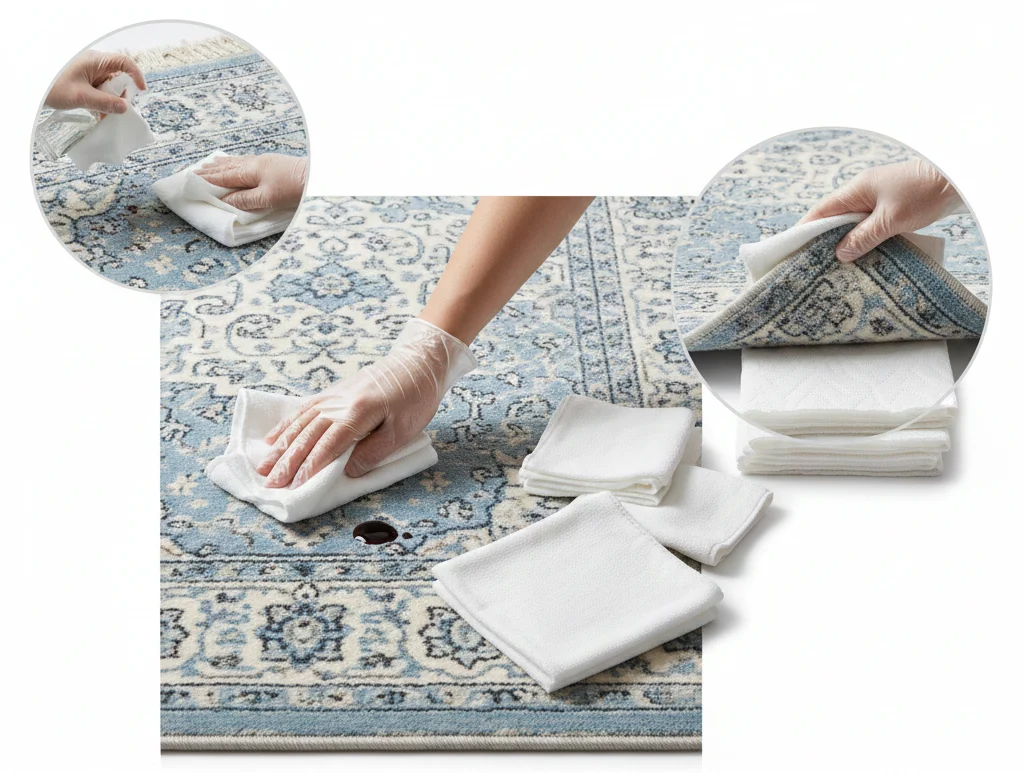
- Put on gloves if bodily fluids or heavy soiling.
- Blot excess liquid immediately with a white cotton cloth or paper towel, press, don’t rub. Repeat with fresh cloths until no more transfer (5–10 repeats).
- Gently lift rug corners or edges if liquid has saturated through; place absorbent towels underneath.
- Do not apply cleaning agents before doing a color bleed test.
Spot Test
- Choose an inconspicuous corner. Apply one drop of the chosen cleaner. Wait 30 seconds. Blot. If color transfers or color loss shows, stop and call a professional.
Water-Soluble Stains (Juice, Tea, Coffee, Food)
Recipe:
1 teaspoon (≈5 ml) mild pH neutral detergent (e.g., wool/silk gentle detergent) + 1 cup (240 ml) cool water.
Method:
- Dip a white cloth into the solution; wring so the cloth is damp, not dripping.
- Dab the solution onto the stain; blot from the outer edge toward the center. Do 6–10 blot cycles.
- Rinse cloth; blot with clean water to remove detergent.
- Blot dry; place fans for rapid drying.
Caution: Do not soak the rug. Apply small amounts only.
Tannin Stains (Tea, Coffee, Wine)
Use the same detergent mix or vinegar mix: 1 part white vinegar : 2 parts water. Use vinegar only after a spot test. Follow the same sequence as above.
Oil, Grease & Ink Stains (What You Should Not Do)
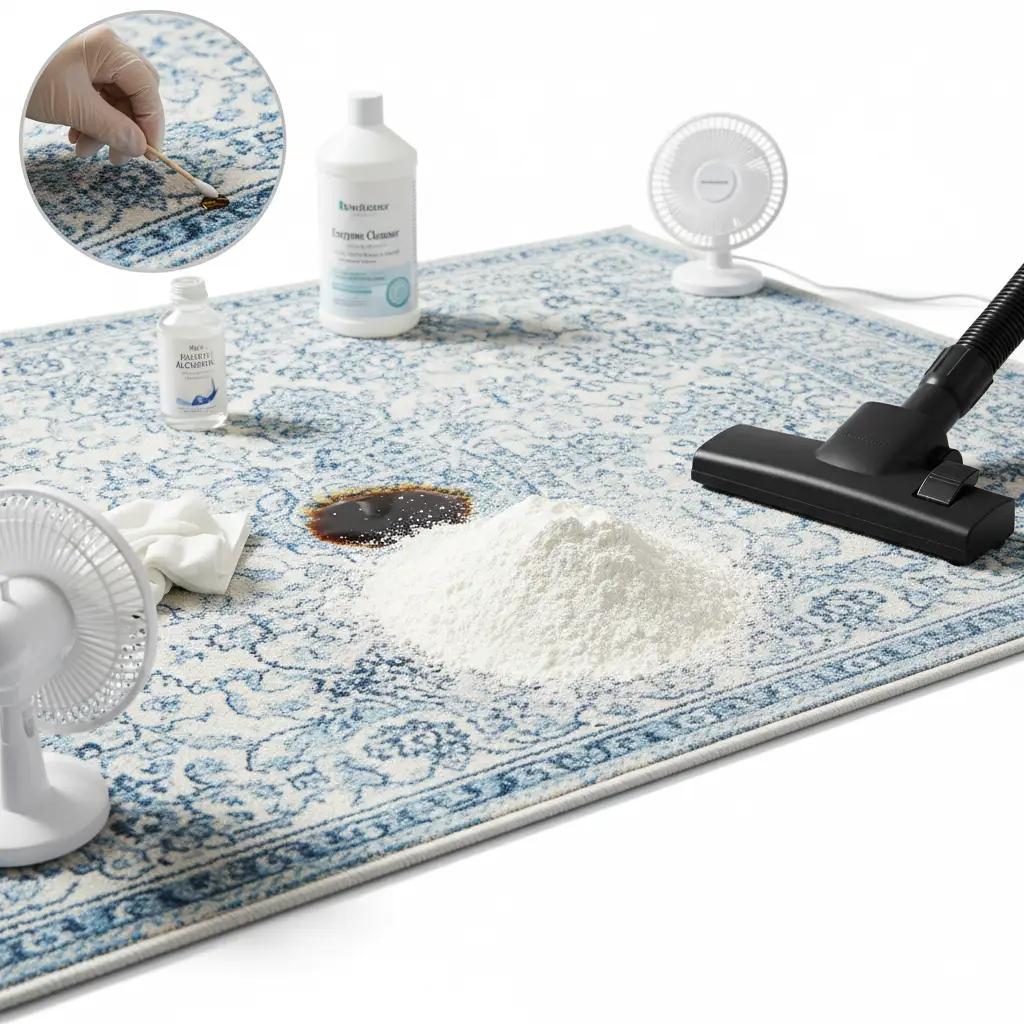
Do NOT wet at first.
First: absorb with cornstarch or talc for 30 minutes → vacuum (use suction only).
If residue remains: spot test 70% isopropyl alcohol on the corner; if safe, dab (don’t saturate) and blot.
If ink or deep oil persists → call a pro.
For pet urine: blot, neutralize odor with enzyme cleaner only if the product label explicitly says “safe for viscose” otherwise call a professional.
Finish
After any cleaning, blot with clean water, then fast dry with fans (see Drying section). No heat.
Deep Cleaning Options (Home vs Professional)
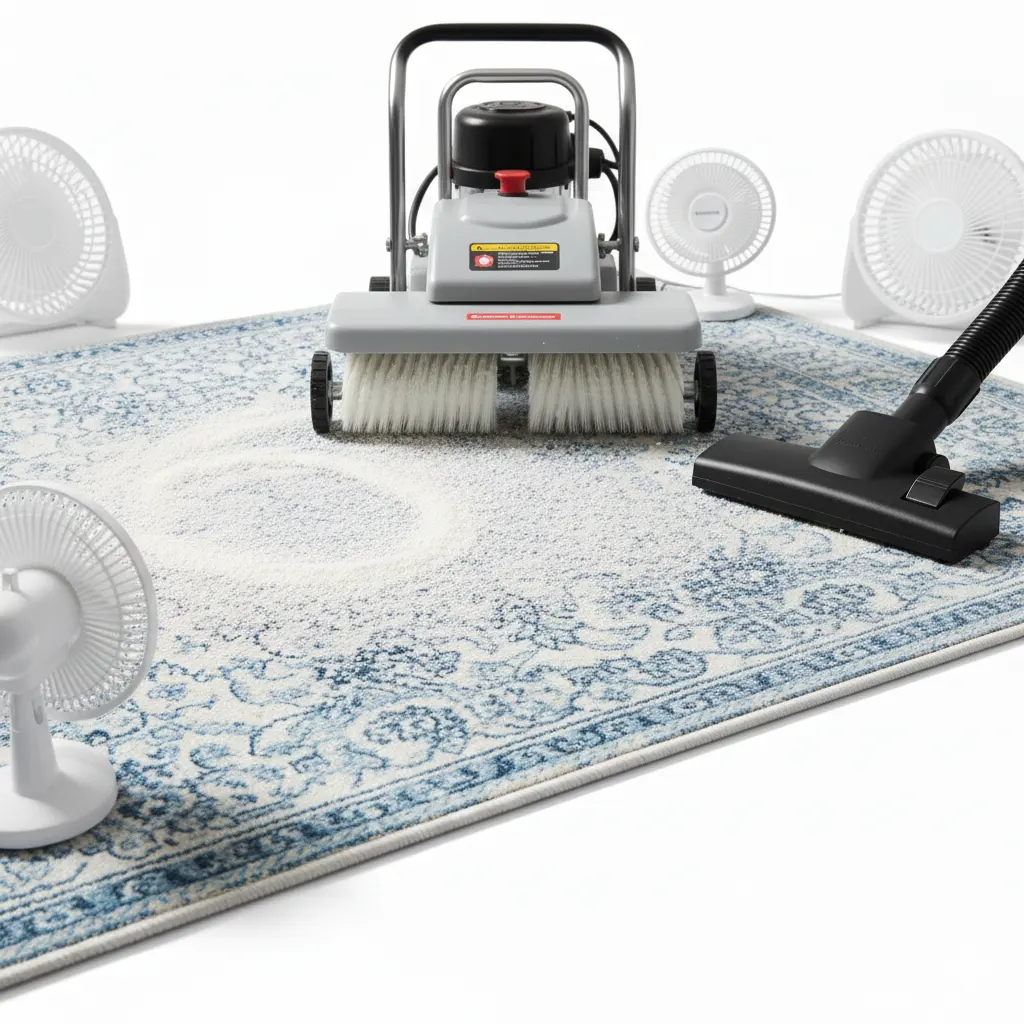
Dry Cleaning / Low-Moisture Methods (Preferred)
The preferred method for deep cleaning viscose rugs is professional low moisture or dry cleaning (encapsulation, powder, or controlled dry cleaners).
Dry Cleaning
Dry cleaning methods, such as encapsulation or powder cleaning, involve minimal moisture, which helps preserve the integrity of viscose fibers.
These methods work by using a cleaning agent that encapsulates dirt, which is then vacuumed up. This reduces the risk of pile collapse and prevents moisture related damage.
Professional cleaners typically use encapsulation polymers, rotary brush vacuuming, and forced air drying for optimal results.
A common technique is dry extraction, which is considered highly effective for delicate fibers like viscose.
Wet Cleaning Risks & When It’s Acceptable
Wet cleaning viscose rugs poses significant risks due to the fiber’s susceptibility to moisture damage, such as weakened fibers, dye migration, and backing shrinkage.
Professionals may use wet cleaning for heavy soil or odor issues, but only under strict conditions.
They place the rug on a support board, use controlled low moisture, and ensure rapid drying within 6–12 hours with industrial air movers.
These precautions prevent irreversible damage.
Do not attempt this method at home, as improper wet cleaning can permanently damage your rug.
Machine Washing Viscose Rugs (Why to Avoid It)
Do not machine wash your viscose rug unless the tag explicitly allows it. Agitation combined with water can cause irreversible pile damage, leading to permanent fiber deformation.
Drying, Reshaping & Pile Recovery
Fast Drying Technique Without Damaging Fibers
To dry your viscose rug, lay it flat on absorbent towels and elevate the edges for proper airflow. Position 2–3 fans to blow air across the top and underneath the rug.
Avoid using direct heat, such as a hot hairdryer, as this can damage the fibers. Aim to complete the drying process within 12 hours.
If the rug remains damp for over 24 hours, there’s a risk of mold growth, and you should contact a professional.
Restoring Pile After Cleaning
Once the rug is nearly dry, gently brush it with a soft nylon brush in the nap direction.
For areas where the pile has been crushed, hold a steam iron 12–15 cm above the pile, using 2–3 second bursts (test first).
Then, lift the pile gently with your fingers or a soft brush. If the pile doesn’t recover, call a professional for help.
Common Stains & Safe Cleaning Formulas
Viscose stains must be treated with small amounts of cleaner, careful blotting, and strict spot testing to avoid color bleeding.
Water Based Stains (juice, soda, food spills)
For simple spills, use this formula:
1 teaspoon mild pH neutral detergent + 1 cup cool water
- Blot the spill (don’t rub).
- Spot test the detergent mix.
- Apply a small amount using a damp cloth (not soaking).
- Blot again until the stain lifts.
- Blot with clean water, then dry with fans.
Stop if any color transfers during the spot test.
Tannin Stains (Tea, Coffee, Wine)
Use either:
- Same detergent mix as above
- 1 part white vinegar : 2 parts cool water (only after spot test)
- Blot the spill.
- Spot test the vinegar mix.
- Apply lightly with cloth, dab gently.
- Blot with clean water.
- Dry quickly with fans.
Oil/Grease Stains
Use this two-step formula:
- Cornstarch or talc powder (to absorb oil)
- 70% isopropyl alcohol (ONLY after spot-test)
- Cover stain with cornstarch for 30 minutes.
- Vacuum using suction only.
- Spot test alcohol.
- Dab gently on stain.
- Blot until oil transfers out.
- If the stain darkens or spreads → stop and call a professional.
Ink Stains
Only use:
70% isopropyl alcohol (after spot test)
- Blot ink first (don’t smear).
- Spot test alcohol.
- Dab tiny amounts with a cotton swab or cloth.
- Blot repeatedly.
- If ink spreads → professional cleaning required.
Pet Urine & Odor Issues
Use:
Enzyme cleaner labeled “safe for viscose”
(If the label does NOT say safe → do NOT use.)
- Blot as much liquid as possible.
- Spot test enzyme cleaner.
- Apply lightly following product instructions.
- Blot with clean water.
- Dry using fans.
- If odor remains after 24 hours → call a professional.
Dye Transfer & Color Bleeding
- Do a spot test first (if color moves even slightly), stop.
- Use only the detergent mix (mild pH neutral detergent + cool water).
- Apply a very small amount with a cloth.
- Blot immediately.
- Dry fast.
- If bleeding continues → do not try again; professional cleaning only.
📝 Reminder
Always spot test first, use very small amounts of liquid, and stop immediately if color transfers.
When You MUST Call a Professional Cleaner
Red Flags You Should Never Ignore
- Color runs during pre-test or visible dye transfer.
- Entire rug saturated or large spill >30 cm diameter.
- Persistent, foul odor after 24 hours.
- Footprint pile collapse over >20% area.
- Antique, handmade, or high value rug.
- Fringe or backing delamination/damage.
If any of the above occur — stop DIY and seek a certified rug cleaner.
Long Term Prevention & Rug Protection
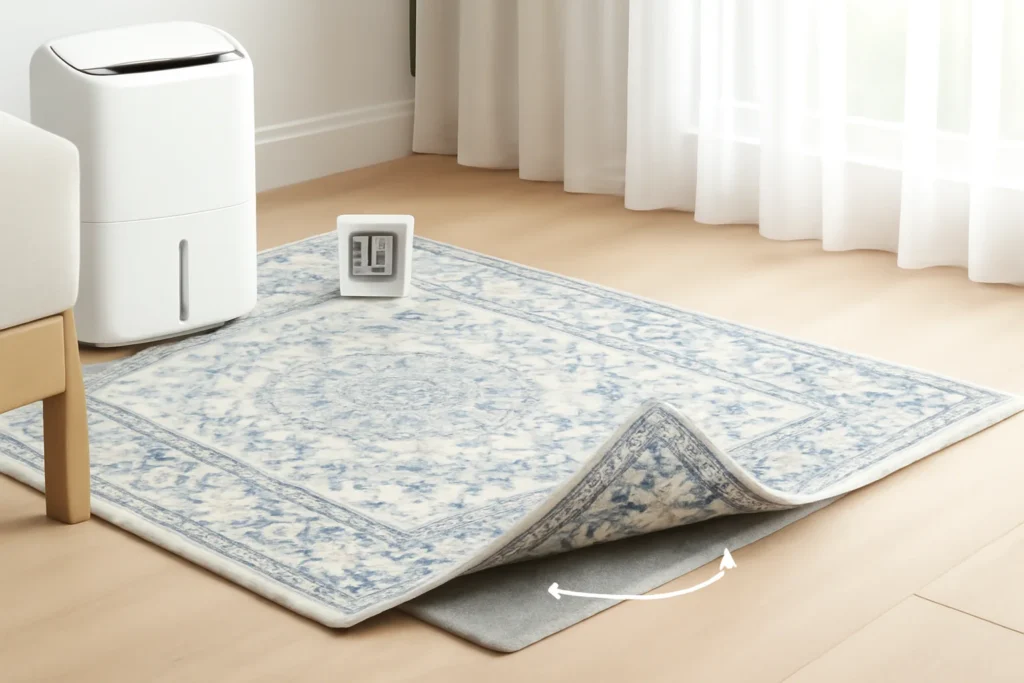
Placement Tips & Humidity Control
- Place pure viscose rugs in low-traffic areas like bedrooms or formal sitting rooms.
- Avoid high risk zones like kitchens, bathrooms, and entryways where moisture and traffic are high.
- Maintain indoor humidity between 30–50% to prevent yellowing, stiffness, and mold growth. Use a dehumidifier in damp environments like basements.
- Use a high quality rug pad to reduce abrasion and provide airflow.
- Limit direct sunlight exposure or use blinds/curtains to prevent color fading.
Choosing & Scheduling for Longevity
- Consider blends (viscose + wool or synthetics) for areas with moderate traffic, as they are more durable.
- Recognize tags that say “100% viscose” and “dry clean only,” which indicate a more delicate rug that requires strict care.
- Rotate your rug 90° every 3 months to ensure even wear across the surface.
- Set a professional cleaning schedule: every 12–24 months for low traffic homes, or every 6–12 months for homes with pets or children.
FAQs
Can I clean a viscose rug myself?
You can perform immediate spot care (blotting and light spot cleaning), but full wet cleaning should be handled by professionals because viscose weakens when wet.
is viscose durable for a rug?
Viscose is not considered highly durable for rugs, especially in high-traffic areas. Its fibers are soft and beautiful but weaken when wet, flatten easily under pressure, and can show wear faster than wool or synthetic rugs. Viscose performs best in low-traffic spaces and requires gentle care to maintain its appearance.
what happens if a viscose rug gets wet
When a viscose rug gets wet, the fibers weaken dramatically and can stretch, buckle, or even break. Moisture may also cause the pile to flatten, the texture to become stiff or distorted, and dyes to bleed or fade. If a viscose rug becomes heavily saturated, it can also shrink or develop a hard, cardboard-like feel. Fast, controlled drying is essential to prevent permanent damage.
Is vinegar safe for viscose rugs?
Diluted vinegar (1:2 vinegar:water) is safe for some tannin stains after a spot test, but do not use strong acids or bleach.
How often should viscose rugs be professionally cleaned?
Every 12–24 months for low traffic areas; every 6–12 months if you have pets, kids, or heavy use.
Why does my viscose rug look flat after cleaning?
Wet fibers and compacted pile cause flattening. Proper drying and gentle brushing or professional re-fluffing usually restore nap; persistent flattening needs pro attention.
Key Takeaways
- Viscose rugs need gentle care: blot spills immediately and avoid heavy wet cleaning at home.
- Use suction only vacuuming, rotate regularly, and use a rug pad.
- For stains: test first, apply small amounts, do not soak.
- Call a certified pro for large saturations, dye runs, antiques, or odors.