
“updated: February 2026”
Viscose vs Cotton: Comfort, Durability & Performance Compared

Viscose vs Cotton – Quick Answer
The Verdict: Choose Cotton for rugged, low-maintenance daily wear and sensitive skin. Choose Viscose for high-drape fashion, superior moisture-wicking, and a luxury silk-like feel.
| Choose Cotton For: | Choose Viscose For: |
| Durability: High tensile strength; lasts years. | Aesthetics: Elegant, “flowy” silk-like drape. |
| Maintenance: Machine wash/dry; heat resistant. | Cooling: Absorbs 1.5x more moisture than cotton. |
| Skin Health: 100% natural and hypoallergenic. | Style: Vibrant color retention and soft sheen. |
Side-by-Side Comparison Table
| Feature | Cotton | Viscose (Rayon) |
| Source | 100% Natural (Seedpod fiber) | Semi-synthetic (Wood pulp) |
| Durability | High; fibers toughen over time | Moderate; prone to pilling/thinning |
| Wet Strength | Increases; stronger when wet | Drops 50%; highly vulnerable |
| Breathability | High (Excellent airflow) | Very High (Superior wicking) |
| Shrinkage | 3–5% (Stable after first wash) | Up to 10% (Highly unstable) |
| Best Use | Tees, Denim, Bedding, Workwear | Dresses, Blouses, Linings, Summer-wear |
Which Fabric Is Better for You?
For Everyday Wear
Cotton’s structural integrity and resistance to pilling make it the superior choice for high-frequency garments like t-shirts and jeans. It maintains its shape and handle even after dozens of wear-and-wash cycles.
Winner: Cotton
For Summer & Hot Weather
Viscose excels in extreme heat because its fibers are highly hydrophilic, wicking sweat away from the skin faster than cotton. It provides a distinct cooling sensation and superior breathability in humid climates.
Winner: Viscose
For Durability & Long-Term Use
Cotton is one of the few fibers that strengthens when wet, allowing it to survive years of agitation. Viscose fibers are fragile and prone to premature thinning or tearing if handled roughly.
Winner: Cotton
For Softness & Elegant Drape
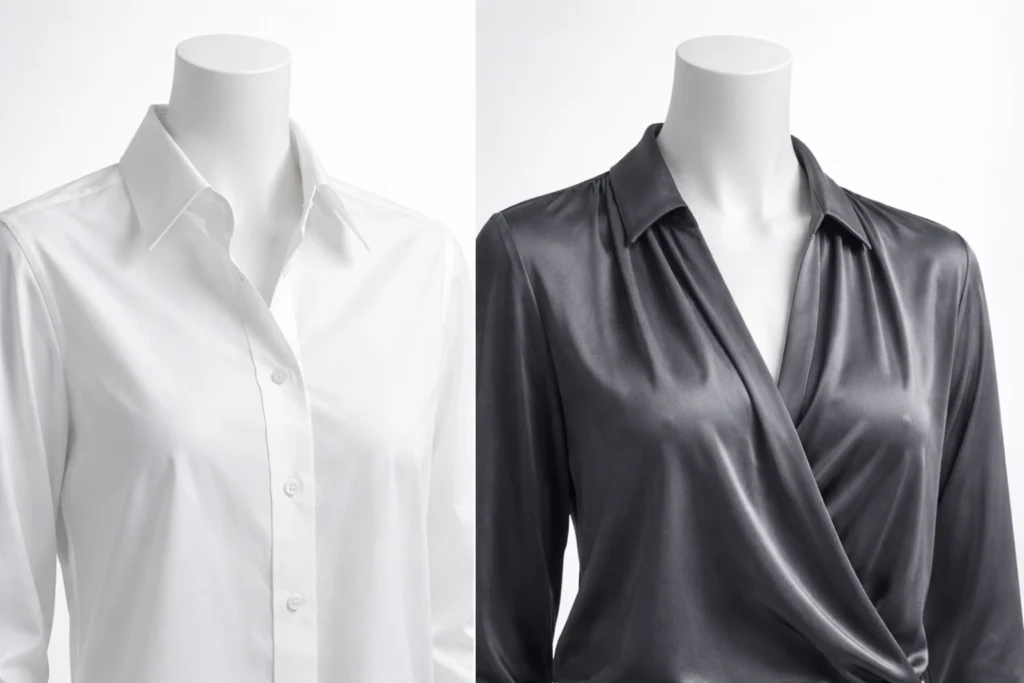
Viscose mimics the luxury of silk, offering a fluid, “flowy” movement that cotton cannot replicate. It falls against the body without the stiff, boxy silhouette often found in heavy cotton weaves.
Winner: Viscose
For Easy Maintenance
Cotton is “set and forget”—it withstands high-heat drying and vigorous machine cycles. Viscose is high-maintenance, often requiring hand-washing or dry cleaning to prevent catastrophic shrinkage or distortion.
Winner: Cotton
Comfort & Feel Differences Explained
Fiber Structure Impact on Texture
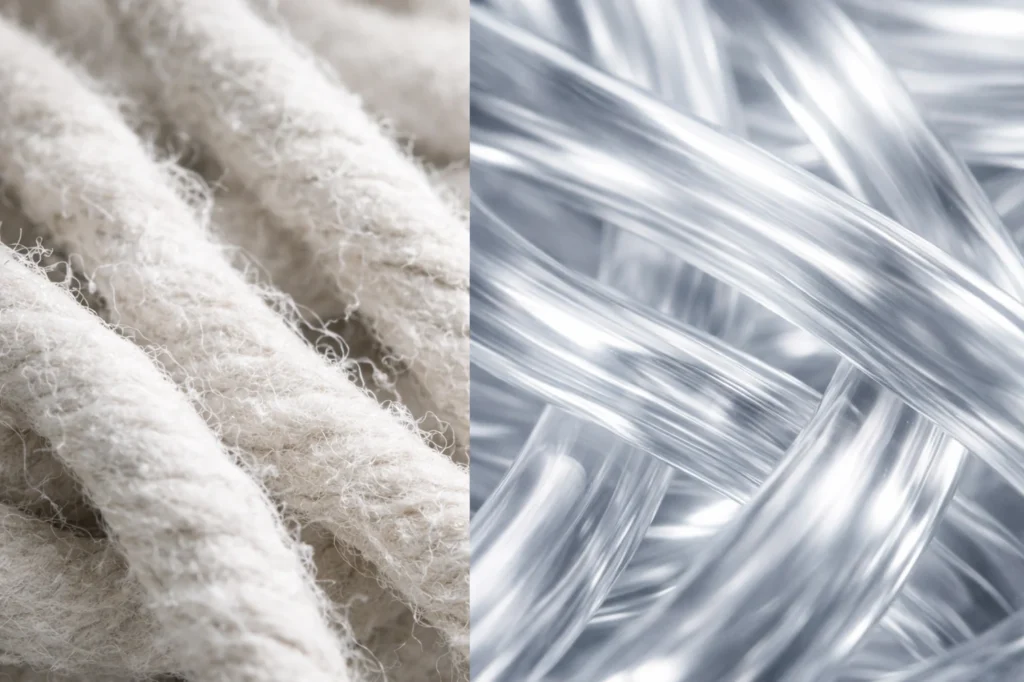
Cotton consists of natural staple fibers with a twisted structure, resulting in a matte finish and a “dry,” crisp hand-feel. Conversely, Viscose is a regenerated cellulose filament; its long, continuous strands create a frictionless surface that feels exceptionally smooth and cool against the skin.
Skin Sensitivity & Softness
Cotton is the gold standard for hypoallergenic performance. As a 100% natural fiber, it contains no residual processing chemicals, making it ideal for those with eczema or dermatitis. While Viscose is soft, its chemical-heavy manufacturing process may occasionally irritate ultra-sensitive skin.
Moisture Absorption & Cooling Effect
Viscose is significantly more hygroscopic than cotton, absorbing up to 1.5x its weight in moisture. This rapid absorption triggers a high rate of evaporative cooling, making it feel colder to the touch. Cotton absorbs moisture effectively but retains a “damp” feel longer, whereas Viscose excels at pulling sweat away during peak humidity.
Durability & Strength (Dry vs Wet Performance)
Tensile Strength Comparison
Cotton possesses high tenacity, ranging from 3.0 to 5.0 grams/denier, allowing it to withstand significant mechanical stress. Viscose has lower dry tenacity and lacks the natural twist of cotton fibers, making it more susceptible to surface abrasion and pilling over time.
Wet Strength Reduction in Viscose
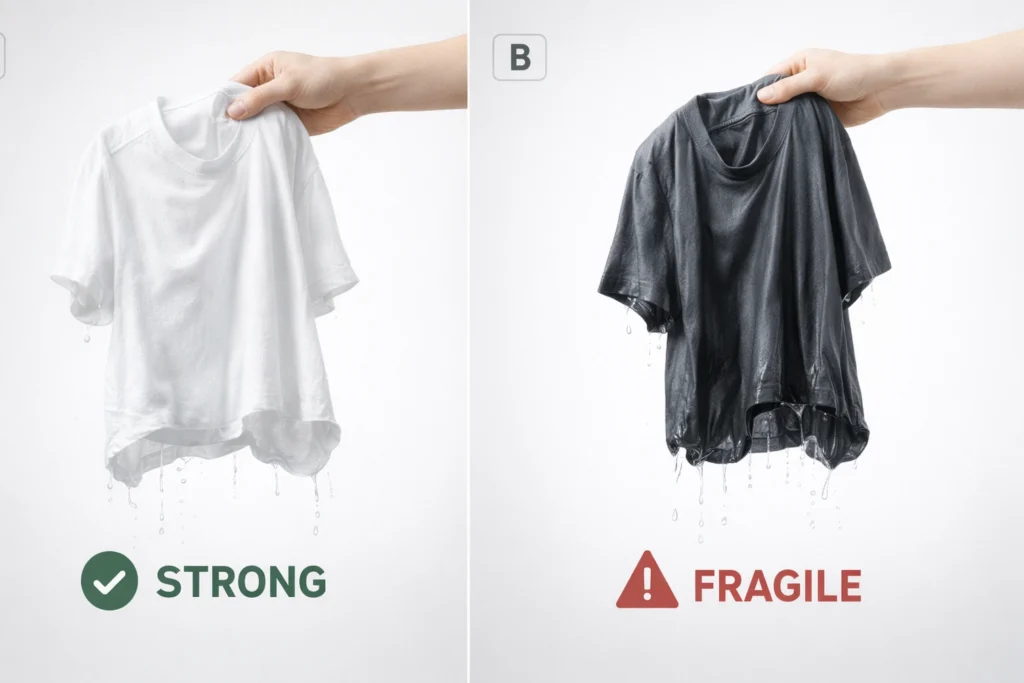
Critical Risk: Viscose is highly unstable when submerged. It loses 50% of its structural integrity when wet, causing fibers to become brittle and prone to snapping. Never wring or twist wet viscose garments; the mechanical force will cause permanent fiber breakage or severe misshaping that cannot be reversed by ironing.
Longevity in Daily Use
Cotton is a legacy fiber that actually improves with age, as repeated washing softens the cellulose bonds without compromising the garment’s form. In contrast, Viscose degrades with every wash cycle. The regenerated fibers eventually thin out, leading to a loss of “body” and the eventual appearance of micro-tears near seams.
Shrinkage & Washing Behavior
Heat Sensitivity
Cotton exhibits high thermal resistance, safely tolerating high-heat iron settings and tumble drying. Viscose is extremely thermosensitive; excessive heat causes fibers to yellow, weaken, or melt. Always use a pressing cloth and a cool iron setting to avoid permanent scorch marks or surface glazing.
Dimensional Stability
Viscose lacks “elastic recovery,” leading to poor dimensional stability. The fibers swell significantly when wet and may “lock” into a shrunken state or permanently stretch (grow) under their own weight if hung to dry. Cotton is far more stable, usually reaching its residual shrinkage limit after just one or two wash cycles.
Care Requirements
Direct Advice:
- Cotton: Machine wash warm; tumble dry medium. Built for high-agitation cleaning.
- Viscose:Hand-wash cold or dry clean only. Use a mesh bag if machine-washing on “Delicate” is unavoidable to prevent fiber distortion.
Breathability & Moisture Management
Air Permeability
Cotton features a natural, irregular fiber twist that creates microscopic gaps in the yarn, ensuring superior air permeability. This physical structure allows heat to escape efficiently, maintaining a dry microclimate between the fabric and skin.
Sweat Absorption
Viscose is exceptionally hydrophilic, utilizing rapid capillary action to pull liquid sweat away from the body faster than cotton. However, its high retention capacity becomes a liability in humid conditions. Because viscose dries slower, it stays damp longer, creating an environment where odor-causing bacteria thrive.
Humidity Performance
In stagnant, humid air, cotton’s ability to release moisture quickly makes it feel “fresher.” While viscose is the king of initial wicking, its tendency to hold onto moisture means it can feel heavy and “soggy” during prolonged high-output activity compared to the crisp performance of cotton.
Environmental & Sustainability Comparison
Natural vs Semi-Synthetic Origin
Cotton is a 100% natural seed fiber. While biodegradable, conventional cultivation is resource-intensive, often requiring vast amounts of water and synthetic pesticides. Viscose is a regenerated cellulose fiber derived from wood pulp (bamboo, pine, or eucalyptus). Although plant-based, it requires intensive chemical transformation to turn solid wood into soft textile filaments.
Water & Chemical Processing
The primary environmental risk is the “toxic viscose process,” which traditionally releases carbon disulfide into local waterways. To mitigate this, look for “Closed-loop” manufacturing, where 99% of solvents and water are recovered and reused. Cotton’s impact is primarily at the farm level, involving high runoff risks in non-organic systems.
Specific Advice: Look for Certifications
To ensure a truly sustainable purchase, ignore generic labels and seek these verified standards:
- For Cotton: Seek GOTS (Global Organic Textile Standard). This guarantees the fiber is grown without toxic chemicals and meets strict social criteria.
- For Viscose: Prioritize Lenzing™ EcoVero™. It is the industry gold standard for transparency, utilizing FSC-certified wood and a process that generates 50% lower emissions and water impact than generic viscose.
Cotton–Viscose Blends (Are They Better?)
Blended fabrics offer a “Best of Both Worlds” engineering solution to the inherent weaknesses of each fiber. A 50/50 blend leverages Cotton’s structural tenacity to reinforce the fabric, significantly reducing the high shrinkage and wet-strength fragility associated with pure viscose fabrics.
Simultaneously, the Viscose component adds a silky hand-feel and superior drape to the weave, eliminating the stiff “boxy” texture of heavy cotton. These hybrids are the premium choice for modern shirting and premium knits, providing a garment that is both durable enough for machine washing and luxurious enough for high-end fashion.
When to Choose Cotton vs When to Choose Viscose
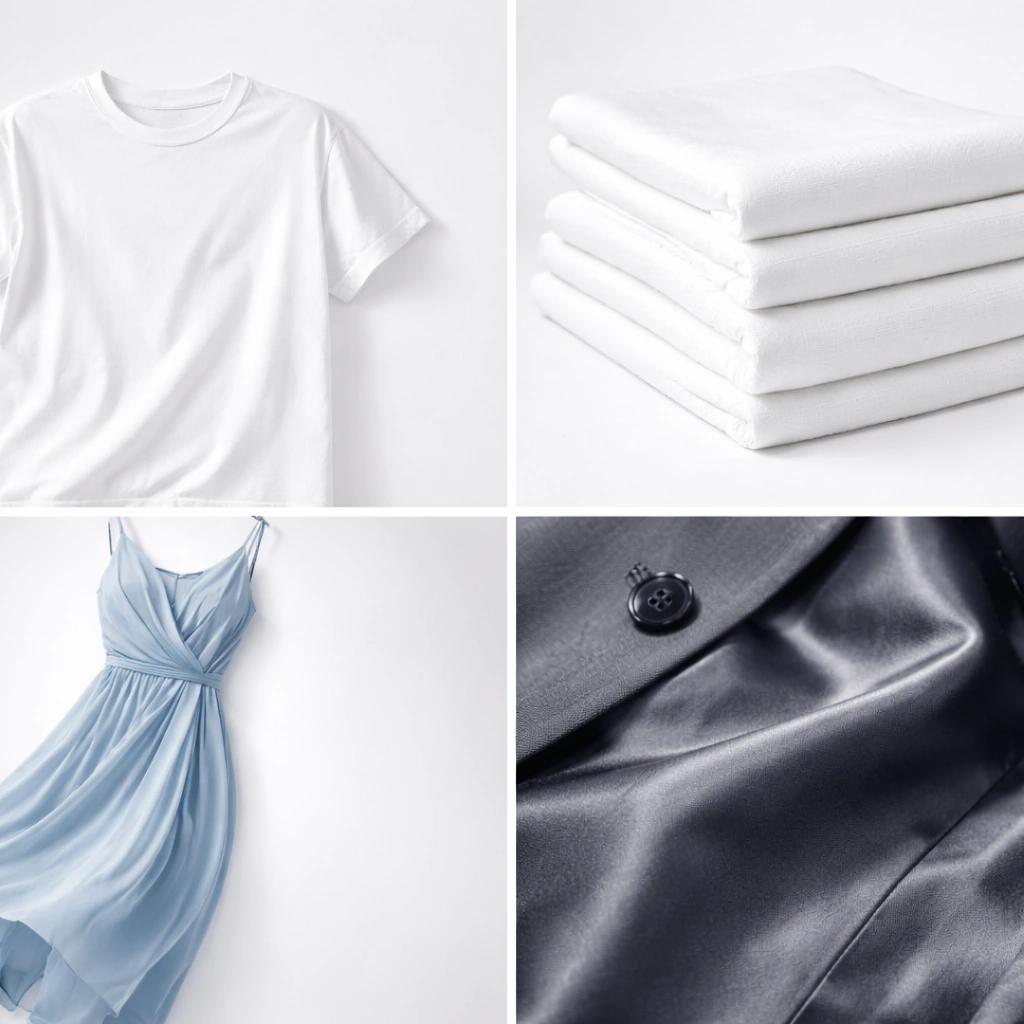
Use this checklist to match fiber performance with your specific end-use requirements.
Select Cotton for:
- High-Utility Basics: Standard t-shirts, denim, and socks that require frequent heavy laundering.
- Home Textiles: Bedsheets and towels; cotton’s wet strength and heat tolerance are essential here.
- Sensitive Skin: Newborn clothing or medical-grade dressings where hypoallergenic purity is mandatory.
Select Viscose for:
- Fluid Fashion: Evening gowns, summer midi-dresses, and blouses requiring a silk-like drape.
- Luxury Linings: Suit and blazer interiors where a frictionless, cooling surface is preferred.
- High-Heat Breeziness: Vacation wear for tropical climates where maximum moisture wicking is the priority.
FAQs
Is viscose better than cotton in summer?
Yes, for cooling; no, for freshness. Viscose is more hydrophilic, absorbing 1.5x more sweat to provide an immediate cooling sensation. However, Cotton dries faster; in high humidity, viscose stays damp and may retain odors longer than breathable cotton.
Does viscose shrink permanently?
Yes. Viscose is highly unstable. Exposure to high heat or agitation causes the regenerated cellulose fibers to “lock” into a shrunken state. Unlike cotton, which can sometimes be stretched back, viscose shrinkage is often irreversible due to fiber distortion.
Is viscose eco-friendly?
It depends on the process. While biodegradable and plant-based, “generic” viscose uses toxic carbon disulfide. It is only eco-friendly if labeled as “Closed-loop” or Lenzing™ EcoVero™, which recycles 99% of chemicals and uses FSC-certified wood pulp.
Why is viscose considered “bad”?
Viscose is considered bad due to these two factors: poor durability (it falls apart when wet) and environmental toxicity in standard manufacturing. It is a “disposable” fashion fiber unless sourced responsibly and laundered with extreme care.
Final Verdict
Cotton for life.
Viscose for Style.
Blend for the best of both.