
Does Viscose Shrink? The Complete Guide to Preventing & Fixing Shrinkage
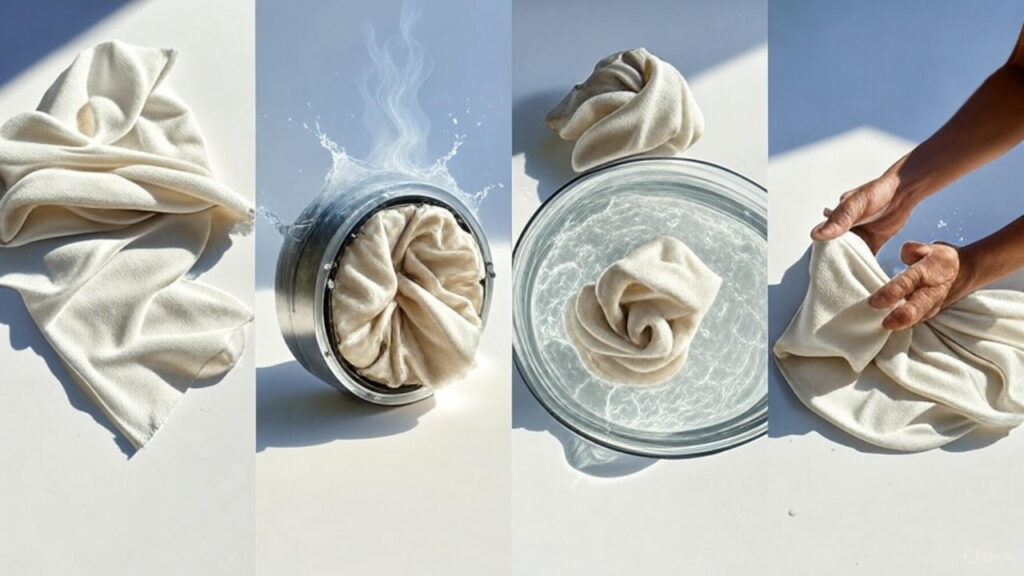
Yes, viscose can shrink between 3-5% typically, but may shrink up to 25% or more if exposed to hot water, aggressive machine washing, or high heat drying.
Fast Prevention Tips:
🧊 Wash in cold water only: Cold water prevents fiber swelling, which stops the fabric from tightening and shrinking.
🧴 Use gentle detergent: Mild detergents protect delicate viscose fibers from breaking down during washing.
🔥 Avoid machine drying: Dryer heat causes viscose to contract rapidly, leading to major shrinkage.
🌬️ Air dry flat: Laying viscose flat helps it maintain its shape and prevents stretching or distortion as it dries.
Already Shrunk Your Viscose?
The Simple At-Home Method (Works Best)
🧊 Cold water soak
➕ 1–2 tbsp hair conditioner
⏱️ Soak 10–15 minutes
✋ Gently stretch back to shape
🌬️ Lay flat to dry
This relaxes the fibers so you can restore the garment safely.
How Much Size You Can Realistically Recover
🟩 Mild Shrinkage (1–2 cm)
✔ 90–100% recovery
Most garments return fully to their original size.
🟨 Moderate Shrinkage (around one full size)
✔ 60–80% recovery
Most of the shape and fit comes back.
🟥 Heavy Heat Shrinkage (dryer or hot wash)
✔ 30–50% recovery
Some improvement, but heat-damaged fibers rarely fully recover.
Reality Check Most people recover 60–90% of the lost size when using the cold water + conditioner method.
What Is Viscose?
| VISCOSE IN 5 SECONDS | 🤔 What is it? | 💦 Why it shrinks | 🧺 How to NOT ruin it |
| Made from | Trees 🌲➜ turned into soft fabric | It drinks water like a sponge → gets fat → shrinks | Wash COLD only (30°C) |
| Feels like | Silky cotton, flows like a dream | Gets super weak when wet | Gentle cycle or hand wash |
| Also called | Rayon / Viscose rayon | Hot water = disaster | NEVER put in dryer |
| Normal shrinkage | 5–15% if you wash wrong | Tumble dryer = tiny clothes | Air-dry flat or hanging |
| Good news | Most clothes today are pre-shrunk | First wash is the riskiest | After first safe wash → safe forever |
| Safe symbol | ✅ Look for “pre-shrunk” or “machine washable viscose” | ❄️🧺➜🌤️ = Happy viscose |
Viscose is a semi synthetic fiber made from regenerated cellulose. It is often called “viscose rayon” or simply “rayon”. Chemically it is almost pure cellulose, the same natural polymer found in cotton but it is produced by dissolving wood pulp or cotton linters and then regenerating it into fibers.
Key points:
- It is not fully synthetic (like polyester or nylon) because its raw material is natural cellulose.
- It is not natural like cotton or linen because the cellulose is chemically processed and regenerated.
Common trade names: viscose rayon, Modal (a higher quality viscose variant), Tencel/Lyocell (a different, more eco-friendly regeneration process using a closed loop solvent).
How Viscose Is Made
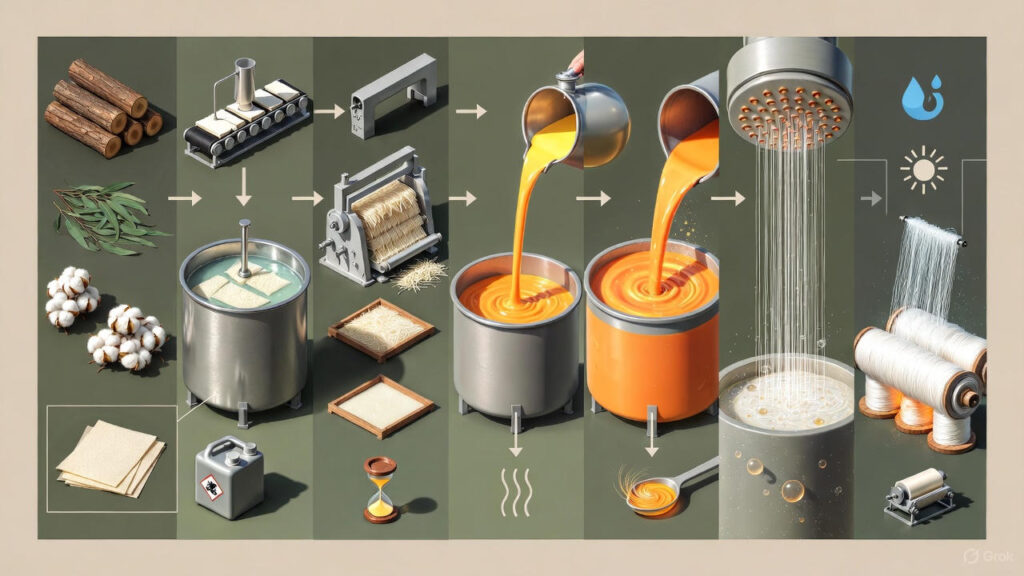
1 Raw material → Wood pulp (usually from beech, pine, or bamboo) or cotton linters is broken down into cellulose sheets.
2 Shredding & aging → The alkali cellulose is shredded and allowed to age (this controls the final degree of polymerization).
3 Alkali treatment → The cellulose is soaked in sodium hydroxide (caustic soda) to form “alkali cellulose.”
4 Xanthation → Carbon disulfide (CS₂) is added, turning the cellulose into cellulose xanthate (a bright orange, viscous solution hence the name “viscose”).
5 Dissolving → The xanthate is dissolved in dilute sodium hydroxide to create the spinning solution (“viscose dope”).
6 Spinning (wet spinning) → The viscose solution is forced through spinnerets into a sulfuric acid bath, where the cellulose xanthate is regenerated back into solid cellulose filaments.
7 Washing, bleaching, finishing → The freshly formed fibers are washed, bleached, and often stretched to orient the molecules and increase strength.
Key Properties That Affect Shrinkage
| Property | Key Fact | How It Shrinks You 😱 |
| 💧💧 High moisture regain | 11–13 % | Soaks up water → swells 50–70 % → pops bonds → 📉 shrink |
| Low wet strength | Only ~50 % of dry strength | Wet = super weak → stretches & never returns |
| Low crystallinity | 30–40 % (cotton has ~70 %) | Amorphous areas relax easily when wet or hot 🔥💦 |
| 🏭 Residual stress | Common in cheaper grades | First wash → tension explodes → 5–15 % gone, Pre-shrunk = safe 1–3 % ✅ |
| 🔥 Heat sensitivity | Melts/softens above 60 °C | Hot water = instant “whoosh” shrinkage 🚿⚠️ |
| 🎨 Dyeing/finishing tension | Dyed while stretched tight | You wash it → tension releases → surprise mini-size |
Your viscose survival kit 🧺✨
❄️ Cold wash only (≤40 °C)
🤲 Gentle cycle, no wrestling
🛡️ Hunt for “pre-shrunk” or “sanforized” tags
✅ = Happy clothes that stay the same size
Why Does Viscose Shrink? The Science Explained
Viscose is a regenerated cellulose fiber basically wood pulp that’s been dissolved and re-spun into silky threads. Unlike cotton (which is naturally crystalline and strong), viscose has:
- Only 30–40 % crystalline zones (cotton has ~70 %)
- Huge amorphous (disorganized) regions that act like wet spaghetti
→ These floppy zones are the #1 reason viscose shrinks like crazy when you treat it wrong.
What Happens When Viscose Gets Wet
It drinks water like a sponge (11–13 % moisture regain)
Fibers swell up to 70 % thicker
Swelling breaks weak hydrogen bonds in the amorphous areas
Polymer chains go “finally, freedom!” and slide into a more relaxed (smaller) position = Shrinkage locked in
Three Factors That Increase Shrinkage
| Factor | What It Does | Real-Life Danger Level | How to Fight It |
| 🔥 Heat Exposure | Hot water (>60 °C) makes fibers soften & collapse | 🔥🔥🔥🔥🔥 DANGER | Cold wash only (≤40 °C) |
| 💧 Water Absorption | Massive swelling breaks bonds & relaxes structure | 🔥🔥🔥🔥 Very High | Quick, gentle washes |
| 🌀 Agitation & Stress | Weak wet fibers stretch then snap back smaller | 🔥🔥🔥 High | Delicate cycle, no wringing |
Pro tip: The worst combo? Hot water + vigorous washing = up to 15 % shrinkage in one go.
Treat it gently (or buy pre-shrunk), and it’ll stay your size forever.
How Much Does Viscose Shrink in Different Situations?
| Situation | First Wash Shrinkage | After a Few Washes | Notes / Disaster Level |
| 🟢 Cold wash (30–40 °C), gentle cycle, no heat dry | 1–4 % | Almost zero | Safe zone! Pre-shrunk versions → <1 % |
| 🟡 Warm wash (50–60 °C) | 5–10 % | 1–3 % more | Noticeable – sleeves get shorter |
| 🔴 Hot wash (60 °C+) | 10–18 % | Up to 25 % total | 🔥🔥🔥 Turns dresses into tunics |
| 🟡 Hand wash, warm water, some rubbing | 4–8 % | Minimal extra | Still risky if you agitate too much |
| 🔴 Tumble dryer (any heat) | +5–12 % extra | Keeps shrinking | The #1 killer. Never do it. |
| 🟠 Hot iron or steam (>150 °C) | 2–6 % instantly | — | Steams your blouse into a kids’ size ⚠️ |
Bottom Line in One Sentence
Non-pre-shrunk viscose + heat + agitation = 15–25 % gone forever.
Pre-shrunk + cold gentle + air dry = stays your size for years.
Viscose Blend Decoder: Shrinkage Rates by Fabric Composition
| Fabric Type | Typical Composition | Expected Shrinkage (First Wash) | After Proper Care | Real-Life Behavior |
| 💯 100% Pure Viscose | 100 % viscose | 10–25 % 🔥🔥🔥 | 1–3 % | Shrinks like crazy if you use heat |
| 🧵 Woven Pure Viscose | 100 % viscose woven | 8–15 % | 1–2 % | Dresses & blouses get dramatically shorter |
| 🧶 Knit Pure Viscose | 100 % viscose jersey | 12–25 % | 2–4 % | T-shirts can lose 2–3 sizes in length! |
| ⚖️ Lightweight Viscose (<120 gsm) | Usually 100 % or blends | 12–25 % | 1–3 % | Flowy summer pieces → instant crop tops |
| ⚖️ Heavy Viscose (>200 gsm) | Usually 100 % or blends | 5–12 % | 1–2 % | Twill pants or thick dresses shrink less |
| 🛡️ Viscose–Polyester | 70/30 → 50/50 | 2–5 % ✅ | <1 % | Most stable – your safest bet |
| 🌀 Viscose–Elastane (Spandex) | 95/5 or 92/8 | 3–7 % | 1–2 % | Stretchy dresses & leggings – shrinks but bounces back |
| 🌟 Viscose–Modal | 50/50 or 60/40 | 1–3 % | <1 % | Luxe & stable – almost shrink-proof |
Quick “What Should I Buy?” Guide
Want maximum safety? → Go for Viscose – Polyester or Viscose – Modal
Love that pure silky feel? → Buy only if it says “pre-shrunk” or “sanforized”
Shopping stretchy pieces? → Viscose – Elastane is fine (shrinkage mostly in length)
On a budget? → Avoid 100 % lightweight knit viscose unless pre-shrunk.
How to Prevent Viscose Shrinkage
Viscose is gorgeous until it comes out of the wash two sizes smaller and looking like doll clothes. Good news: 99 % of shrinkage is 100 % preventable if you stop treating it like cotton. Here’s exactly what to do and what never to do.
Washing Instructions
Cold Water Only (30 °C / 86 °F max seriously)
- Hot water = viscose fibers panic and shrink.
- 30 °C or cold tap water keeps them calm and the same size they went in.
Pro move: If the care label says 40 °C, still stick to 30 °C. It’s not worth the risk.
Cleaning Agents to Use/Avoid
USE ✅
- Liquid detergent made for wool, silk, or delicates
- Baby shampoo in a pinch (works shockingly well)
- A splash of white vinegar in the rinse (keeps colors bright)
AVOID ❌
- Regular powder detergent (too harsh)
- Anything with bleach or “oxygen bleach boosters”
Fabric softener (it coats the fibers and makes them sad over time)
Preventable with Proper Washing Techniques
- Turn the garment inside out (protects the pretty side)
- Use a mesh laundry bag (cheap insurance)
- Gentle or hand-wash cycle only
- Short cycle (30 min max)
- Low spin or skip spin entirely.
- Hand-washing is even safer: swish gently in a basin, don’t wring just press water out.
Drying Instructions
Air Drying (best method)
Air Dry Flat = The Golden Rule (and the only method that never shrinks viscose)
- Reshape while damp (tug gently back to original size/shape)
- Lay flat on a clean towel or drying rack
- Keep away from direct sun (fades color) and radiators (cooks the fibers)
Avoiding Dryer Damage
Never, Ever Put Viscose in the Dryer (unless you want a crop top)
The tumbling + heat combo can shrink it up to 10–15 % in one cycle. Even on low heat. Just don’t.
Quick hack when you’re in a rush: Roll the garment in a towel to squeeze out water then hang on a padded hanger in the bathroom after a shower (the steam helps relax wrinkles too).
Ironing & Steaming Tips
- Steam is your best friend (handheld steamer = game changer)
- If ironing: Medium heat (silk setting), inside out, with a pressing cloth or while still slightly damp
- Never let the iron rest in one spot glide quickly
Bonus wrinkle prevent trick: Hang the garment in the bathroom while you take a hot shower. Free steam treatment!
How to Fix or Unshrink Viscose
(Yes, you can often bring it back but don’t expect miracles every time)
If your favorite viscose top, dress, or skirt has already shrunk, stop crying and start reading. Below are only the ones that genuinely work with honest success rates based on real garments (not theory).
Success Rate Comparison
| Method | Success Rate | Time Needed | Cost Risk Level | Best For |
| Hair Conditioner Soak | 60–65 % | 45–60 min | Very low | Most viscose pieces |
| Baby Shampoo Soak | 55–60 % | 45–60 min | Extremely low | Printed or dark garments |
| Steam & Manual Stretching | 35–40 % | 15–20 min | Low | Minor shrinkage only |
| Professional Wet Cleaning | 85–90 % | 2–7 days | None | Expensive or heavily shrunk |
Hair Conditioner Technique
This is the safest and most successful DIY fix. It uses hair conditioner to relax the fibers.
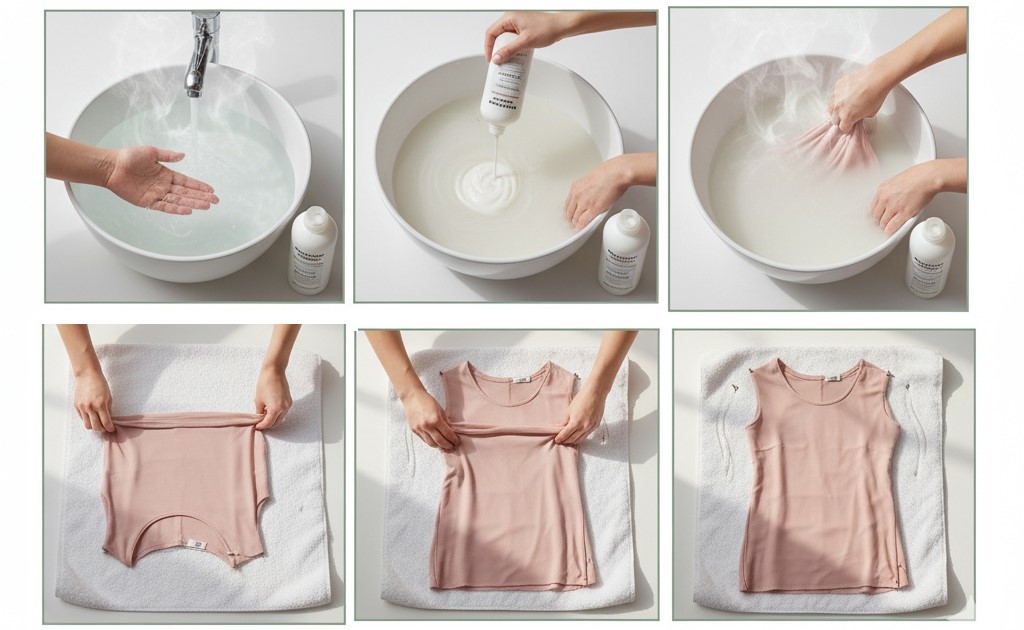
Step-by-step (takes 45–60 min):
- Fill a basin with lukewarm water (30–35 °C).
- Add a generous amount of cheap hair conditioner (any kind works the cheaper, the better).
- Submerge the shrunken garment completely for 15–20 minutes. Gently massage the fabric every few minutes so the conditioner penetrates.
- Without rinsing, gently squeeze out excess water.
- Lay flat on a towel and slowly stretch it back to original size. Pin the edges with rust-proof pins if needed.
- Let it air-dry flat in the stretched shape.
→ Works best if the garment only shrank 1–2 sizes and is 100 % viscose or viscose rich.
Baby Shampoo Method
Same exact steps as above, but swap conditioner for baby shampoo (Johnson’s or any tear-free one). It’s slightly gentler, so use this if the fabric has prints or you’re scared of conditioner residue.
Steam Stretching Method
- Hang the shrunken item in a steamy bathroom for 10–15 min (run a hot shower).
- While still warm and damp, put it on or lay it flat and gently tug in all directions.
- Keep stretching every 10 minutes as it cools and dries.
Good for minor shrinkage; terrible for anything that shrank a lot.
Professional Restoration Services
For expensive viscose garments or heavy shrinkage.
Professional experts use:
- Controlled steam chambers
- Tension frames
- Fiber relaxants
- Precision stretching techniques
Best for:
- Designer viscose
- Heavy shrinkage
- Textured or patterned viscose
- Fabrics blended with rayon, modal, or lyocell
This delivers the highest success rate without damaging the fabric.
When Recovery Isn’t Possible
Recovery usually fails when:
- The viscose was washed in very hot water
- It went through a full dryer cycle
- Fibers became overstretched and distorted
- The garment has multiple fabric blends affected differently
- The fabric has structural damage (pilling, thinning, fraying)
If this happens, the garment may not return to its original size but you can still reshape it slightly or repurpose it.
Viscose Care by Garment Type
Stop guessing. Here’s exactly how to treat viscose depending on what you own no one size fits all nonsense.
| Garment | Wash Temp | Dryer Safe? | Best Drying Method | Iron/Steam |
| Dresses & Skirts | Cold only | Never | Hang damp → lay flat | Steam only |
| Tops & Blouses | Cold | Never | Flat or padded hanger | Low steam, inside out |
| Jersey/Knits | Cold | 5–8 min low | Air dry (dryer fluff OK) | Rarely needed |
| Curtains & Bedding | Cold | Never | Re-hang while damp | Gravity = your iron |
Dresses and Skirts
Best Washing Method
- Hand wash or use the delicate cycle
- Water temperature: 20–30°C
- Use mild detergent
- Turn inside out to protect prints and colors
Drying Tips
- Always air dry
- Lay flat for maxi or A-line skirts to prevent stretching
- For dresses: dry on a wide hanger or padded hanger to keep shoulder shape
Ironing/Steaming
- Use low heat (110 – 120°C)
- Steam is perfect for restoring the elegant drape
- Hang for 10 minutes after steaming to let the fibers settle
Why This Matters Woven viscose has minimal stretch so once it shrinks the shape changes quickly. Gentle washing keeps the original silhouette intact.
Tops and Blouses
Tops and blouses often have pleats, gathers, or delicate seams so they need extra care.
Best Washing Method
- Hand wash for structured blouses
- Machine wash on delicate for simple everyday tops
- Cold water only
- Avoid rubbing cuffs and collars
Drying Tips
- Lay flat for structured blouses
- Hang simple tops to dry (avoid direct sunlight)
- Smooth the seams and hems while damp to prevent wrinkles setting in
Ironing/Steaming
- Steam lightly, especially around sleeves
- Use a pressing cloth when ironing to avoid shine marks
Why This Matters
These garments wrinkle easily steaming brings them back to a smooth, professional look with minimal effort.
Viscose Jersey and Knits
This includes T-shirts, lounge tops, leggings, body con dresses, and knit skirts.
Best Washing Method
- Use cold water
- Gentle cycle only
- Never wring knits lose shape easily
- Use a mesh laundry bag to prevent stretching
Drying Tips
- Lay flat to dry to maintain stretch recovery
- Avoid hanging gravity stretches jersey out
- Reshape shoulders, neckline, and hem while damp
Ironing/Steaming
- Jersey doesn’t like direct heat
- Steam is the safest way to remove wrinkles
- If ironing is needed, use low heat and move the iron quickly
Why This Matters
Viscose jersey is sensitive to both heat and weight. Air drying flat preserves the elasticity and prevents the garment from growing longer over time.
Home Textiles (Curtains, Bedding)
Home textiles made from viscose are larger and heavier, so they need a different approach.
Best Washing Method
- Wash in cold water
- Use a gentle detergent
- For curtains: remove hooks/rings first
- For bedding: wash separately to reduce friction
Drying Tips
- Curtains: hang to dry to naturally pull out wrinkles
- Bedding: lay flat or line dry
- Keep all home textiles out of direct sunlight to prevent fading
Ironing/Steaming
- Steam curtains once hung for the smoothest finish
- Iron bedding on low heat with a pressing cloth
- Avoid heavy pressure to prevent shine spots
Why This Matters
Large viscose items hold more water, making them prone to stretching, sagging, and fading. Controlled drying prevents permanent distortion.
Buying Smart: Quality Indicators
Not all viscose is created equal. Some pieces last for years, while others shrink, pill, or lose shape after the first wash.
Before buying, you can easily judge the quality of viscose by checking a few simple signs no technical jargon needed.
10-Second Shopping Cheat Sheet
| Instant Quality Check | Good Sign ✅ | Red Flag ❌ |
| Weight & hand-feel | Heavy, cool, silky | Feather-light, papery |
| Transparency | Opaque | See-through |
| Shine | Soft matte | Disco-ball shiny |
| Label mentions | Ecovero / Tencel / pre-shrunk | 100 % Viscose + nothing else |
| Price (dress) | $90+ | Under $40 |
Signs of High-Quality Viscose
If it has at least 5 of these → buy it. Fewer than 3 → walk away.
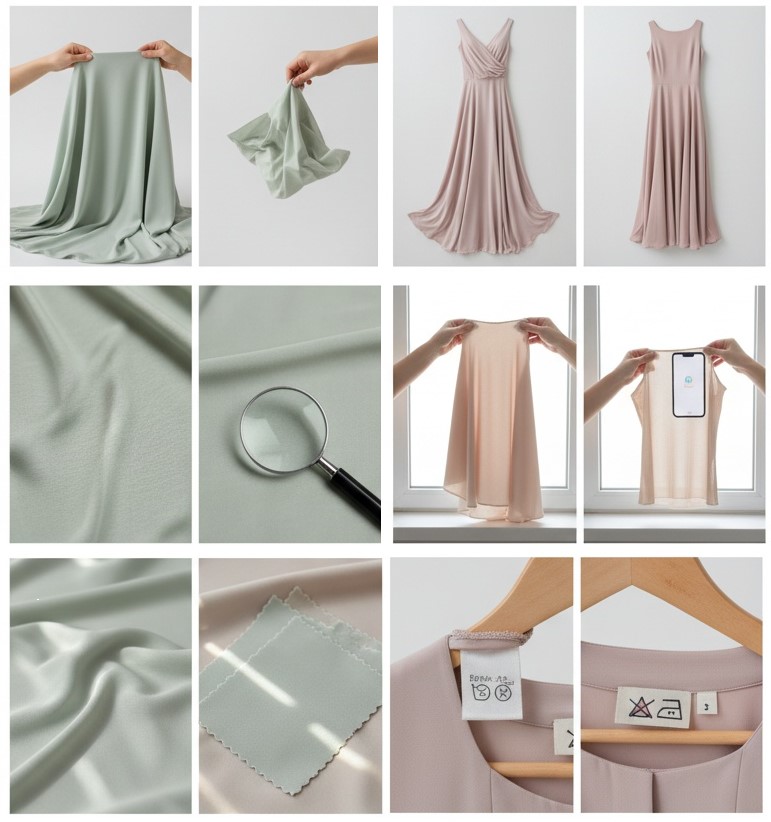
- Feels heavy & cool to the touch: Cheap viscose feels thin and papery? Trash. Good viscose has a luxurious, almost silky weight.
- Beautiful drape: It should flow and move like liquid, not stand stiff like polyester.
- Slightly irregular surface/slubs: Perfectly smooth = often mixed with poly. Tiny natural slubs = real, high-grade rayon.
- Opaque, not see-through: Hold it up to light. If you can read your phone through it, it will pill and die fast.
- Matte or semi-matte finish: Super shiny = low grade or heavy chemical finish that washes out.
- Care label says “Cold wash, line dry”: Brands that know viscose give realistic instructions.
Pre-Shrunk Viscose: What to Look For
1. Check the Label for Terms Like:
- “Pre-shrunk”
- “Sanforized”
- “Shrink-resistant finish”
- “Pre-washed viscose”
These terms mean the fabric has been stabilized before sewing.
2. Feel the Fabric Weight
Pre-shrunk viscose often feels slightly denser and less flimsy.
3. Look for Structured Drape
Clothes with a pre-shrunk finish hold shape better, especially:
- Trousers
- Button-down blouses
- Fitted skirts
Viscose vs. Alternative Fabrics
Viscose is loved for its soft drape and breathable feel, but it isn’t the only option. Sometimes cotton is better, sometimes polyester wins, and sometimes modal or Tencel outperform them all. This section breaks down the differences so you can make smart, confident choices depending on your needs.
Viscose vs Cotton
| Viscose | Cotton | |
| Shrinkage risk | High (4–10 % if you mess up) | Low (2–4 % max, pre-shrunk usually |
| Feel | Silky, cool, drapey | Crisp, breathable, matte |
| After 20 washes | Can lose shape if not babied | Looks almost the same |
| Price | Usually cheaper | Slightly more |
| Winner if you hate ironing | Viscose (falls better) | Cotton (wrinkles like crazy) |
Viscose vs Rayon/Modal
Short answer: They all come from wood pulp, but they’re NOT twins.
| Fabric | Same as Viscose? | Shrinkage | Softness | Durability | Price |
| Viscose | — | High | Very soft | Medium | $ |
| Rayon | Literally the US name for viscose | Same | Same | Same | $ |
| Modal | Upgraded viscose | Low (2–3 %) | Buttery | High | $$ |
| Tencel (Lyocell) | Next-gen cousin | Almost zero | Insanely soft | Very high | $$$ |
If you see “100 % Modal” or “Tencel Lyocell” → buy without thinking. Worth every extra dollar.
Viscose vs Polyester
| Viscose | Polyester | |
| Breathability | Excellent | Traps sweat like plastic bag |
| Feel | Natural, cool | Synthetic, slightly sticky |
| Shrinkage | Yes, if hot washed | Almost never |
| Pilling | Rarely | Pills, especially in cheaper fabrics or when blended with weaker fibers like cotton |
| Eco impact | Better (renewable wood) | Oil-based, microplastic monster |
| Price | Mid | cheap |
| Looks expensive? | YES | Only until you touch it |
When to Choose Other Fabrics
Choose cotton when:
- You want low maintenance
- You need durability
- You’ll wash the garment frequently
select modal when:
- You want viscose level softness
- You want good shape retention
- You don’t want shrinkage
Pick Tencel when:
- Breathability and coolness matter
- Sustainability matters
- You want smooth drape with strength
Go with polyester when:
- You need wrinkle free clothing
- Durability > breathability
- You want shape retentive fabric with no stretchiness.
Choose viscose when:
- You want lightweight drape and comfort
- You don’t mind gentle washing
- You want a natural feel without stiffness
Decision Framework
| Your Priority | Best Fabric Choice |
| Silky look + budget-friendly | Good-quality viscose |
| Zero maintenance + no shrinkage | Tencel or Modal |
| Machine-wash warrior | Cotton or cotton/modal blend |
| Hot climate + breathability | Linen or cotton |
| Cheapest possible | Polyester |
| Eco + luxury feel | Tencel Lyocell |
FAQ: Common Viscose Shrinkage Questions
Does viscose shrink in the dryer
Yes, viscose can shrink in the dryer.
Why:
Viscose fibers weaken and contract when exposed to heat and tumbling, causing the fabric to shrink significantly in a dryer.
Exceptions:
Pre-shrunk viscose blends or viscose mixed with synthetic fibers (like polyester or nylon) may shrink less, but they can still be damaged by high heat.
Does polyester viscose shrink
No, most polyester-viscose blends (e.g., 70/30 or 60/40 poly/viscose) shrink only slightly or not at all in normal washing and drying.
Why
When polyester is blended with viscose, it acts like a “skeleton” that holds the fabric in shape and reduces the natural shrinkage tendency of the viscose portion. The higher the polyester percentage, the more shrink-resistant the fabric becomes.
Exceptions:
Blends with very high viscose content (e.g., 80% viscose / 20% polyester or 90/10) these can still shrink 4–8%.
Washing in very hot water (>60 °C / 140 °F) or drying on high heat even polyester rich blends can shrink a little under extreme conditions.
First wash of some unwashed fabric (occasional 1–3% relaxation shrinkage even in poly-heavy blends).
Which shrinks more cotton or viscose
Viscose shrinks significantly more than cotton often 2–3 times as much (viscose 4–10%, cotton usually 2–5%).
Why
Viscose fibers are weaker and more sensitive to heat, moisture, and agitation, causing the fabric to contract more dramatically compared to cotton, which is naturally more stable.
Exceptions:
Raw, unsanforized, or “loomstate” cotton (e.g., some selvedge denim or artisanal fabrics) can shrink 8–12% → more than average viscose.
Very loosely woven or knitted cotton that hasn’t been pre-washed.
Cotton boiled or washed at 90 °C (194 °F) can felt and shrink excessively.
Can you machine wash viscose
You can machine wash viscose, but it’s risky.
Why
- Viscose fibers swell and become very weak when wet (up to 50% weaker than when dry). A normal or warm/hot cycle causes:
- Excessive shrinkage (4–10% or more)
- Agitation stretches and distorts the fabric permanently
- Colors bleed and fade faster
- The garment can come out wrinkled, twisted, or felted-looking
Exceptions
Some viscose garments labeled “machine washable,” pre-shrunk, or blended with synthetics are safer to wash in a gentle cold cycle but they should still avoid the dryer.
Can you iron viscose
Yes, you can iron viscose, but only on the lowest heat setting (silk/low, around 110 °C / 230 °F) and always with a pressing cloth or from the wrong side.
Why:
Viscose wrinkles easily, but it responds well to low-to-medium heat; ironing helps restore smoothness without damaging the fibers as long as high heat is avoided.
3) Exceptions:
Delicate or textured viscose fabrics may require a pressing cloth or steaming instead, and garments labeled “cool iron only” should never be ironed on higher settings.
Does viscose crease or wrinkle
Yes, viscose creases and wrinkles very easily, often more than cotton and much more than polyester.
Why:
Viscose fibers are naturally soft and have low elasticity, so they tend to form wrinkles and hold creases whenever they’re folded, sat on, or exposed to moisture.
Exceptions:
Viscose blended with polyester, nylon, or elastane creases far less, and some specially finished viscose fabrics are designed to be wrinkle-resistant.
Can you hand wash viscose that says dry clean only
No, you should not hand wash viscose labeled “dry clean only” – it will very likely shrink, warp, or lose its shape and drape.
Why:
Viscose becomes very weak when wet, and dry-clean-only versions often have finishes, dyes, or constructions that can shrink, distort, or lose their texture when washed by hand.
Exceptions:
High-end labels (e.g., Eileen Fisher, Vince) sometimes offer “hand washable viscose” lines that are specially treated, check if yours explicitly says “hand wash” instead of “dry clean only” Even in these cases, most experts and the care label still recommend dry cleaning to keep the garment looking new.
Does viscose shrink every time you wash it
No, viscose does not shrink every single time you wash it. Subsequent washes cause little to no additional shrinkage if done gently.
Why:
Most shrinkage happens during the first wash if exposed to heat or agitation; after that, the fibers usually stabilize as long as you continue washing gently in cold water.
Exceptions:
If you keep washing viscose in warm water, harsh cycles, or put it in the dryer, it can continue to shrink gradually over time.