Usama Ayub

Usama is the founder of PlasticSpec and a materials researcher specialising in engineering thermoplastics. He publishes machining parameters, material property data, and selection guides for Delrin, Nylon, PEEK, PTFE, UHMW, Polycarbonate, and ABS.

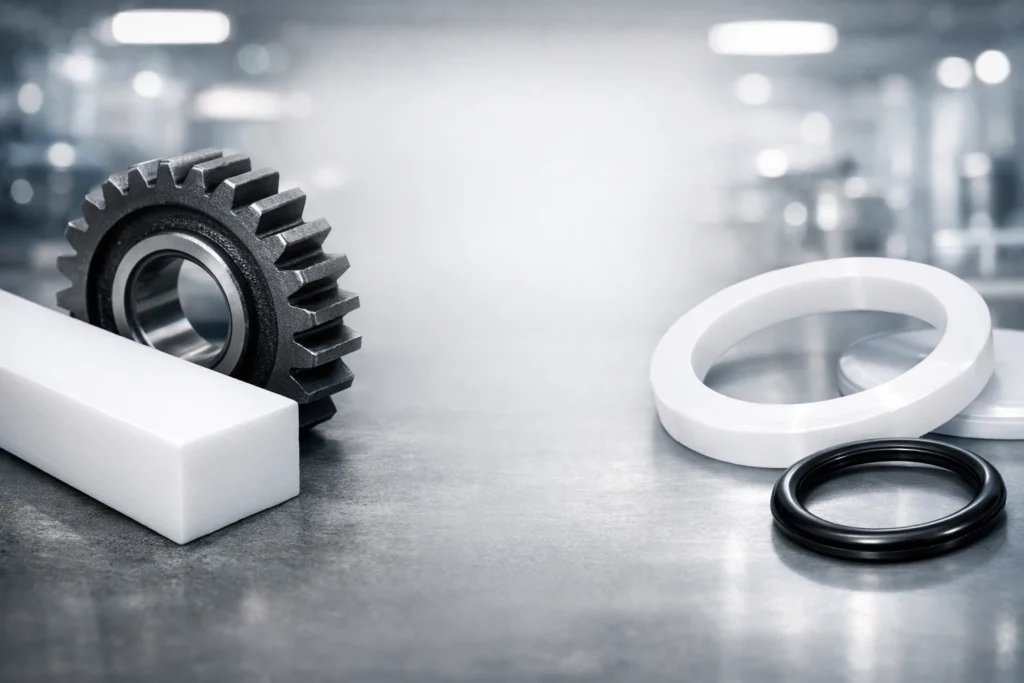
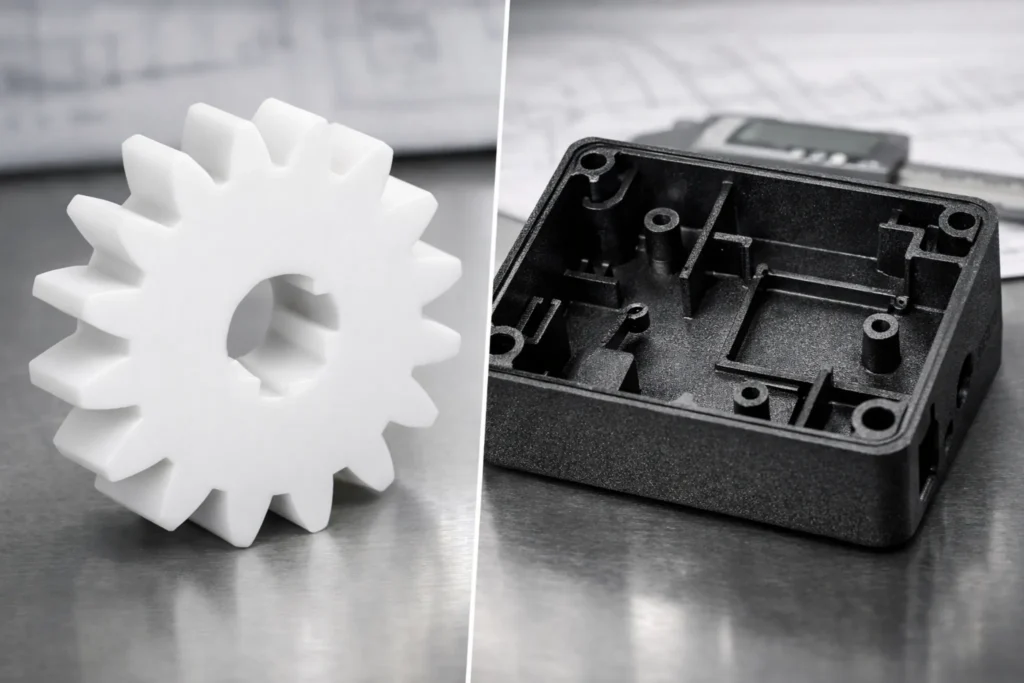
Side-by-side comparison of a white Delrin gear and a black ABS housing showing material texture and machining precision.

Delrin vs ABS

Delrin (Acetal/POM) vs ABS: Strength, Machining, Cost & Selection Guide Delrin (Acetal) is stronger, more dimensionally stable, and better for precision moving parts like gears and bushings. ABS is more impact-resistant, easier to mold, and better for housings and cosmetic components. Choose Delrin for mechanical wear; choose ABS for impact and cost efficiency. Feature Delrin […]
Delrin vs ABS Read More »

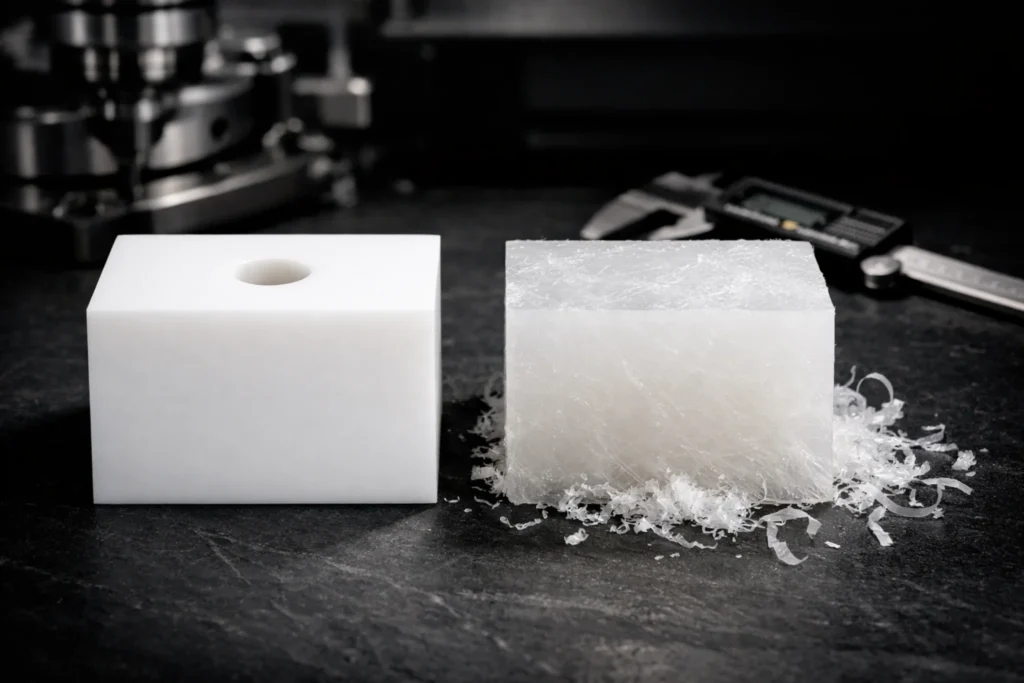
Side-by-side comparison of white HDPE and translucent UHMW industrial plastic blocks on an engineering workbench.

UHMW vs HDPE

UHMW vs HDPE: Differences, Performance & When to Choose Each Quick Decision Summary Which Plastic Do You Need? UHMW is better than HDPE for sliding, abrasion resistance, and extreme impact strength. HDPE is better for structural rigidity, weldability, and cost-sensitive applications. If your part moves or experiences friction, choose UHMW. If it holds weight or

UHMW vs HDPE Read More »

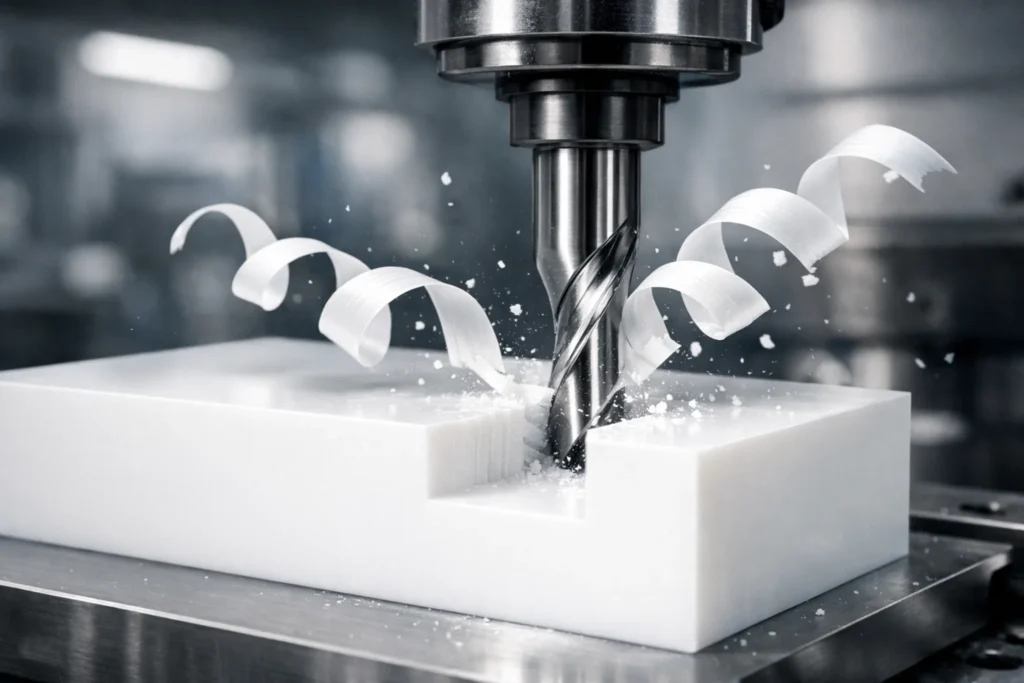
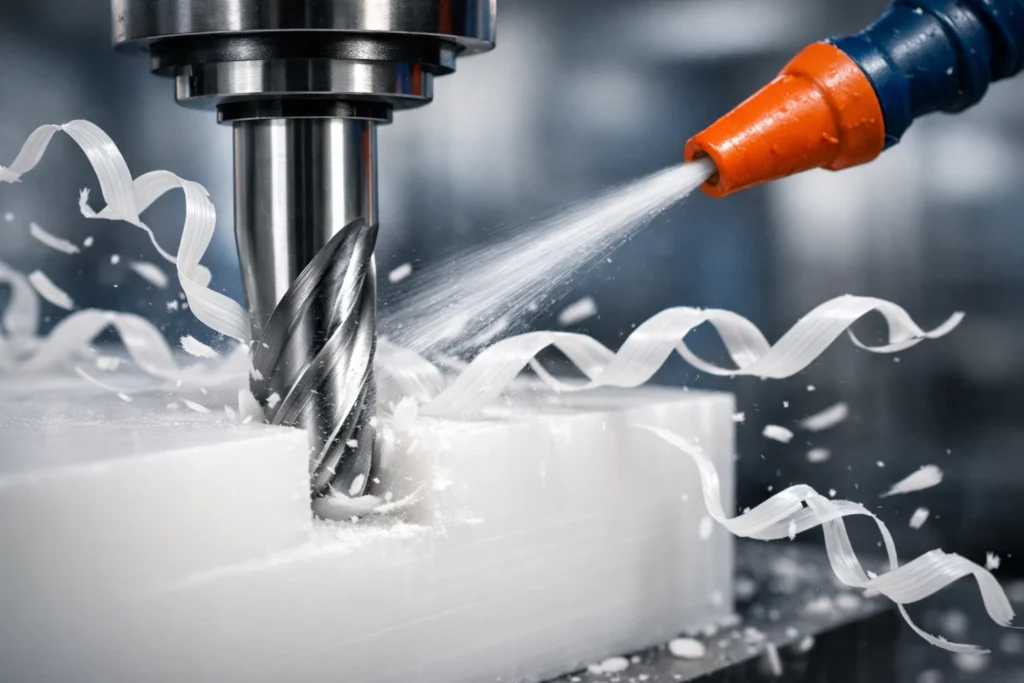
A close-up of a CNC end mill cutting white UHMW plastic showing the characteristic long stringy chips and an air blast nozzle for heat management.

Machining UHMW

Machining UHMW: Tools, Speeds, Tolerances & Common Problems UHMW (Ultra-High Molecular Weight Polyethylene) is an engineering paradox: it is one of the most wear-resistant polymers available, yet it is notoriously difficult to machine to tight tolerances. Because its thermal expansion is 12x higher than steel and it possesses high elastic memory, standard machining approaches will cause melting, warping, and

Machining UHMW Read More »

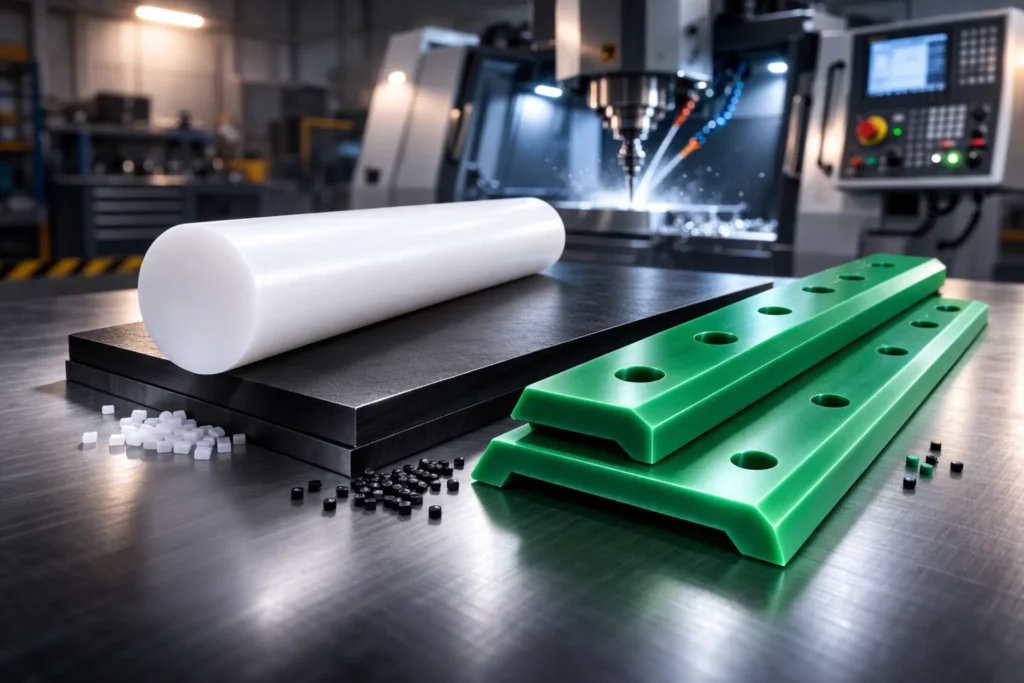
Comparison of Virgin White and Black UV-Stabilized UHMW plastic sheets and rods for industrial applications.

UHMW

UHMW (Ultra-High Molecular Weight Polyethylene): Properties, Applications, Grades & Selection Guide UHMW is the industrial “super-plastic” engineered for extreme impact, zero-friction movement, and maximum abrasion resistance in the world’s harshest environments. What Is UHMW? (Quick Definition) UHMW (Ultra-High Molecular Weight Polyethylene) is a high-density thermoplastic featuring extremely long polymer chains that result in a material

UHMW Read More »

Side-by-side comparison of white UHMW and PTFE industrial plastic components in a lab setting

UHMW vs PTFE

UHMW vs PTFE: Differences in Strength, Friction, Wear & Industrial Applications UHMW and PTFE are two high-performance engineering plastics used in low-friction, wear-resistant, and chemical-exposure environments. While both materials offer excellent durability and self-lubricating properties, they perform very differently under heat, load, and abrasive conditions. UHMW (Ultra-High Molecular Weight Polyethylene) is known for extreme impact

UHMW vs PTFE Read More »

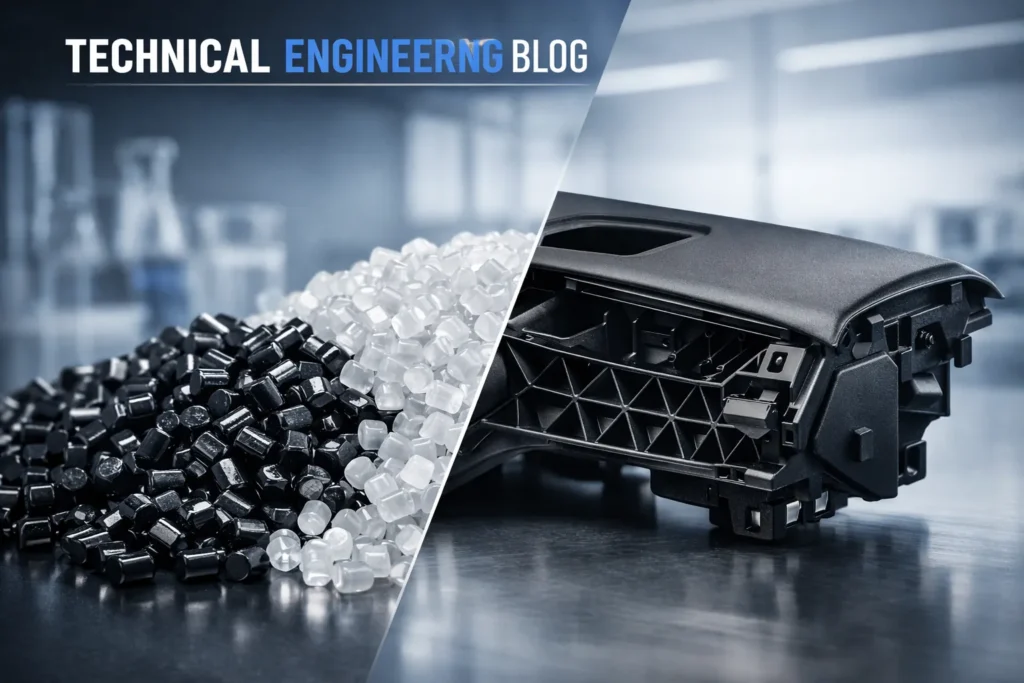
Macro view of PC-ABS thermoplastic pellets and a finished automotive component showing high-impact resistance and thermal stability.

Polycarbonate ABS Material

Polycarbonate ABS Material (PC-ABS): Properties, Processing & Selection Guide This technical guide provides essential mechanical specifications, thermal thresholds, and processing parameters for Polycarbonate ABS Material. You will learn to optimize material properties for high-impact applications, compare cost-performance trade-offs, and implement critical injection molding or 3D printing protocols to prevent part failure. What Is Polycarbonate ABS Material? PC-ABS is a high-performance thermoplastic alloy created by mechanically blending Polycarbonate (PC)

Polycarbonate ABS Material Read More »

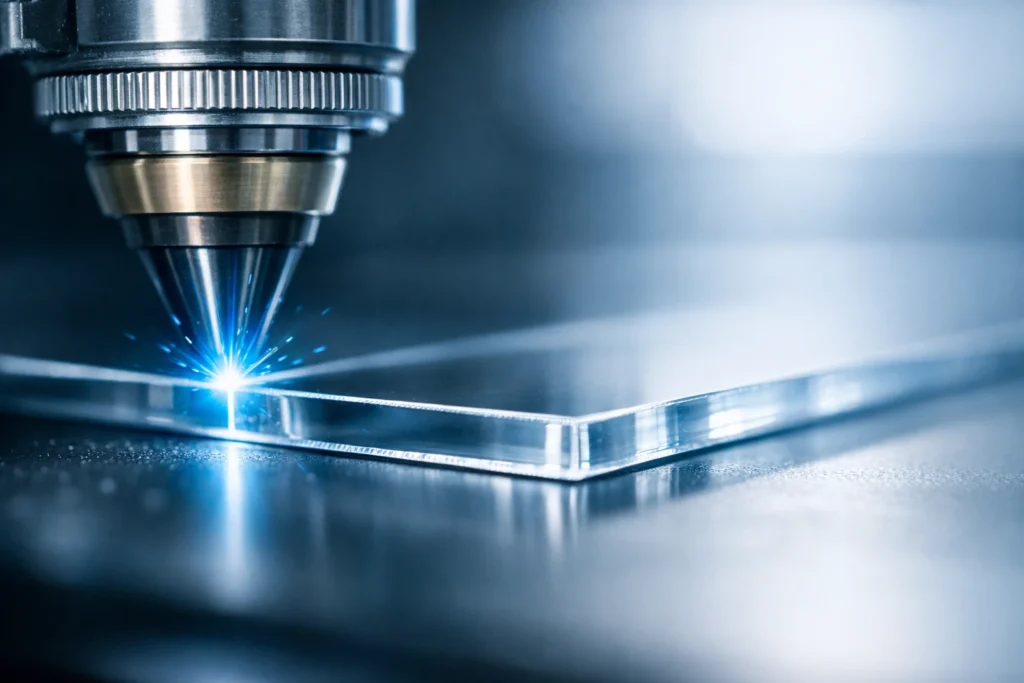
Macro view of a clean laser cut on a polycarbonate sheet.

Can You Laser Cut Polycarbonate

Can You Laser Cut Polycarbonate? (The Honest Truth & Best Alternatives) You can laser cut polycarbonate, but you shouldn’t for most projects. It produces toxic hydrogen cyanide gas, poses a high fire risk, and results in charred, yellowed edges. Only laser cut sheets under 1.5mm. For thicker material, use CNC routing for clean results. The Direct Answer: Can You Laser Cut It Safely? Why “Can

Can You Laser Cut Polycarbonate Read More »

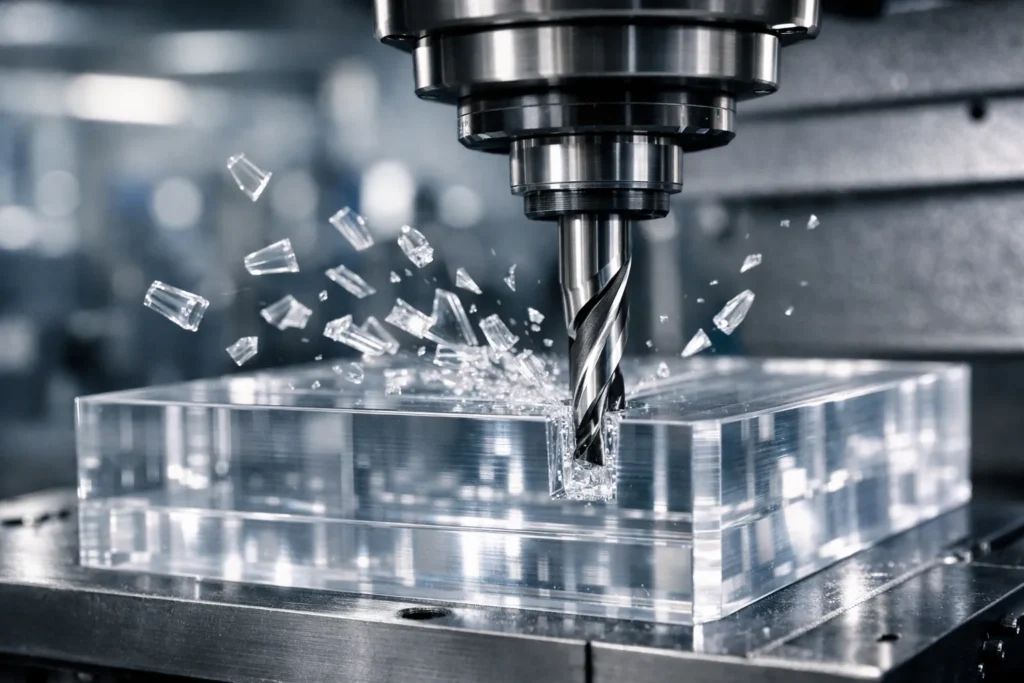
High-precision CNC milling of a clear polycarbonate block showing clean chip evacuation and optical clarity

Machining Polycarbonate

Machining Polycarbonate: Precision Techniques, Risks, and Material Decisions Polycarbonate is a high-impact, ductile thermoplastic favored for its optical clarity and extreme toughness. Successful machining requires precise heat management to prevent melting and proactive stress relief (annealing) to eliminate post-process cracking or dimensional warping. Is Polycarbonate Suitable for Machining Machinability Characteristics of Polycarbonate Polycarbonate is highly machinable but behaves differently than brittle

Machining Polycarbonate Read More »

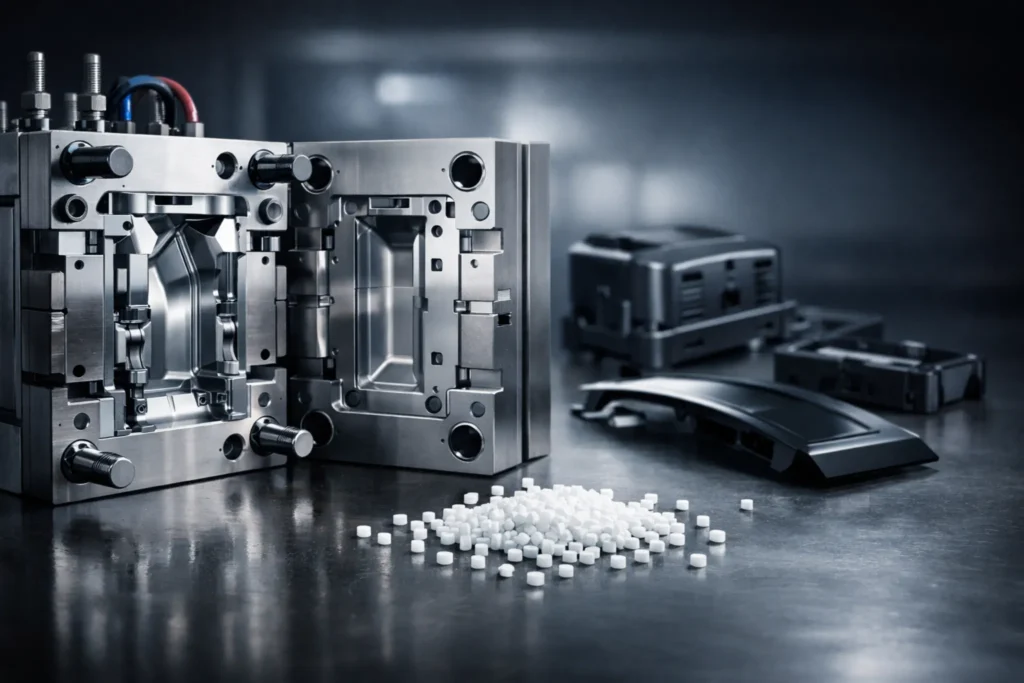
Professional ABS plastic injection molding tool and finished industrial parts showcase.

ABS Plastic Injection Molding

ABS Injection Molding: Complete Process Parameters, Defects & Design Guide ABS injection molding runs at 230–270°C melt temperature, requires drying to below 0.02% moisture content, and delivers 0.4–0.7% linear shrinkage — making it one of the most predictable resins for precision molded parts. This guide covers the exact processing parameters, defect root causes and fixes,

ABS Plastic Injection Molding Read More »