
Engineering Plastics — Properties, Machining & Material Selection
Real data for engineers and machinists. Machining parameters, material comparisons, and selection guides for Delrin, Nylon, PEEK, PTFE, UHMW, Polycarbonate and more.
Written by Usama Ayub — 8 years of industrial experience in polymer manufacturing. Real material knowledge, not manufacturer datasheets.
Machining Delrin
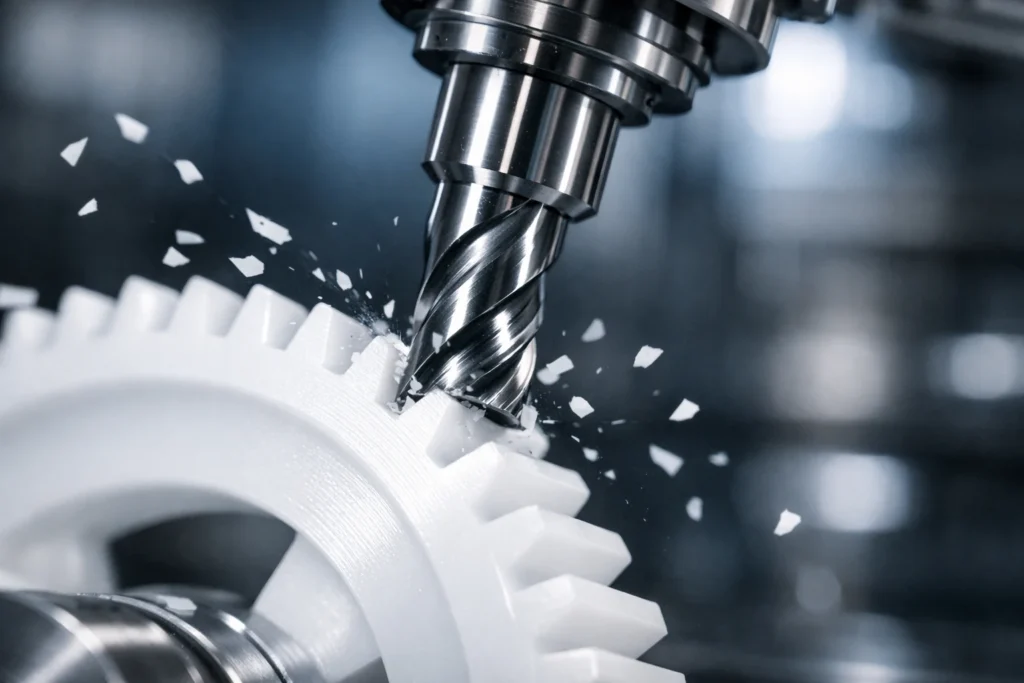
Delrin (Acetal Homopolymer) is the industry standard for high precision plastic machining due to its superior dimensional stability, low friction, and excellent chip formation.
Delrin 3D Printing
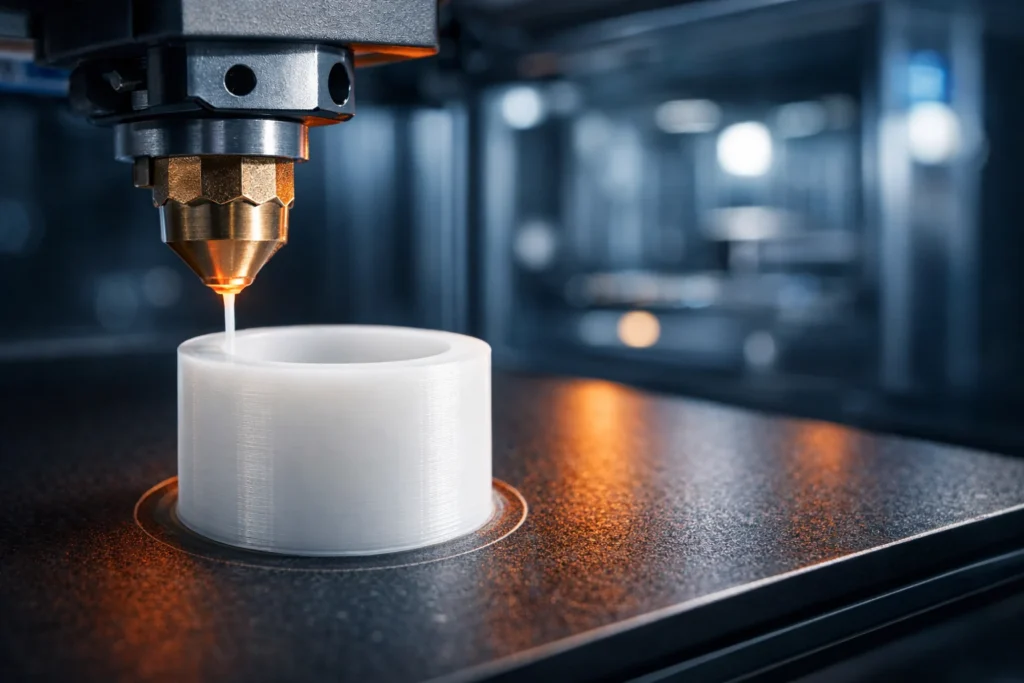
Delrin (Polyoxymethylene or POM) is a gold standard in CNC machining for its low friction and high stiffness, these same properties make it notoriously difficult to 3D print due to extreme warping and poor bed adhesion.
Laser Cut Delrin
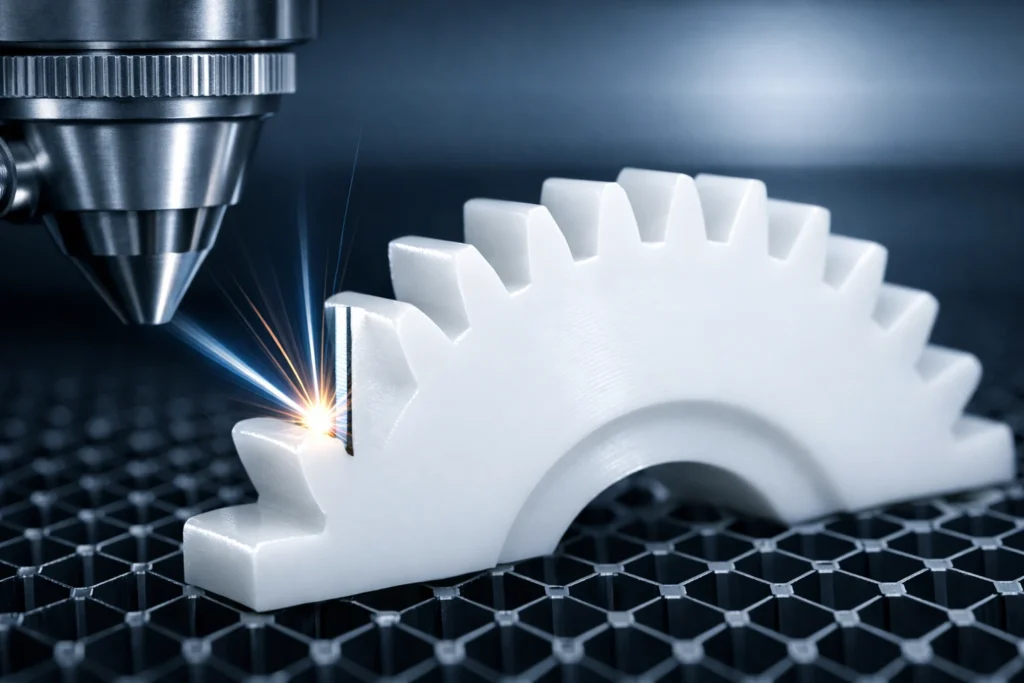
Delrin (Acetal/POM) is an optimal engineering plastic for CO2 laser cutting. It sublimates (vaporizes) cleanly, leaving a high-gloss, burr-free edge.
UHMW
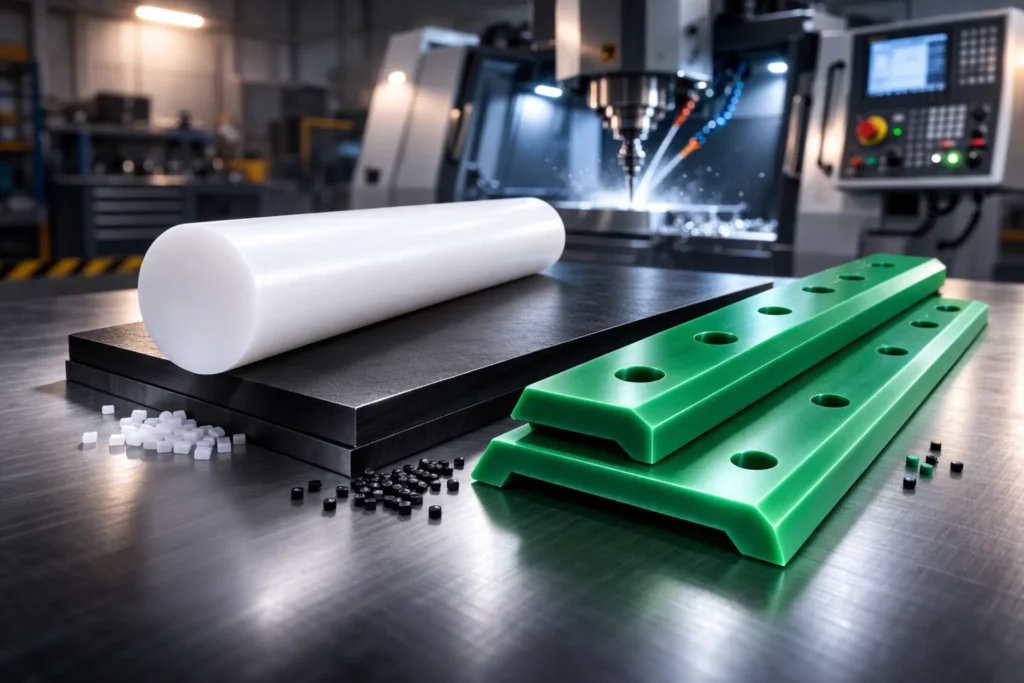
UHMW (Ultra-High Molecular Weight Polyethylene) is a high-density thermoplastic featuring extremely long polymer chains that result in a material with unparalleled impact strength and near-zero friction.
Machining UHMW
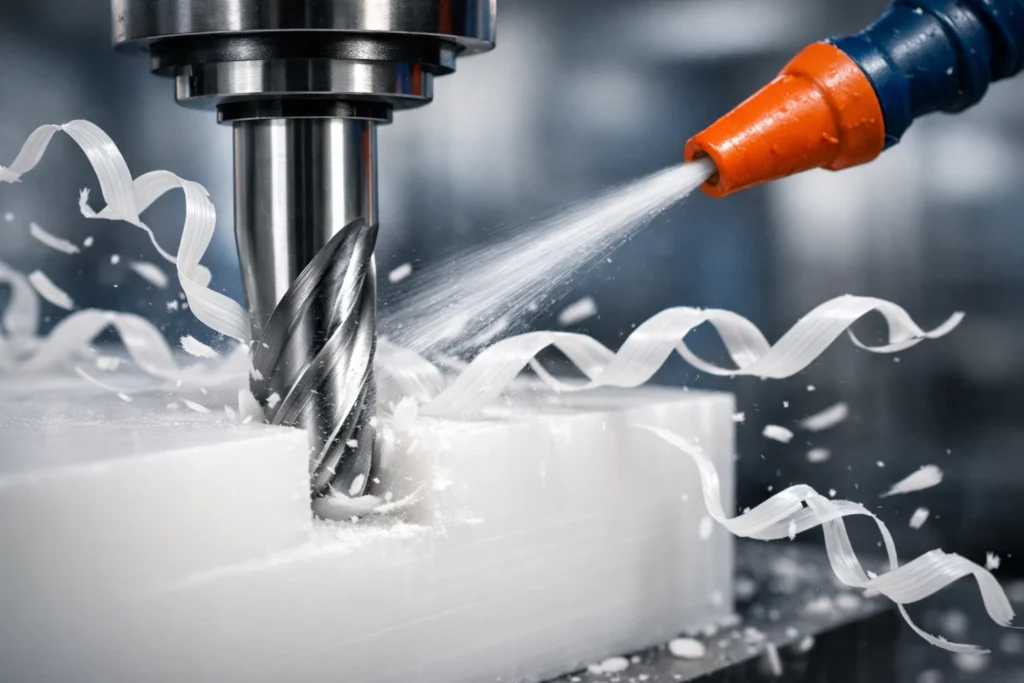
UHMW behaves more like hard wax or cheese than metal. High spindle speeds are your enemy; sharp, high-positive rake angles are your primary solution.
UHMW vs PTFE
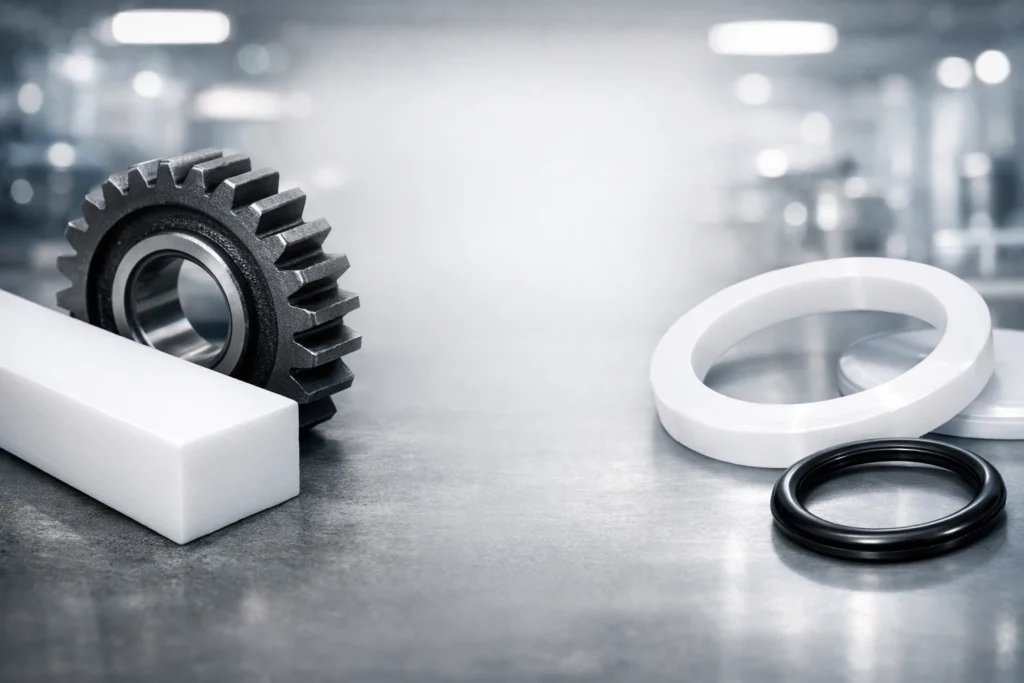
Choosing between UHMW vs PTFE depends on your operating temperature, friction requirements, chemical exposure, and long-term cost considerations.
ABS Plastic Injection Molding
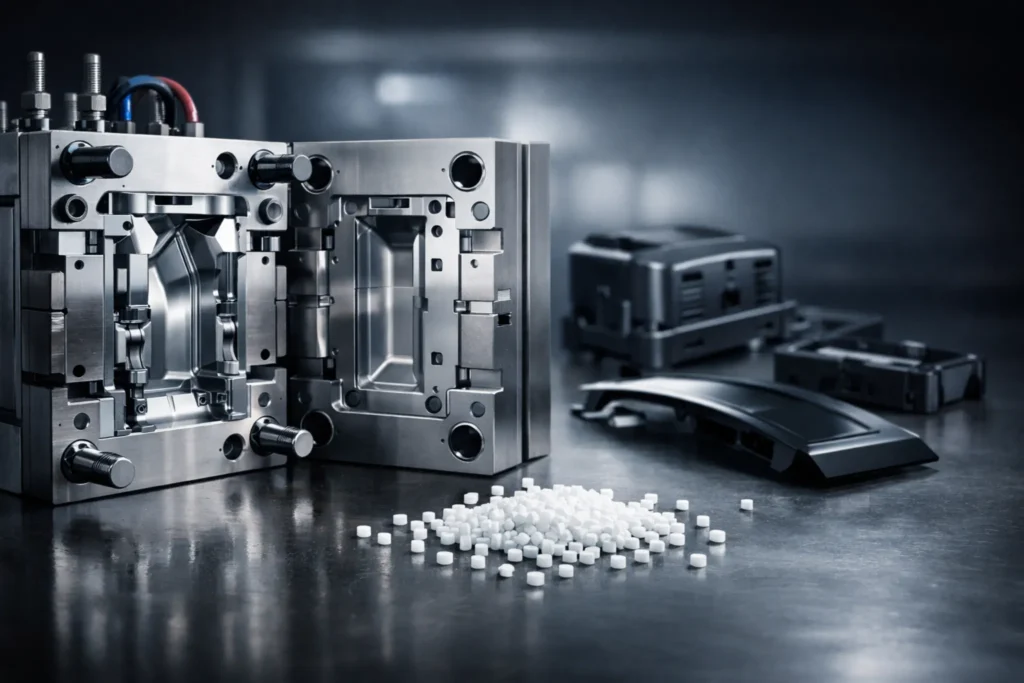
ABS (Acrylonitrile Butadiene Styrene) is the industry standard for components requiring high impact strength, dimensional stability, and a premium surface finish.
Vapor Smoothing Nylon
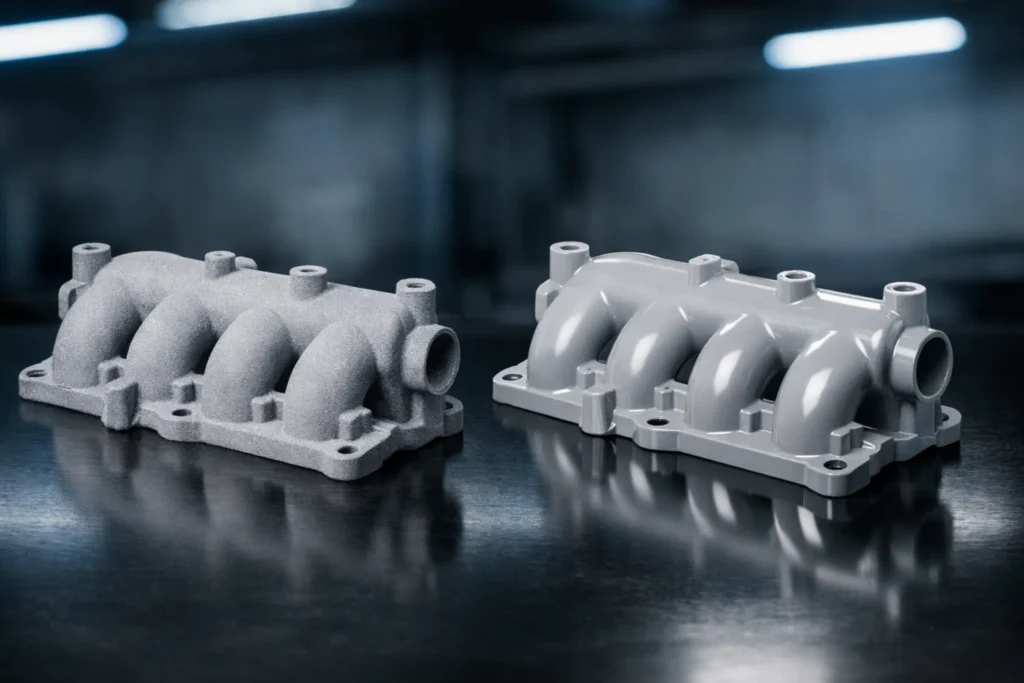
Nylon can be vapor smoothed, but it requires specific industrial solvents, primarily formic acid blends rather than common hobbyist chemicals.
Nylon 6 vs Nylon 12
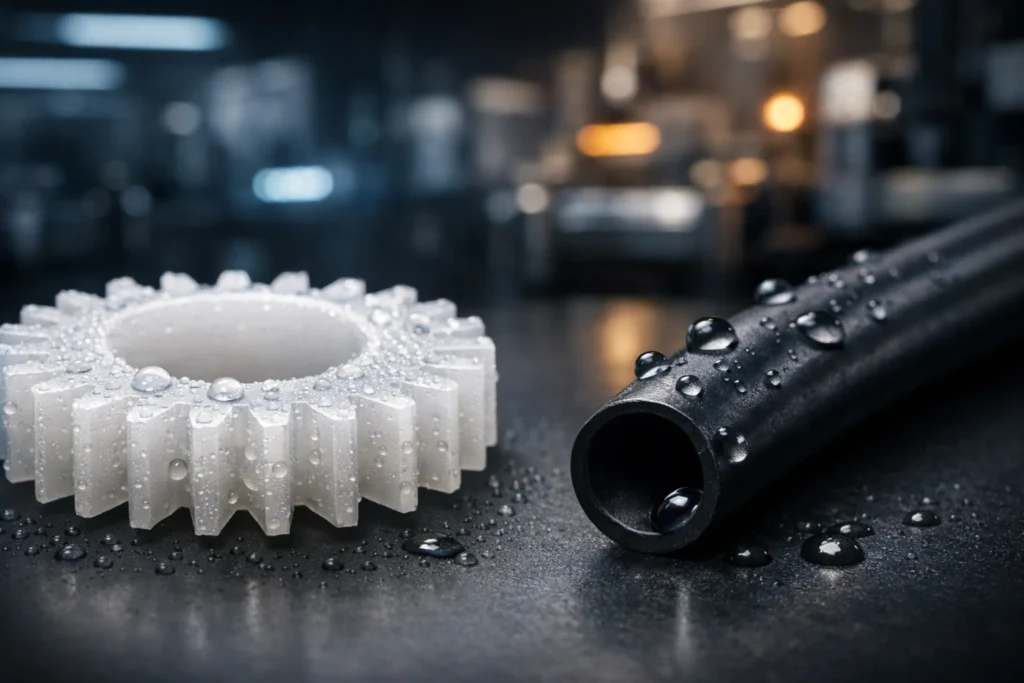
Specifying Nylon 6 vs Nylon 12 is not an academic exercise; the choice dictates your warranty claims, field reliability, and total material spend.
SLS vs SLA
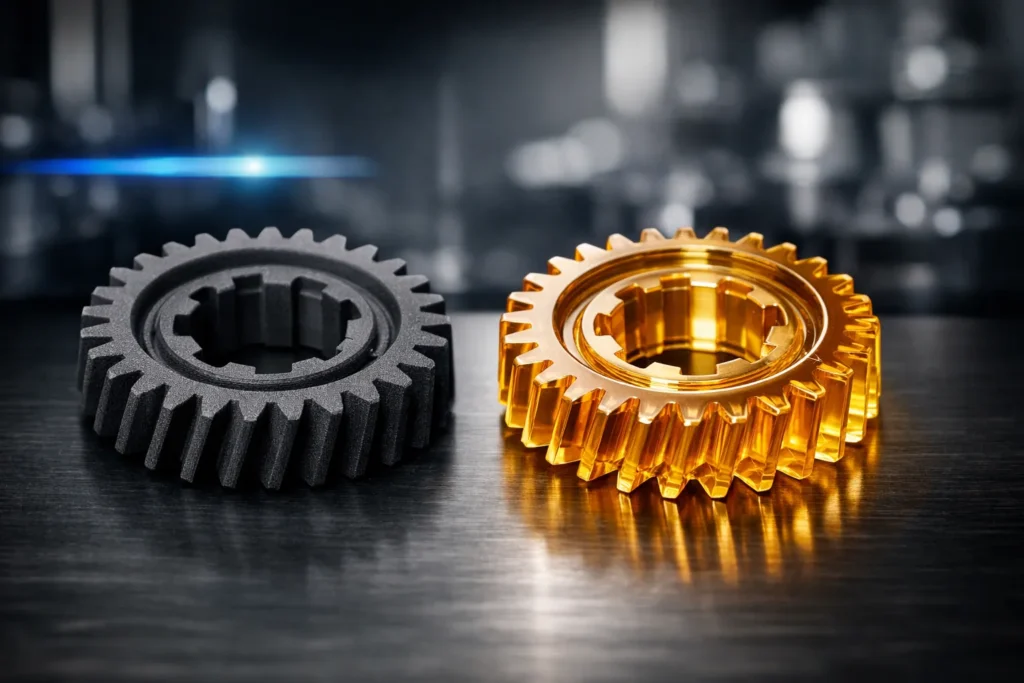
SLS delivers isotropic strength with minimal finishing. SLA offers dimensional accuracy but demands support removal, UV curing, and surface treatment. Choose based on what breaks your workflow, not your budget.
Have a question or a story to share?