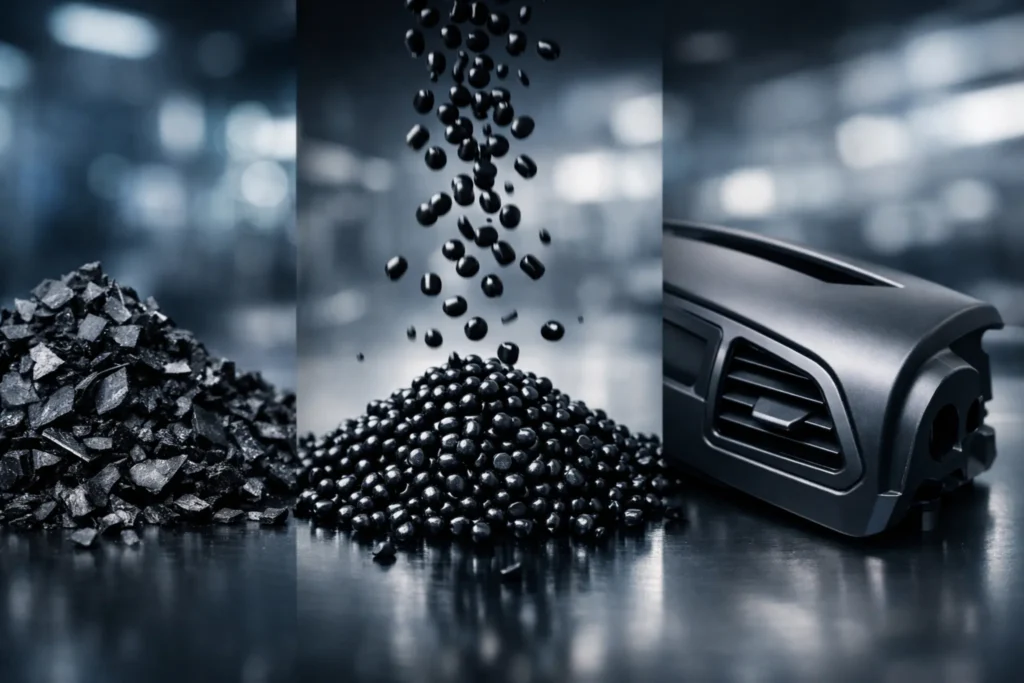
Industrial ABS plastic recycling process showing shredded regrind, black resin pellets, and a molded automotive part.

ABS Plastic Recycling

ABS Plastic Recycling: Process, Challenges, and Industrial Use Cases Recycling Acrylonitrile Butadiene Styrene (ABS) is a commercially viable strategy that recovers high-value engineering resin while reducing carbon emissions by up to 80% compared to virgin production. As a core pillar of the industrial circular economy, efficient ABS reprocessing diverts complex electronic waste from landfills and provides manufacturers with a […]

ABS Plastic Recycling Read More »

Quick Turn Injection Molding

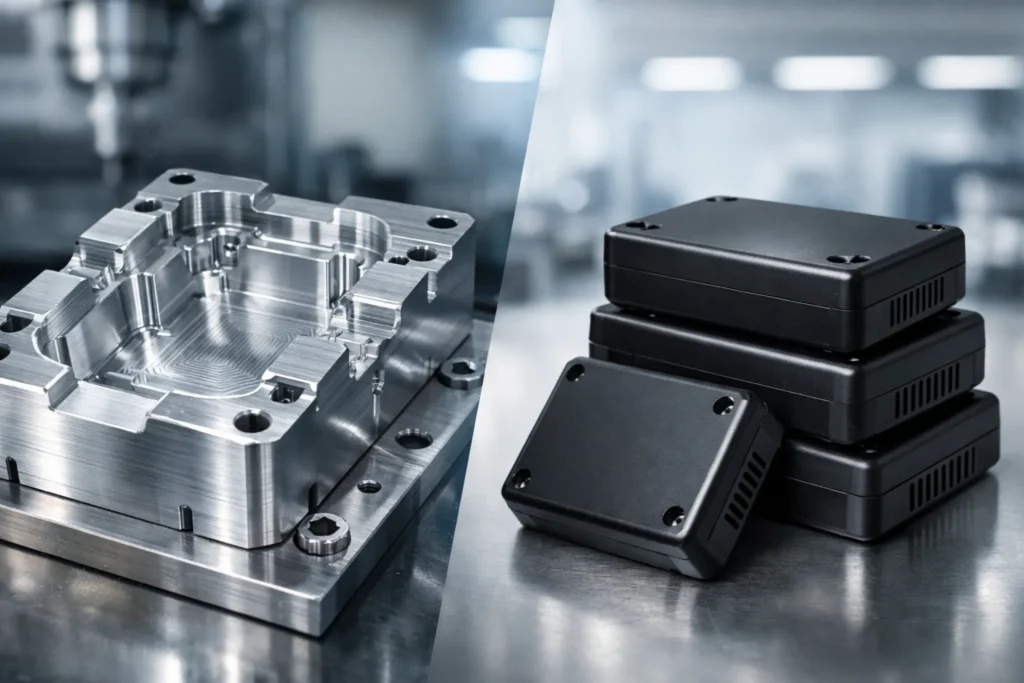
Quick Turn Injection Molding: When Speed, Cost, and Part Quality Matter Quick turn injection molding accelerates product development by utilizing automated DFM analysis and aluminum tooling to deliver production-grade plastic parts in days rather than months. This process bypasses the lengthy fabrication cycles of traditional steel molds, allowing engineers to validate designs with final-market materials under aggressive deadlines. Quick Turn Essentials Contents1

Quick Turn Injection Molding Read More »

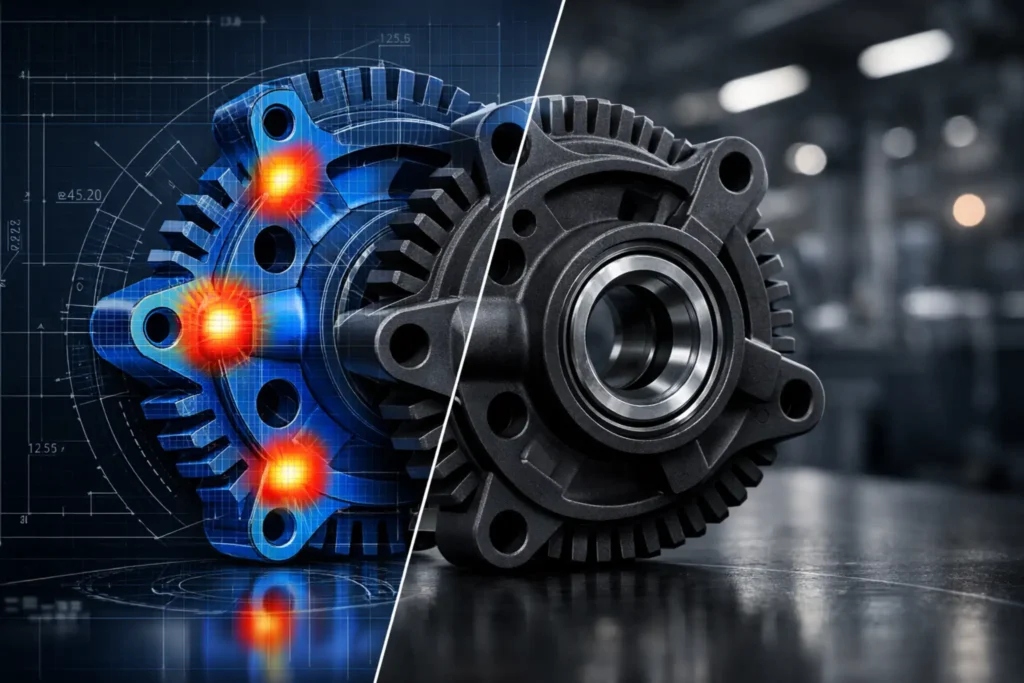
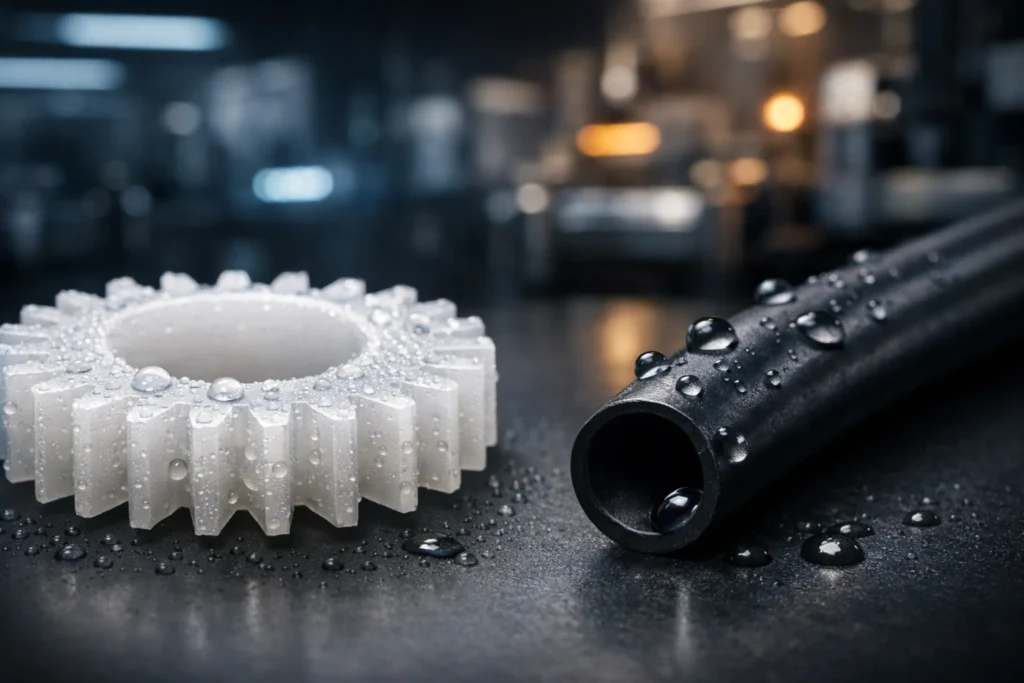
Comparison of high-strength PEEK and Glass-Filled Nylon injection molded parts for high-stress industrial applications.

Strongest Plastic for Injection Molding

Strongest Plastic for Injection Molding: Material Selection Guide for High-Stress Parts Selecting the strongest plastic for injection molding requires balancing tensile strength, impact resistance, and thermal stability. This guide ranks industrial-grade resins and high-performance polymers, providing the technical data needed for precise resin selection in high-stress, load-bearing applications. Contents1 What “Strongest” Means in Injection Molding Applications1.1 Plastics vs. Metals: Understanding Specific Strength1.2 Tensile Strength vs

Strongest Plastic for Injection Molding Read More »

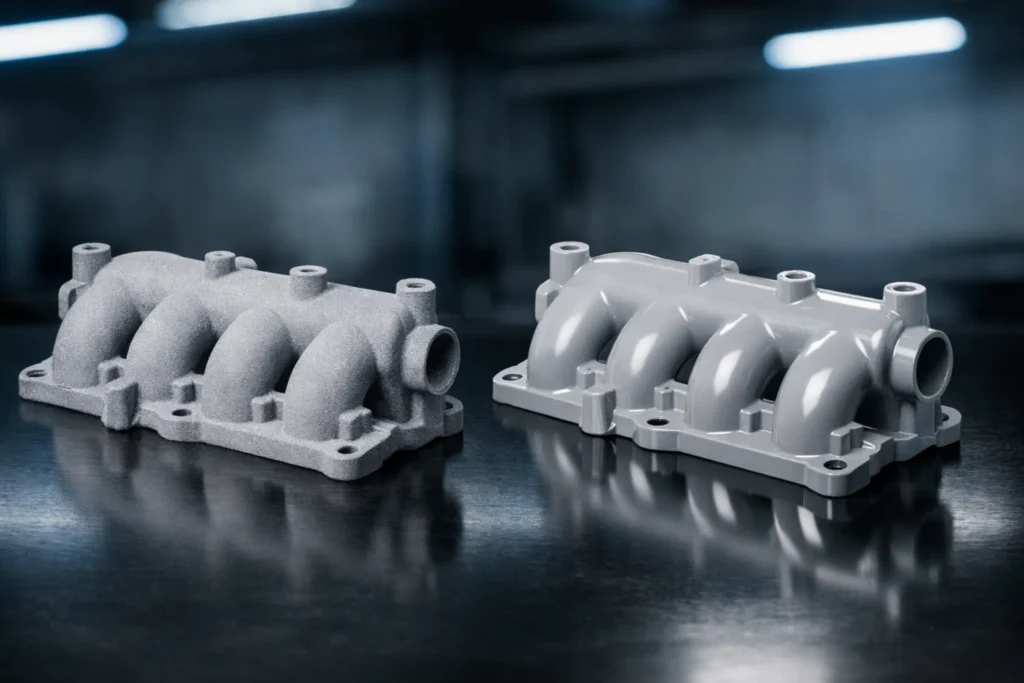
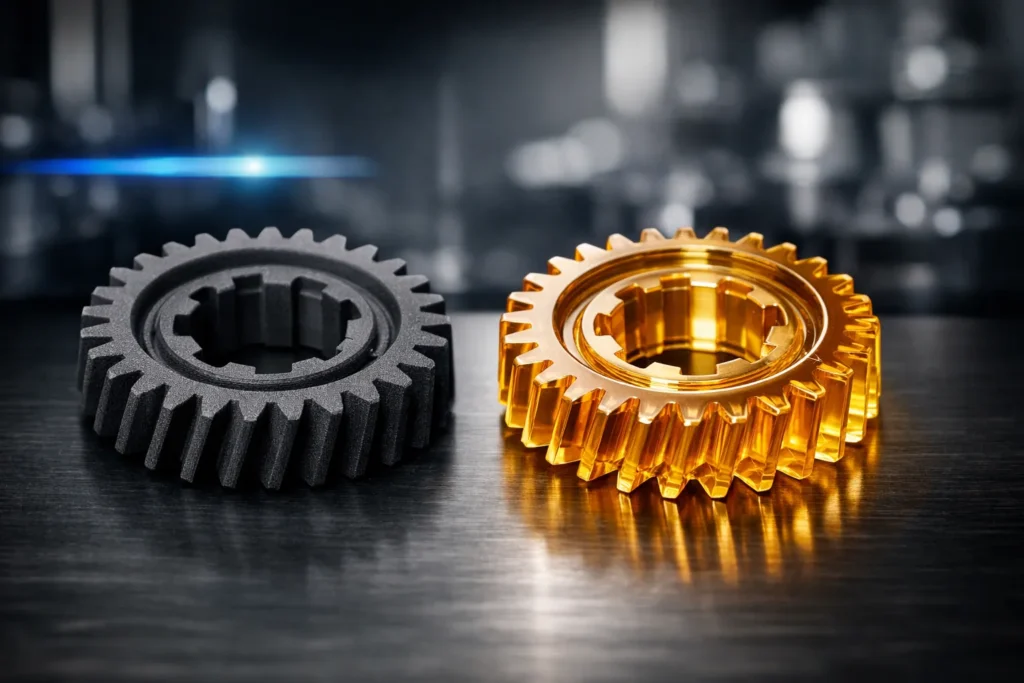
Comparison of raw SLS 3D printed nylon vs. vapor smoothed nylon showing surface roughness reduction and glossy finish.

Vapor Smoothing Nylon

Vapor Smoothing Nylon: Methods, Limits, and When It Actually Works This guide provides an objective analysis of chemical vapor smoothing for PA11 and PA12 nylon, detailing precise roughness metrics, safety protocols, and mechanical impacts. Contents1 Direct Answer: Can Nylon Be Vapor Smoothed?2 Which Nylon Types Respond to Vapor Smoothing2.1 Nylon 12 and PA11 (SLS & MJF parts)2.2 Nylon 6 and

Vapor Smoothing Nylon Read More »

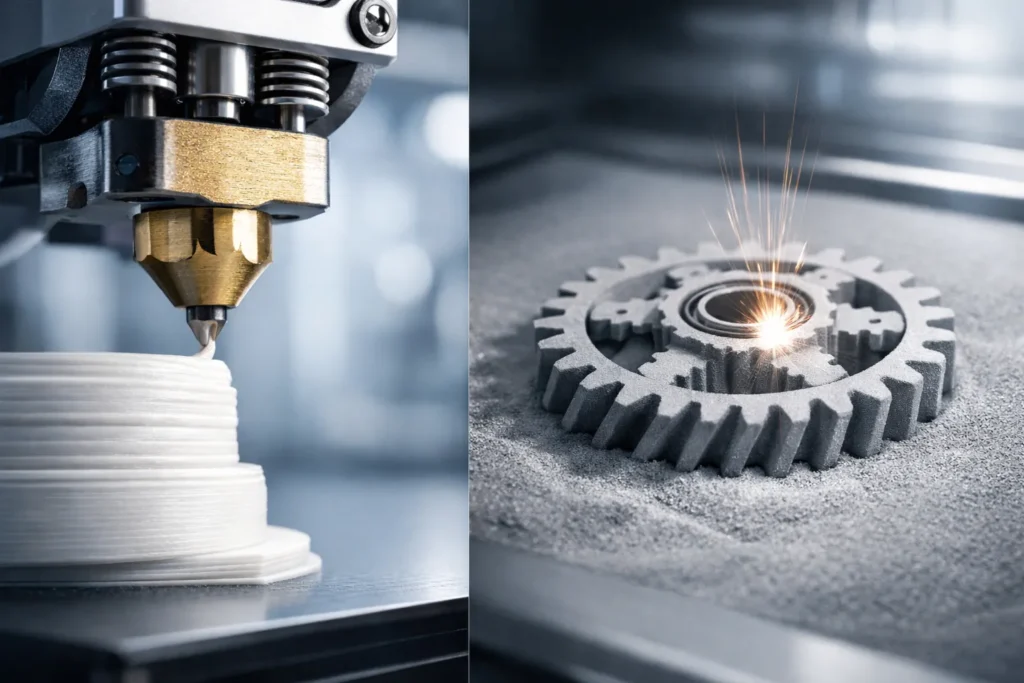
SLS vs FDM

SLS vs FDM: Which 3D Printing Technology Is Right for Your Application? To choose between these technologies, evaluate your requirement for mechanical isotropic strength versus cost-effective scale. FDM (Fused Deposition Modeling) is the industry standard for low-cost, large-scale visual prototyping and simple jigs, while SLS (Selective Laser Sintering) is the superior choice for complex, high-performance functional parts and high-density batch production. In this technical SLS vs FDM comparison,

SLS vs FDM Read More »

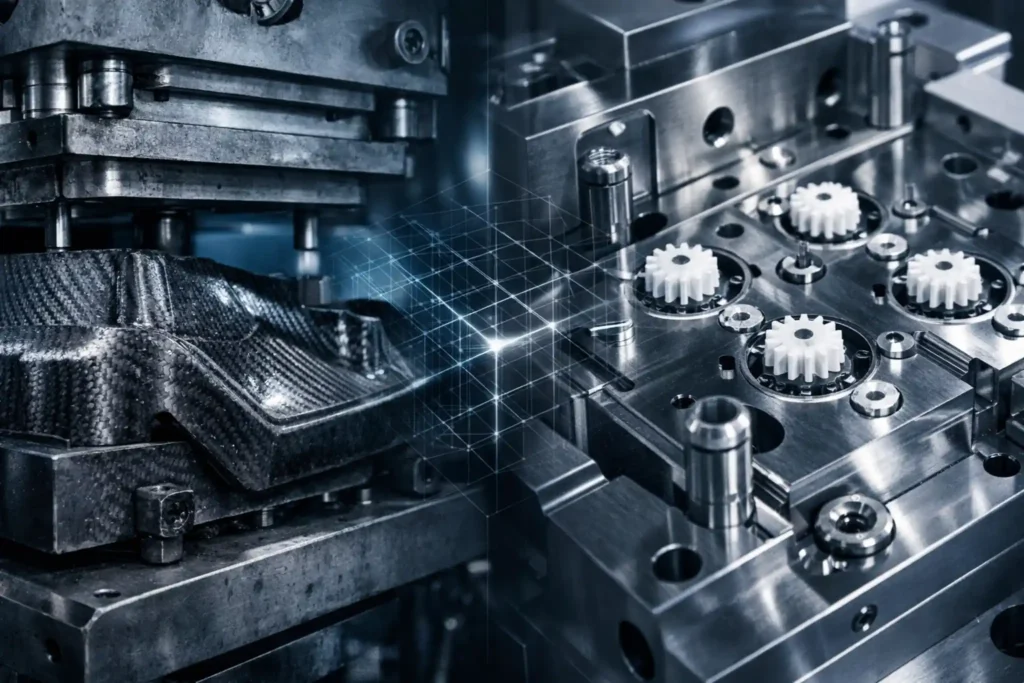
Compression vs Injection Molding

Compression vs Injection Molding: Key Differences, Costs, and When to Choose Each Compression vs injection molding determines your production economics, part quality, and tooling ROI for the next 5–10 years. Injection molding forces molten thermoplastic resins into closed molds at high clamping force, optimized for mass production of complex, high-precision geometries. Compression molding utilizes thermosetting polymers

Compression vs Injection Molding Read More »

SLS vs SLA

SLS vs SLA: Which 3D Printing Technology Is Right for Your Application in 2026? The SLS vs SLA debate isn’t about which technology is better. It’s about which one survives your application’s mechanical loads and post-processing realities. Engineers who choose based on machine cost alone end up with parts that fail during assembly or require

SLS vs SLA Read More »

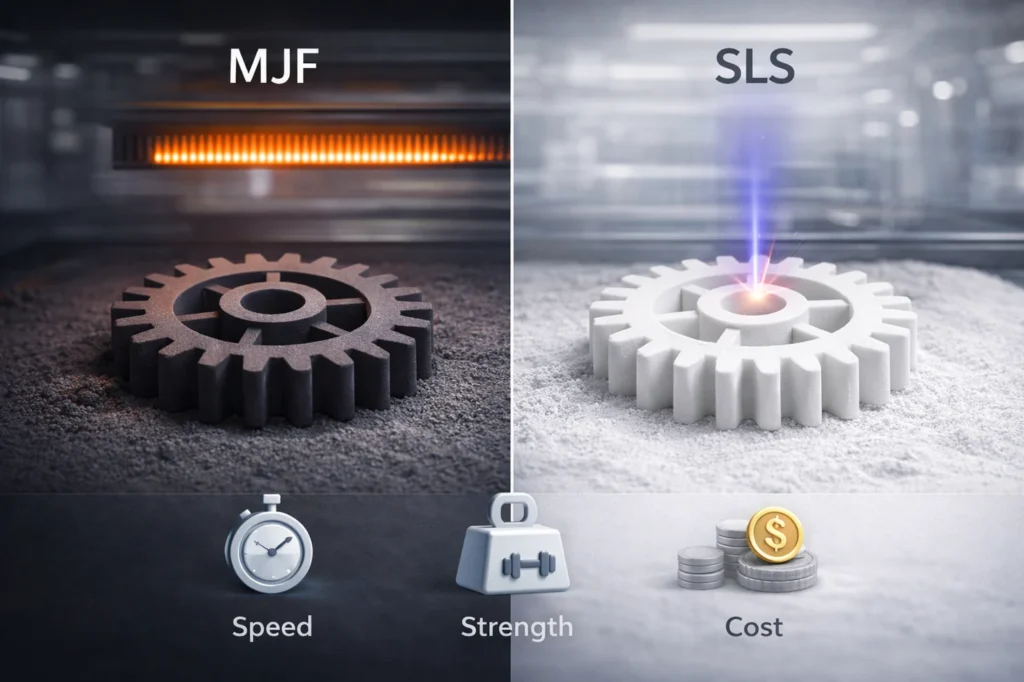
MJF vs SLS

MJF vs SLS: The 2026 Engineering Guide to Choosing the Right Powder Bed Fusion for Production Contents1 The 60-Second Verdict: When to Pick MJF vs SLS1.1 Key Decision Drivers: Strength, Surface, and Volume1.2 The “Break-Even” Point: Where MJF Becomes More Profitable Than SLS2 Mechanical Performance & The “Isotropy” Advantage2.1 Tensile Strength & Elongation: PA12 vs

MJF vs SLS Read More »

Professional MJF Nylon production parts on an industrial workbench, showcasing PA12 material texture, complex manifold geometries, and vapor-smoothed finishes for engineering applications

MJF Nylon

MJF Nylon Engineering Guide (2026): Performance, Costs, and Production Design MJF Nylon is the primary choice for 2026 production cycles where engineers require thousands of functional components without the lead times of traditional CNC machining. In current manufacturing environments, Multi Jet Fusion systems deliver repeatable tolerances, high-density nesting, and stable unit economics across serial batches. The process fuses PA12

MJF Nylon Read More »