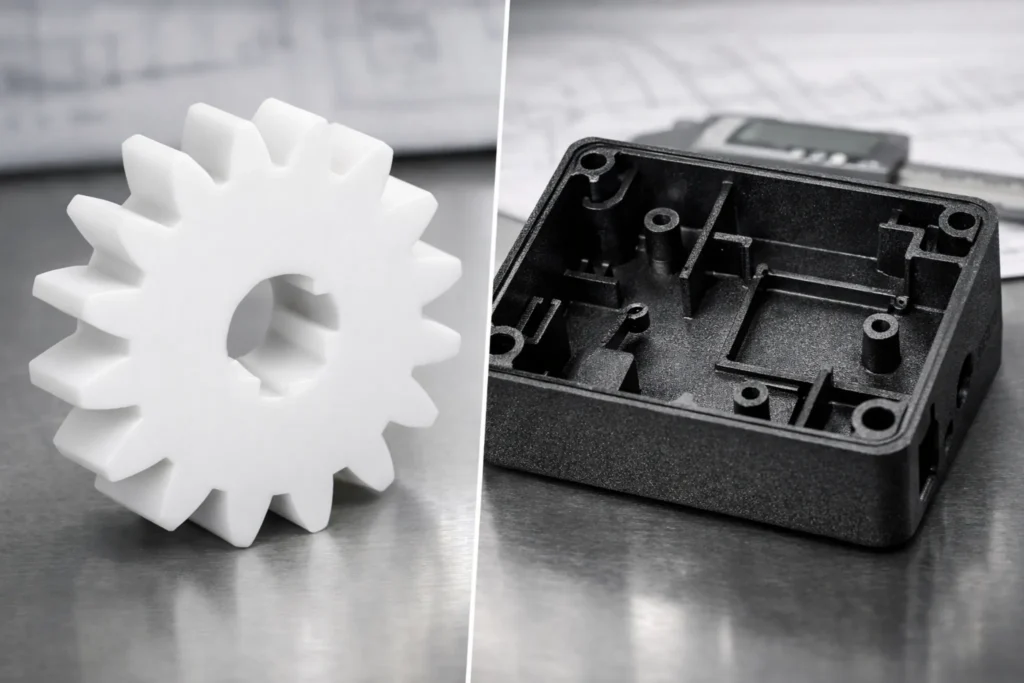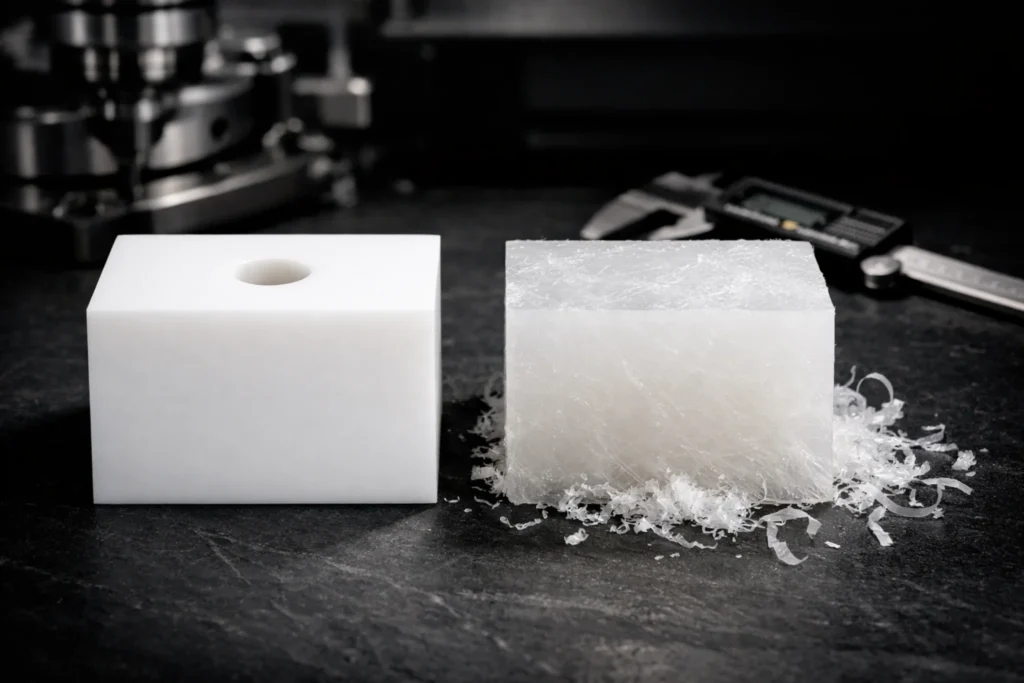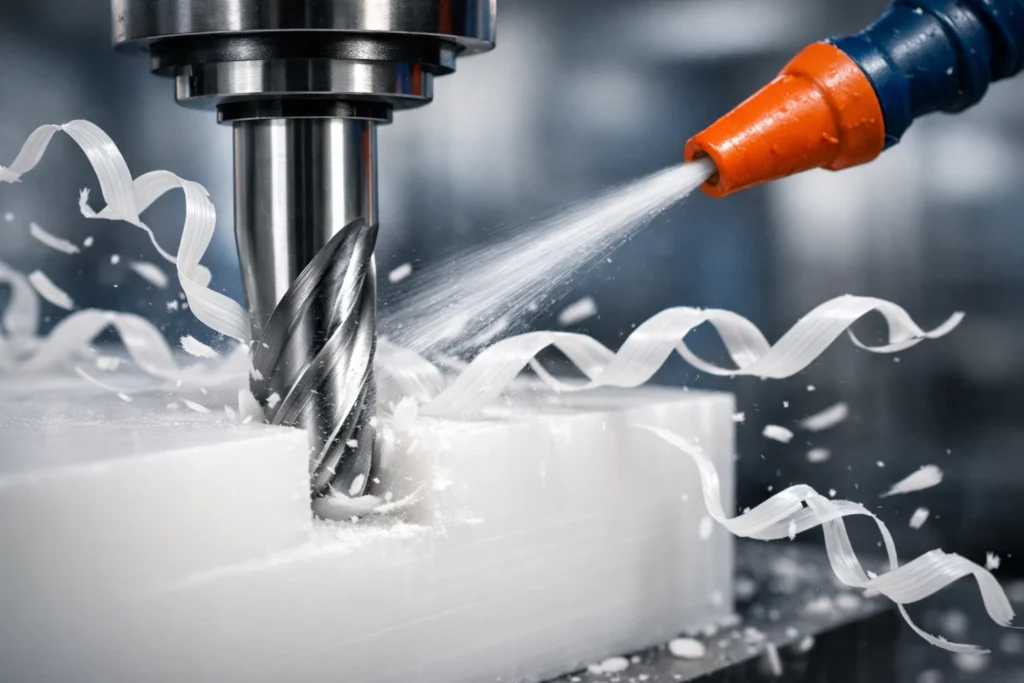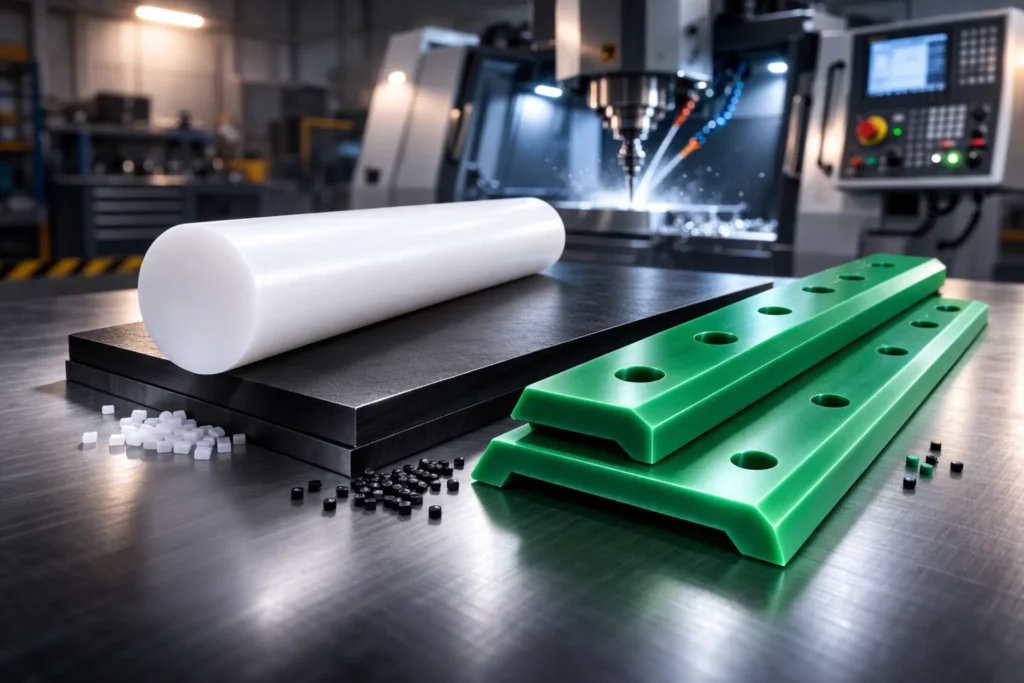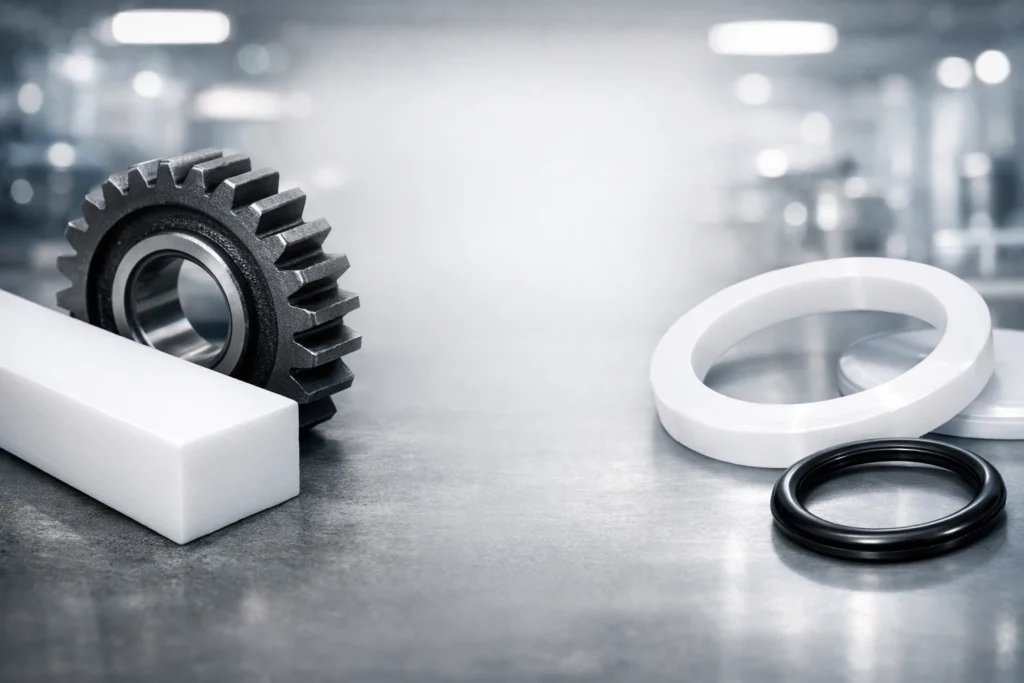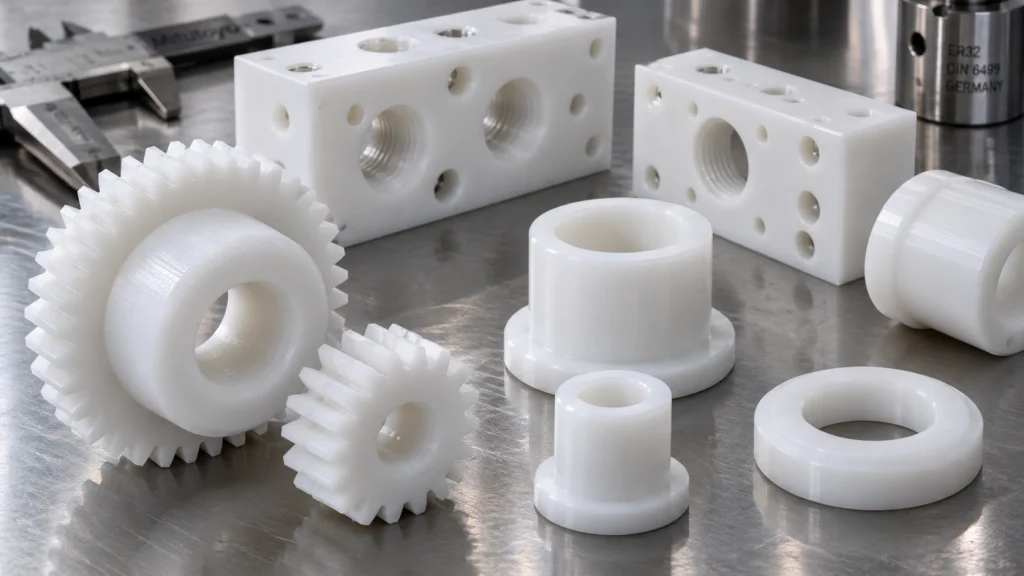
Side-by-side comparison of white UHMW and PTFE industrial plastic components in a lab setting

UHMW vs PTFE

UHMW vs PTFE: Differences in Strength, Friction, Wear & Industrial Applications UHMW and PTFE are two high-performance engineering plastics used in low-friction, wear-resistant, and chemical-exposure environments. While both materials offer excellent durability and self-lubricating properties, they perform very differently under heat, load, and abrasive conditions. UHMW (Ultra-High Molecular Weight Polyethylene) is known for extreme impact […]

UHMW vs PTFE Read More »

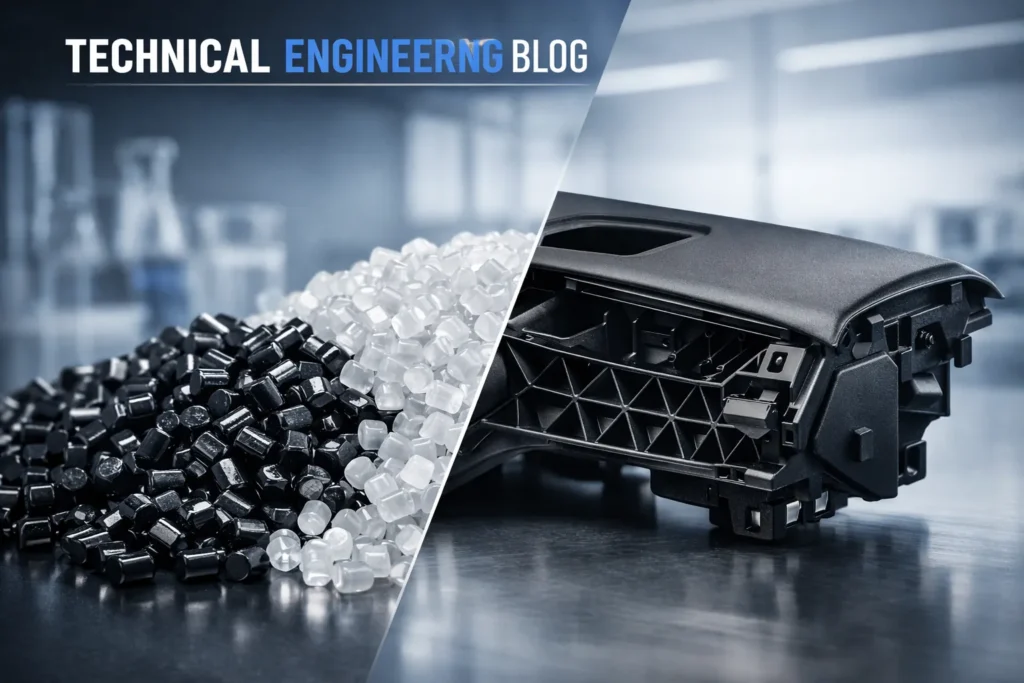
Macro view of PC-ABS thermoplastic pellets and a finished automotive component showing high-impact resistance and thermal stability.

Polycarbonate ABS Material

Polycarbonate ABS Material (PC-ABS): Properties, Processing & Selection Guide This technical guide provides essential mechanical specifications, thermal thresholds, and processing parameters for Polycarbonate ABS Material. You will learn to optimize material properties for high-impact applications, compare cost-performance trade-offs, and implement critical injection molding or 3D printing protocols to prevent part failure. Contents1 What Is Polycarbonate ABS Material?1.1 Why Polycarbonate and ABS Are Blended1.2 How PC-ABS Differs

Polycarbonate ABS Material Read More »

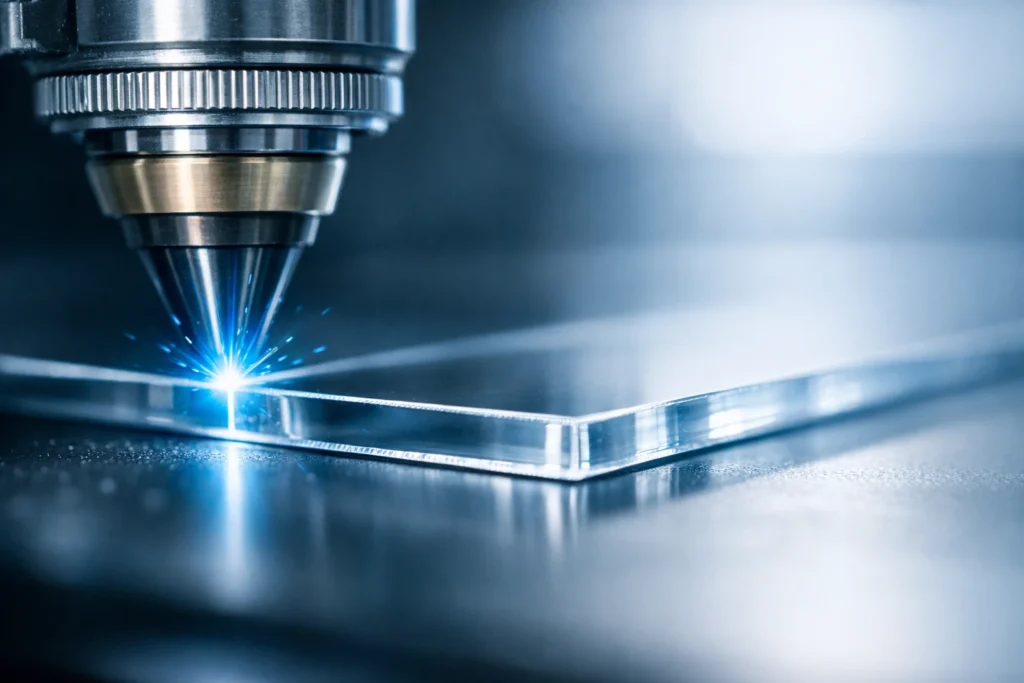
Macro view of a clean laser cut on a polycarbonate sheet.

Can You Laser Cut Polycarbonate

Can You Laser Cut Polycarbonate? (The Honest Truth & Best Alternatives) You can laser cut polycarbonate, but you shouldn’t for most projects. It produces toxic hydrogen cyanide gas, poses a high fire risk, and results in charred, yellowed edges. Only laser cut sheets under 1.5mm. For thicker material, use CNC routing for clean results. Contents1 The Direct Answer: Can You Laser Cut It Safely?1.1 Why

Can You Laser Cut Polycarbonate Read More »

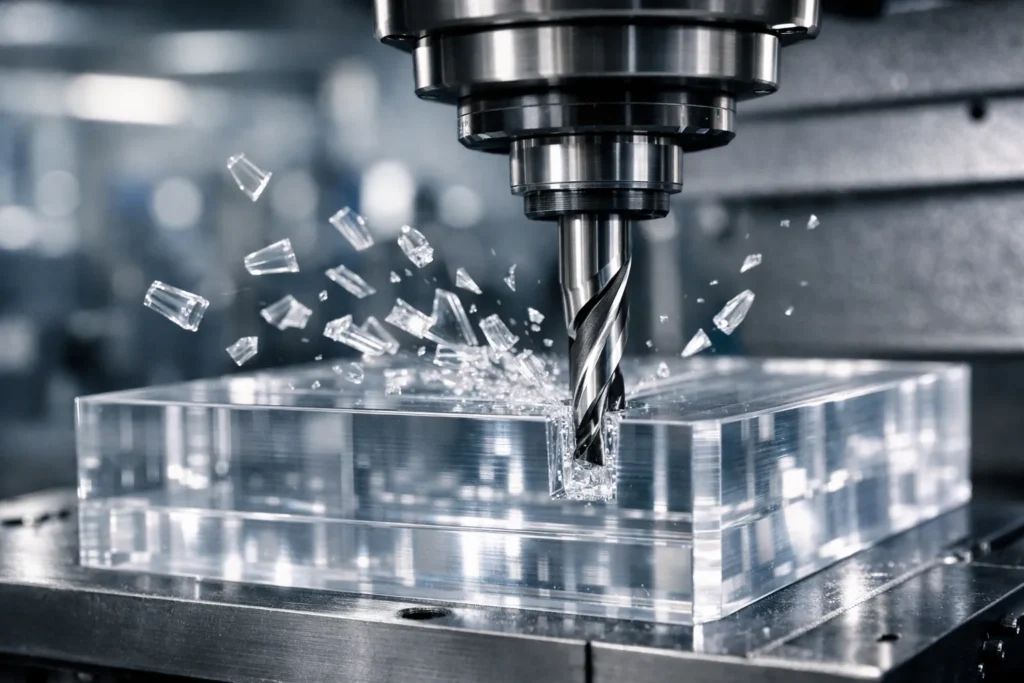
High-precision CNC milling of a clear polycarbonate block showing clean chip evacuation and optical clarity

Machining Polycarbonate

Machining Polycarbonate: Precision Techniques, Risks, and Material Decisions Polycarbonate is a high-impact, ductile thermoplastic favored for its optical clarity and extreme toughness. Successful machining requires precise heat management to prevent melting and proactive stress relief (annealing) to eliminate post-process cracking or dimensional warping. Contents1 Is Polycarbonate Suitable for Machining1.1 Machinability Characteristics of Polycarbonate1.2 Selecting the Right Grade: Machine Grade vs. Window

Machining Polycarbonate Read More »

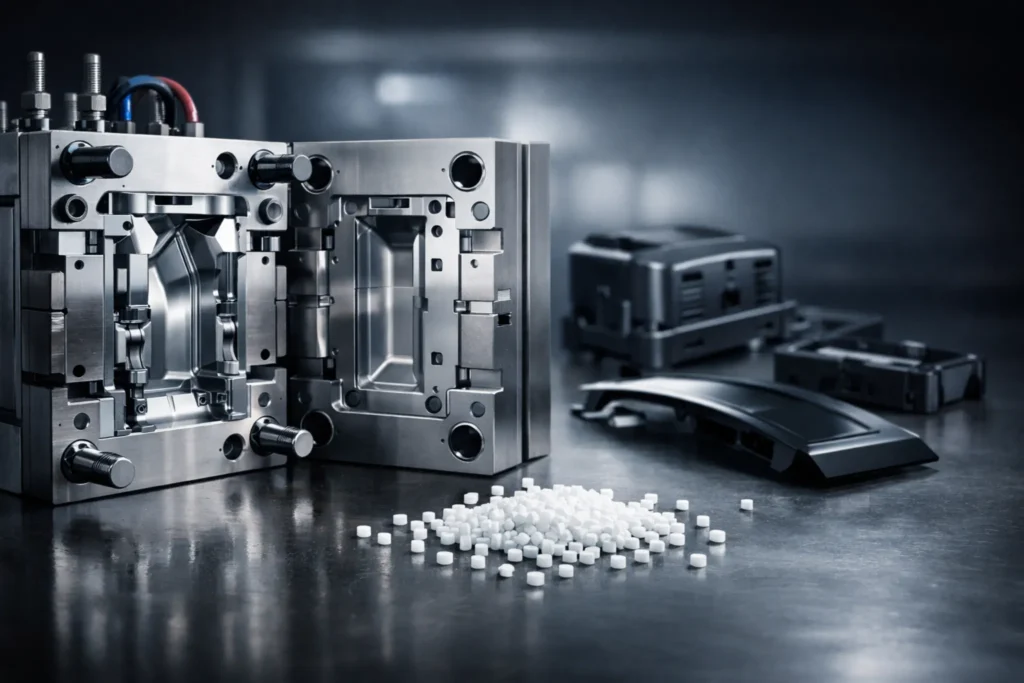
Professional ABS plastic injection molding tool and finished industrial parts showcase.

ABS Plastic Injection Molding

ABS Injection Molding: Complete Process Parameters, Defects & Design Guide ABS injection molding runs at 230–270°C melt temperature, requires drying to below 0.02% moisture content, and delivers 0.4–0.7% linear shrinkage — making it one of the most predictable resins for precision molded parts. This guide covers the exact processing parameters, defect root causes and fixes,

ABS Plastic Injection Molding Read More »

Industrial ABS plastic recycling process showing shredded regrind, black resin pellets, and a molded automotive part.

ABS Plastic Recycling

ABS Plastic Recycling: Process, Challenges, and Industrial Use Cases Recycling Acrylonitrile Butadiene Styrene (ABS) is a commercially viable strategy that recovers high-value engineering resin while reducing carbon emissions by up to 80% compared to virgin production. As a core pillar of the industrial circular economy, efficient ABS reprocessing diverts complex electronic waste from landfills and provides manufacturers with a

ABS Plastic Recycling Read More »

Quick Turn Injection Molding

Quick Turn Injection Molding: When Speed, Cost, and Part Quality Matter Quick turn injection molding accelerates product development by utilizing automated DFM analysis and aluminum tooling to deliver production-grade plastic parts in days rather than months. This process bypasses the lengthy fabrication cycles of traditional steel molds, allowing engineers to validate designs with final-market materials under aggressive deadlines. Quick Turn Essentials Contents1

Quick Turn Injection Molding Read More »

Comparison of high-strength PEEK and Glass-Filled Nylon injection molded parts for high-stress industrial applications.

Strongest Plastic for Injection Molding

Strongest Plastic for Injection Molding: Material Selection Guide for High-Stress Parts Selecting the strongest plastic for injection molding requires balancing tensile strength, impact resistance, and thermal stability. This guide ranks industrial-grade resins and high-performance polymers, providing the technical data needed for precise resin selection in high-stress, load-bearing applications. Contents1 What “Strongest” Means in Injection Molding Applications1.1 Plastics vs. Metals: Understanding Specific Strength1.2 Tensile Strength vs

Strongest Plastic for Injection Molding Read More »

Comparison of raw SLS 3D printed nylon vs. vapor smoothed nylon showing surface roughness reduction and glossy finish.

Vapor Smoothing Nylon

Vapor Smoothing Nylon: Methods, Limits, and When It Actually Works This guide provides an objective analysis of chemical vapor smoothing for PA11 and PA12 nylon, detailing precise roughness metrics, safety protocols, and mechanical impacts. Contents1 Direct Answer: Can Nylon Be Vapor Smoothed?2 Which Nylon Types Respond to Vapor Smoothing2.1 Nylon 12 and PA11 (SLS & MJF parts)2.2 Nylon 6 and

Vapor Smoothing Nylon Read More »